Does key cutting require original keys? Learn when a locksmith can cut a replacement from a code, lock or spare, including modern car keys. Fast.
How to Unlock a Car Without Damage
You do not think about car entry methods until the second you are standing outside your vehicle, keys visible on the seat, rain starting, and your day already off schedule. If you are searching for how to unlock a car without damage, the first thing to know is simple – the wrong move can turn a lockout into a broken window, bent door frame, damaged weather seal, or an expensive lock repair.
That is why the safest answer depends on the car, the type of lockout, and what tools you actually have. Some situations leave room for a careful fix. Others need a trained automotive locksmith right away.
How to unlock a car without damage starts with the type of lockout
Not every lockout is the same. A car with an older manual locking system is very different from a late-model vehicle with deadlocks, proximity entry, internal shields, and coded electronics. What works on one car can damage another in minutes.
If the keys are locked inside and the car still has working power, there may be a safer path than if the battery is dead and the central locking system has stopped responding. If the key is broken in the lock, that is another issue entirely. And if the remote fob has failed but the mechanical emergency key still works, the fix may be easier than it first appears.
A proper non-destructive entry method starts by identifying the lock system, checking whether the vehicle is double locked, and choosing the least invasive way in. That is how specialists avoid damage. Guesswork is usually where damage begins.
The methods people try first
Most drivers try the handle again, check every door, and then move to the trunk. That is sensible. One door may not have fully latched, or the trunk may still respond even when the side doors do not. If you have a spare key nearby, that is obviously your cleanest option.
After that, people often start thinking about coat hangers, wedges, rods, shoelaces, or inflatable tools. This is where things get risky. Older vehicles with upright lock buttons sometimes allowed limited access with simple tools. Modern cars are much less forgiving. Interior linkages are often shielded, door frames are tighter, and window glass sits closer to trim and electronics.
A wire slipped in the wrong place can tear a weather strip, scratch glass, damage airbags in the door area, or pull the wrong mechanism. A wedge pushed too hard can bend the top of the frame just enough to create wind noise and water leaks later. The door may still close, but it will not be right.
That is the real issue with DIY entry. It is not only about getting in. It is about getting in without causing problems you notice next week.
When a spare key or app-based access is the best fix
Before touching the car with any tool, check whether your vehicle has connected services or app-based remote access. Many newer vehicles allow remote unlocking through the manufacturer app if your subscription is active and the car has network coverage.
If a family member can bring a spare key quickly, that is usually faster and cheaper than trying improvised methods. For business vehicles or shared household cars, this is often the best first call.
When roadside assistance may help
Some roadside providers can assist with basic lockouts. That said, the quality of entry service varies. General roadside operators may handle common situations, but not all are specialists in modern car security systems, side-impact door layouts, or coded key issues. If your vehicle has advanced locking, keyless entry faults, or a broken key problem, a dedicated auto locksmith is usually the better fit.
When DIY is most likely to cause damage
If your car is newer, has frameless windows, has a dead battery, or uses proximity locking, be careful. These vehicles often need a more precise approach. The same goes for luxury makes, vans with shielded internals, and models known for tight door seals.
DIY attempts are especially risky when the keys are in the trunk, the child lock is involved, the interior button is hard to reach, or the car has double locking. In those cases, even if you create a gap at the top of the door, you may still not be able to release the lock from inside.
You should also stop immediately if you feel resistance, hear trim creaking, or find yourself forcing the frame. A non-destructive entry should not feel like a wrestling match. If it does, it is the wrong method.
What a professional does differently
A specialist auto locksmith approaches the job as a vehicle access problem, not a general lock problem. That matters. Car entry is not just about opening a door. It is about understanding lock geometry, latch behavior, deadlocks, electronic overrides, and brand-specific weak points.
Professional non-destructive entry can include bypass tools, controlled air wedges, lock picking where appropriate, decoding, and manufacturer-aware entry techniques. The right method is chosen to protect the paint, glass, seals, trim, and locking hardware.
On older cars, that may mean working the lock directly. On newer vehicles, it may involve carefully creating access and manipulating the correct internal point without stressing the frame. If the issue is not a lockout but a failed key, damaged blade, or dead fob, the fix may continue beyond entry to key replacement or programming.
That is one reason drivers call a dedicated auto locksmith rather than a general locksmith. Modern vehicles are full of systems that interact. Opening the door is sometimes only half the job.
How to unlock a car without damage when the key fob failed
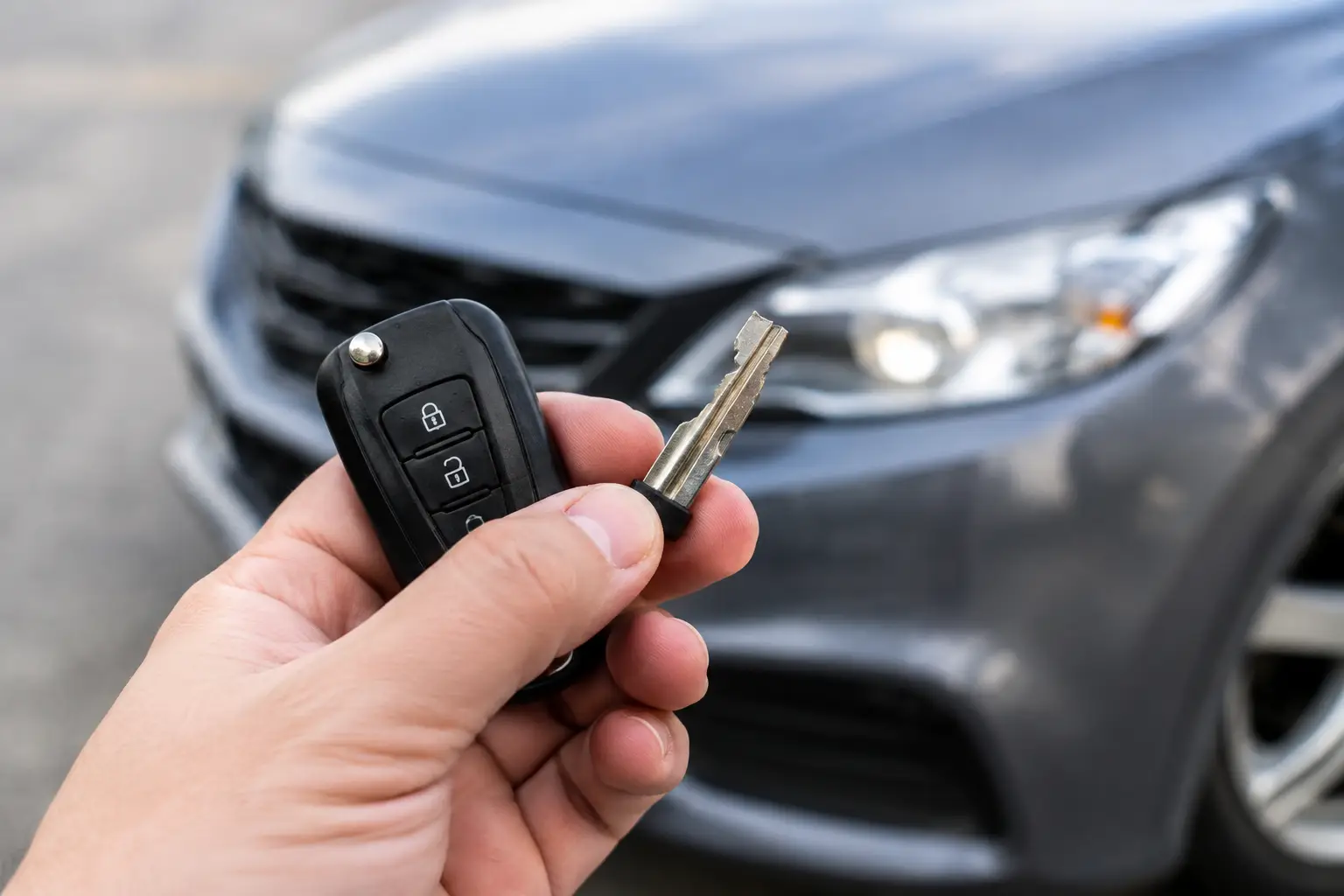
A dead key fob battery does not always mean you are locked out for good. Many fobs contain an emergency mechanical key hidden inside the case. On some vehicles, the door lock is visible. On others, it is hidden behind a small cover on the handle.
If you have never used that emergency key, this is the time to check the owner information for your vehicle and use a gentle hand. Forcing a cover off with the wrong tool can mark the handle or snap a clip. If the emergency key turns but nothing happens, the lock may be stiff from lack of use rather than fully failed.
If the fob has power issues and the car uses push-to-start, there is often an emergency start procedure that lets the car read the transponder when the fob is held close to a marked area. That will not help if the keys are inside the locked car, but it does matter when the real problem is a non-responsive fob rather than a true lockout.
Why breaking in is almost never the cheaper option
Smashing a window sounds fast when you are stressed, but it is usually the most expensive path unless there is an immediate emergency involving a child, vulnerable person, or animal in danger. Even then, call emergency services first and explain the situation.
Outside of urgent safety cases, a broken window creates far more trouble than a lockout. You are paying for glass, cleanup, possible regulator damage, temporary security issues, and time off the road. There is also the chance of injuring yourself during the break or while clearing shards from the interior.
In most standard lockouts, professional non-destructive entry is the more sensible move financially and practically.
Choosing the right help for a car lockout
If you need help fast, ask whether the locksmith specializes in vehicles, not just locks in general. Ask if they offer non-destructive entry, whether they work on modern transponder and proximity systems, and what happens if the car cannot be opened on site.
A serious auto locksmith should be clear about the process and realistic about the situation. Some lockouts are straightforward. Others involve failed central locking, damaged keys, or security faults that need diagnosis after entry. Clear answers matter when you are stranded and watching the clock.
For drivers who want a practical, damage-free solution, this is where a specialist service like Auto Locksmith Doctor Ltd makes sense – fast response, vehicle-specific access methods, and no nonsense when you need your car open without creating a second problem.
What to do while you wait
Stay with the vehicle if it is safe to do so. Check your exact location, keep your phone charged, and have the make, model, year, and issue ready. If the keys are visible, note where they are inside the car. That can affect the entry method.
If the weather is poor or you are stopped in an unsafe place, move yourself to safety first. The car can be dealt with once you are out of harm’s way. If children or pets are locked inside and there is any risk from heat, cold, or distress, treat it as urgent and call emergency services immediately.
Most lockouts feel worse in the moment than they are. The key is not to turn a stressful situation into bodywork damage, broken trim, or a costly repair by trying the wrong trick from memory. The best result is simple: get back into your vehicle safely, keep the car intact, and get on with your day.

Related Posts