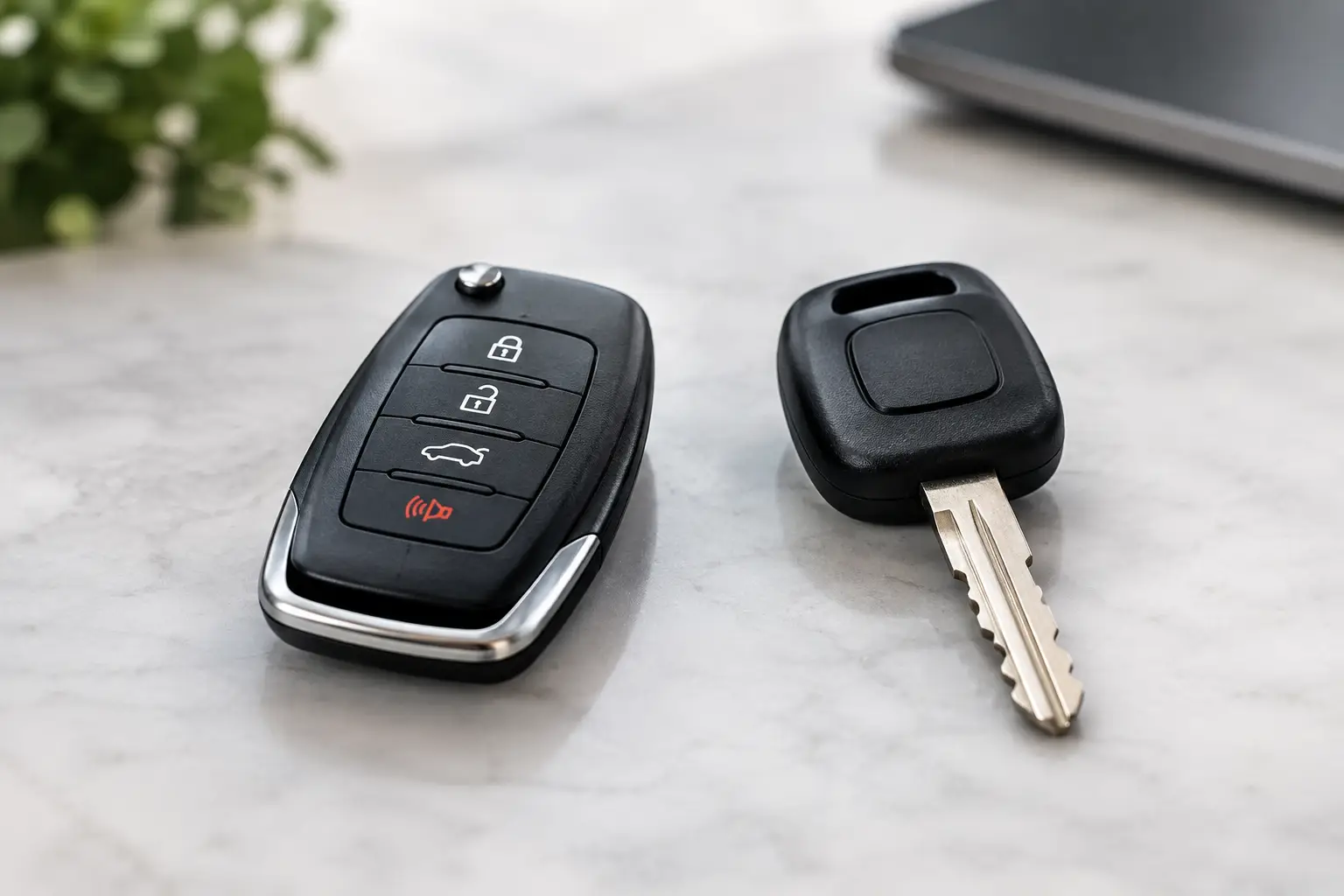
Smart key versus transponder key: learn how each works, what fails, replacement costs and when a Glasgow auto locksmith can get you moving again quickly.
Central Locking Not Working Car? Do This
You press the remote, hear nothing, and suddenly a normal day turns into a hassle. If your central locking not working car problem has left you stuck outside, unable to secure the vehicle, or worried the alarm and immobilizer are acting up too, the key thing is not to force anything. Most central locking faults have a clear cause, and the right fix depends on whether the issue is with the key, the battery, the door lock, or the car’s control system.
What a central locking fault usually looks like
Not every central locking problem behaves the same way, and that matters. On some cars, none of the doors respond. On others, the driver’s door works with the key but the remote does nothing. You might also see one door refusing to lock, the trunk staying shut while the rest of the car opens, or the locks cycling up and down by themselves.
Those details help narrow the fault quickly. If every door has stopped responding at once, the problem is often with the key fob battery, a blown fuse, a vehicle battery issue, or a control module fault. If only one door is affected, the issue is more likely a failed actuator, damaged wiring in that door, or a worn lock mechanism.
Central locking not working car – start with the simple checks
Before assuming the worst, check the basics. A weak car battery can cause strange locking behavior, especially on vehicles with proximity keys, alarm systems, and body control modules that are sensitive to voltage drops. If the car has been sitting, struggling to start, or showing dim lights, low battery voltage may be part of the problem.
Next, try your spare key if you have one. This is one of the fastest ways to tell whether the fault is in the vehicle or in the remote itself. If the spare works normally, your main key fob may need a battery, repair, or reprogramming.
Also try the interior lock switch if the vehicle has one. If the switch inside the car locks and unlocks the doors but the remote does not, that points strongly toward a remote or programming issue. If the interior switch also fails, the problem is more likely inside the vehicle’s locking system.
The key fob battery is a common culprit
A flat key fob battery is one of the most common reasons central locking stops working. It can happen gradually or all at once. Sometimes the remote range gets shorter first. Other times it just stops responding with no warning.
Replacing the battery is often straightforward, but it still needs care. Some fobs are easy to open and some are easy to damage if pried apart the wrong way. On a few vehicles, changing the battery can also expose an already worn shell, broken button pad, or loose internal contact.
If the battery has been replaced and the remote still does nothing, it may no longer be transmitting properly. That can mean internal circuit damage, water ingress, cracked solder joints, or failed buttons. In those cases, a new battery alone will not solve it.
When the car battery is the real issue
Drivers often focus on the remote first, but central locking depends on the vehicle having stable power. A weak or failing car battery can leave the locks sluggish, inconsistent, or fully dead. This is especially common in colder weather and on cars that are not being driven regularly.
If the vehicle will not start and the remote has stopped working at the same time, test or charge the main battery before chasing more expensive possibilities. If the battery is healthy but the locking still fails, then it makes sense to look deeper into fuses, door actuators, or electronic faults.
One door not locking or unlocking
When just one door is playing up, the most likely cause is a failed door lock actuator. This is the small electric motor or mechanism inside the door that physically moves the lock when you press the remote or interior switch. Actuators wear out, especially on older vehicles or cars that see constant daily use.
There can also be a broken wire in the door loom, usually where wiring flexes between the door and the body of the car. That kind of fault can be intermittent at first. The lock may work on dry days but fail in rain, or work when the door is in one position but not another.
A worn mechanical lock can complicate things too. If the lock barrel or latch is stiff, the actuator may not have enough force to complete the movement. That is why forcing the key or repeatedly hammering the remote button is a bad idea. It can turn a minor fault into a broken lock.
If the locks click but nothing happens
A clicking sound without proper locking or unlocking usually means the system is trying to work but the mechanism is not completing the job. That can point to a weak actuator, a jammed latch, internal wear in the lock assembly, or low voltage.
This is one of those faults where guessing can waste time and money. Replacing the remote will not help if the door hardware is binding. On the other hand, stripping the door apart is unnecessary if the real issue is just poor battery voltage. A proper diagnosis saves a lot of hassle.
Fuses, modules, and programming faults
Modern cars rely on more than a lock and a key. The central locking system may be controlled by a body control module, comfort module, smart key system, or integrated security unit. If a fuse has blown, communication has failed, or the key has lost synchronization, the car may ignore the remote completely.
Programming faults do happen, but they are not the first thing to assume. Many drivers are told they need a new key when the actual fault is in the vehicle. Others replace parts on the car when the original problem is a damaged fob. The trade-off here is simple: central locking faults can look similar from the outside, but the repair path is very different depending on what testing shows.
What not to do when your central locking stops working
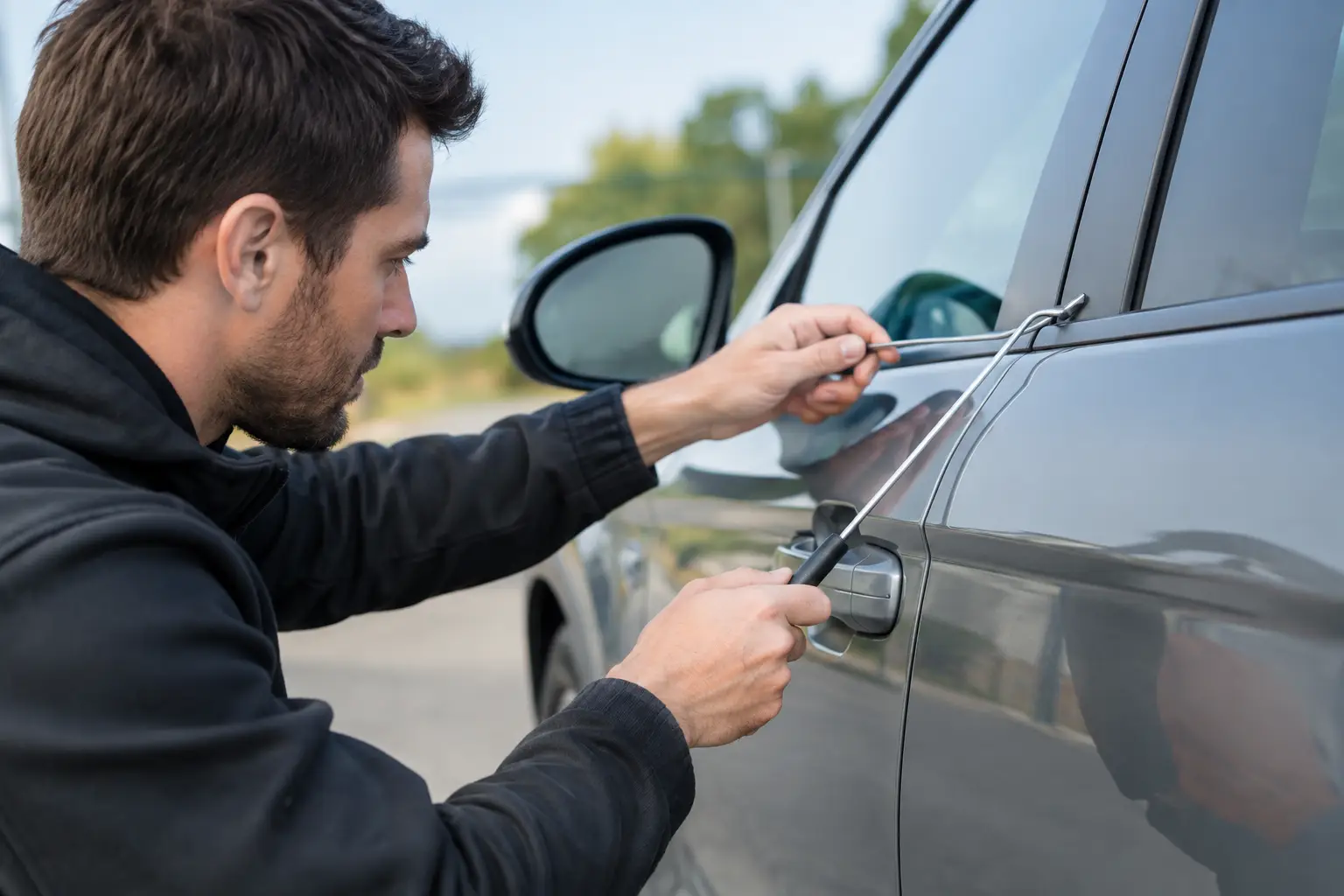
If you are locked out, frustrated, or late for work, it is tempting to force the issue. That usually makes it worse. Avoid prying at the top of the door with household tools, forcing the key in a stiff lock, or repeatedly trying the remote if the locks are cycling oddly.
You should also be careful with DIY advice that treats every car the same. Older vehicles with simple remote systems are very different from newer cars with transponder keys, proximity entry, deadlocks, and factory alarms. What works on one model can trigger extra problems on another.
When to call a specialist auto locksmith
If you have tried the spare key, checked the obvious battery issue, and the car still will not lock, unlock, or allow access, it is time to get a specialist involved. This is particularly true if the keys are inside the car, the alarm is active, one lock has failed mechanically, or the remote and manual key both stop working.
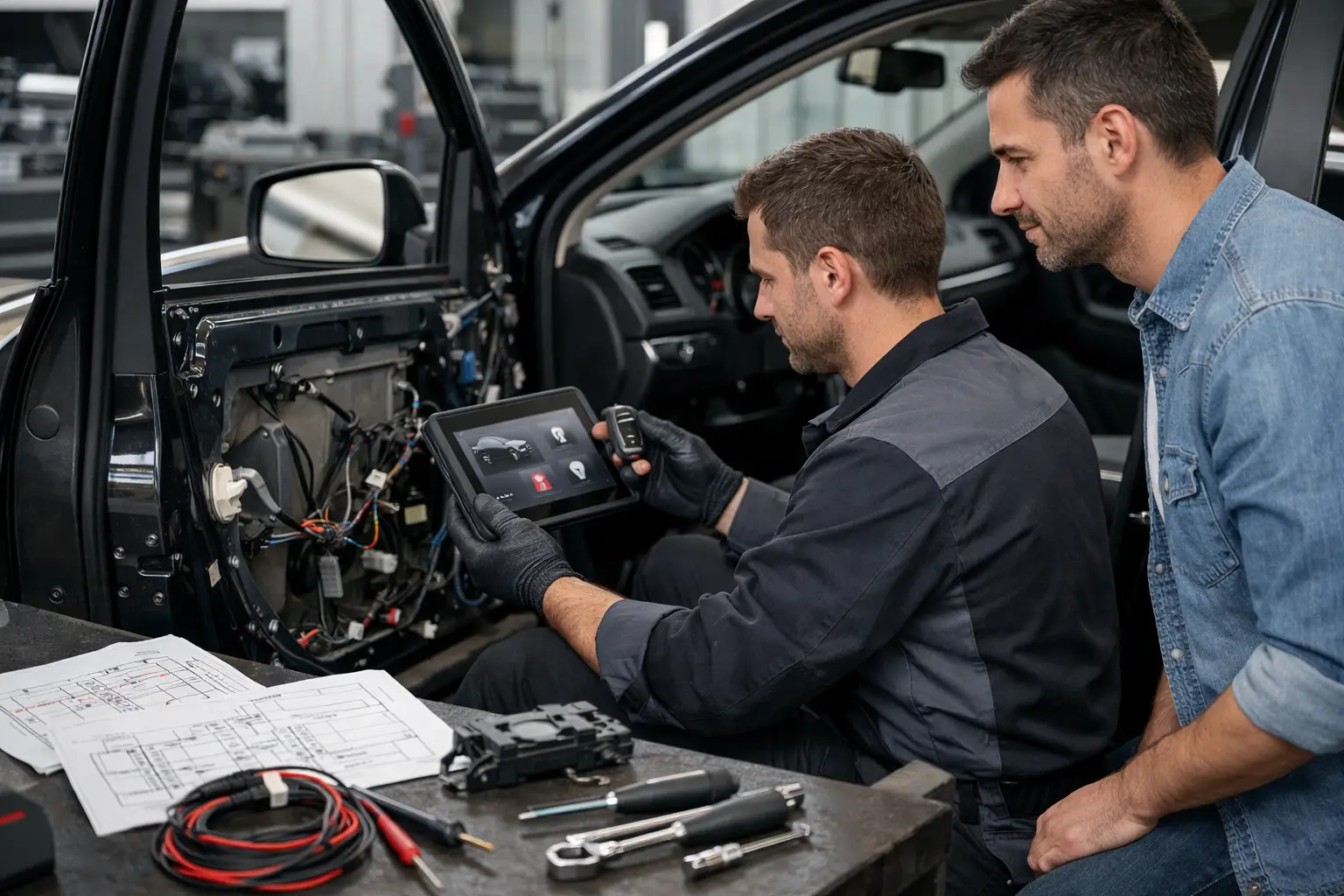
A proper automotive locksmith can do more than open the vehicle. They can assess whether the fault is the key fob, the lock itself, the actuator, the programming, or a broader vehicle-side issue. That matters because a general locksmith may handle the entry but not the electronic diagnosis.
For drivers dealing with a central locking emergency, speed matters, but so does method. Non-destructive entry is the goal. The right technician should be able to gain access without damaging trim, glass, weather seals, or the locking system wherever possible.
Why specialist help saves time and money
Central locking faults often sit between mechanical and electronic problems. That is why they can be misdiagnosed so easily. A remote may need a battery, a shell repair, or circuit board work. A vehicle may need lock decoding, key programming, or access gained first so the fault can be tested properly.
That blend of work is exactly why companies like Auto Locksmith Doctor Ltd focus specifically on vehicle locks and keys rather than general lock work. On modern cars, especially those built with coded keys and immobilizer systems, experience with auto security electronics is a real advantage.
The best next step if your car will not lock or unlock
If the fault is minor, you may only need a fob battery or a repaired key shell. If it is a failed actuator, damaged lock, or electronic issue, the repair is more involved. Either way, the best move is to avoid damage, keep the car secure if you can, and get the problem diagnosed properly rather than swapping parts at random.
If your central locking has failed and you need the car opened, secured, or checked quickly, act early. A lock fault that starts as an inconvenience can become a full lockout at the worst possible time. A calm diagnosis usually gets you back on the road faster than guesswork ever will.

Related Posts