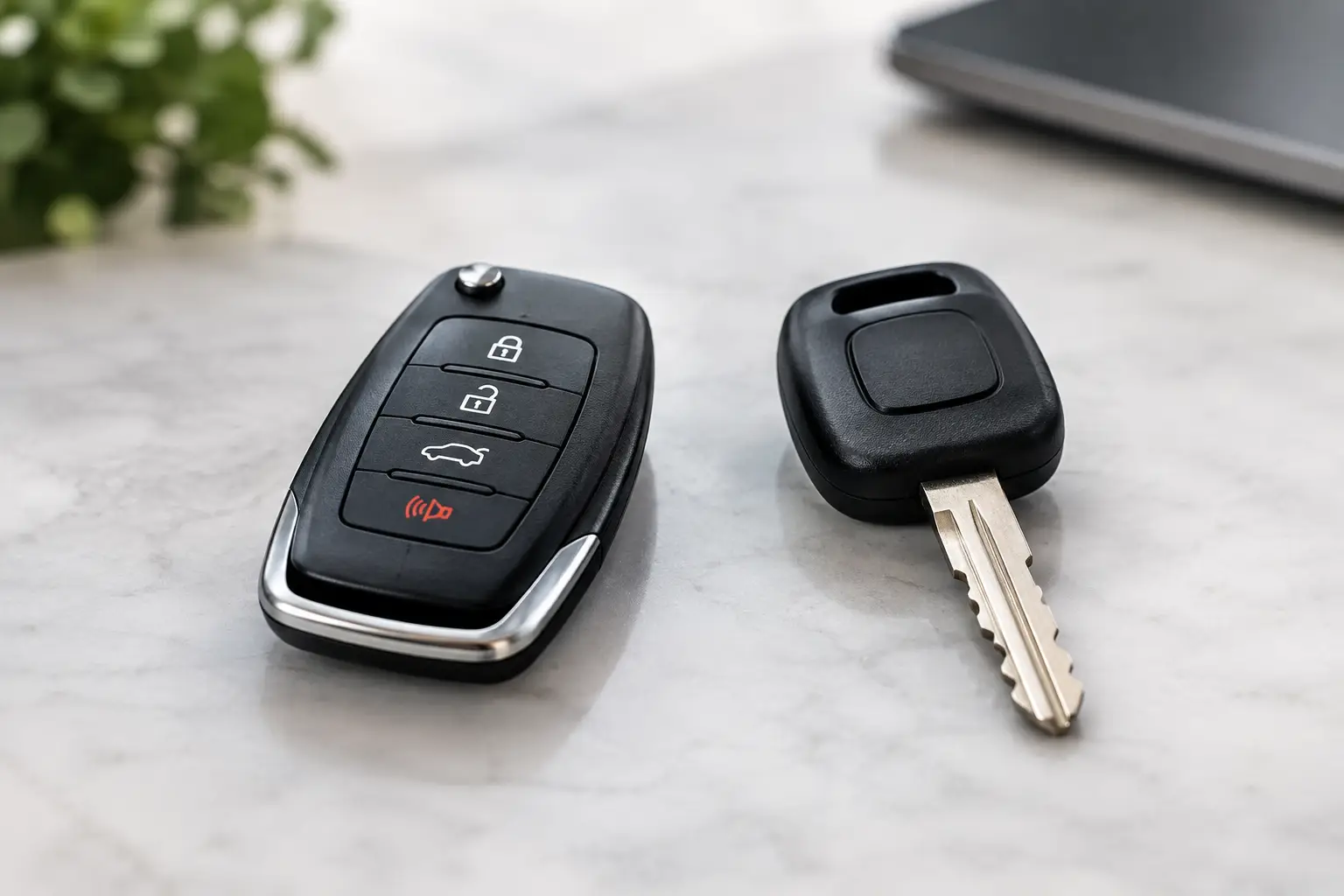
Smart key versus transponder key: learn how each works, what fails, replacement costs and when a Glasgow auto locksmith can get you moving again quickly.
Broken Car Key Extraction Done Right
A car key rarely snaps at a convenient time. It happens in the rain, outside work, on the school run, or when you are already late. When broken car key extraction is needed, the first priority is simple – get the key out without turning a bad situation into a damaged lock, a ruined ignition, or a bigger bill.
That is where people often make the mistake. They grab pliers, push the broken piece farther in, or spray the wrong product into the lock and hope for the best. Sometimes that works on an old worn door lock. On a modern vehicle, it can leave you with a jammed cylinder, a key that still needs replacing, and a car you still cannot drive.
What broken car key extraction actually involves
Broken car key extraction is the removal of a snapped key blade or key fragment from a vehicle door lock, trunk lock, or ignition without damaging the lock housing or the internal wafers. The method depends on where the key broke, how deep the fragment is lodged, and whether the vehicle uses a purely mechanical key or a transponder-equipped key with an immobilizer system.
On older cars, the problem may be limited to the metal blade. On newer vehicles, the broken key can be part of a more complex issue involving a worn remote head, a failed flip key hinge, or a transponder chip that still needs to be paired to the car. Getting the metal piece out is only part of the job if the vehicle still needs a properly cut and programmed replacement key before it will start.
Why car keys break in the first place
Most broken keys do not fail without warning. They weaken over time. A key blade can wear down from years of use, especially if the lock itself has started sticking. Drivers also put extra stress on keys by twisting too hard, using the key as a handle, or carrying heavy keychains that pull on the ignition while driving.
Cold weather can make things worse. A stiff lock combined with a brittle, worn key is a poor combination. Dirt inside the lock, a damaged ignition cylinder, or a key that has already bent slightly can all increase the chance of a snap. Flip keys are another common trouble spot because the hinge mechanism can loosen, making the blade wobble and take uneven force.
If the key broke while turning in the ignition, the ignition may already be worn. If it broke while unlocking the door, the lock cylinder may be binding. That matters, because proper broken car key extraction should deal with the cause as well as the broken fragment. Otherwise, the replacement key may snap too.
What not to do when a key snaps
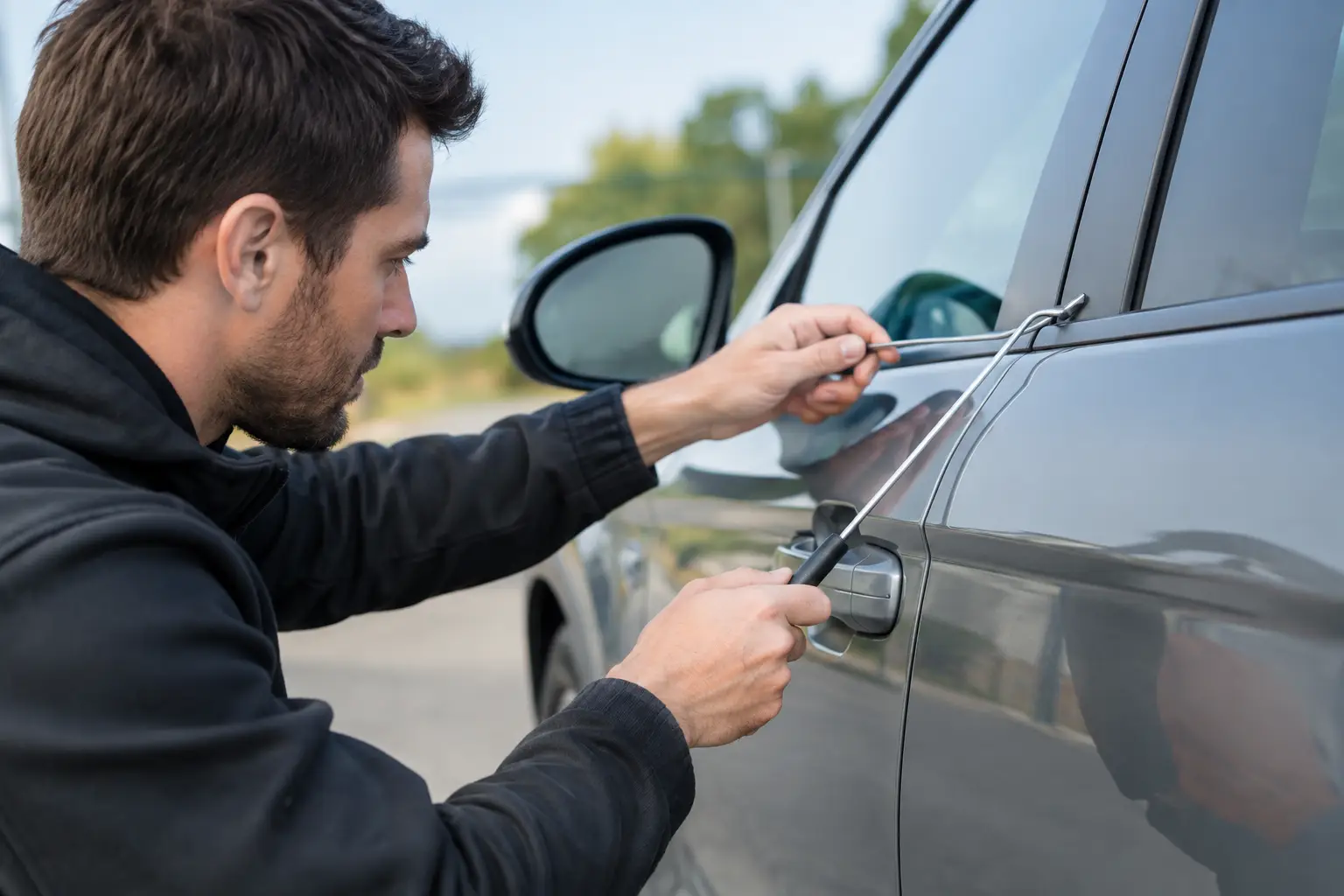
The biggest problem after a key breaks is panic. People want the car open or running again immediately, and that leads to rushed decisions. If part of the key is still visible, it is tempting to pull hard with household pliers. The trouble is that pliers usually do not grip evenly, and they can push the key deeper or twist the lock components out of alignment.
Super glue is another bad idea. It sounds clever in theory – stick the broken half back on and pull it out. In practice, glue often spreads into the lock and bonds moving parts together. That turns a straightforward extraction into a lock repair or lock replacement job.
Needles, paper clips, and kitchen tweezers are no better in most cases. Car locks have tight tolerances. Improvised tools can scratch the inside of the lock, bend wafers, or wedge the key fragment tighter. If the key has snapped in the ignition, forcing the cylinder can also damage the steering lock or ignition assembly.
When a DIY attempt might work
There are limited cases where a careful driver can remove the broken piece. If the key snapped near the outer edge of a door lock, the car is stationary, and part of the blade is clearly protruding, a steady pull with a proper extraction tool may work. The key point is proper tool, not random household item.
Even then, it depends on whether the lock is under tension. If the key broke while twisted, the lock may be binding the fragment in place. Pulling harder will not solve that. It often takes controlled manipulation of the lock position before the fragment can be removed cleanly.
If nothing is sticking out, if the key is in the ignition, or if the vehicle is a newer model with a coded key and push-button or proximity system, it is usually smarter to stop before more damage is done.
How a specialist handles broken car key extraction
A proper automotive locksmith starts by checking exactly where the key has broken and whether the lock itself is still serviceable. The extraction method changes depending on the vehicle and the fault. In a door lock, the goal is to remove the fragment without scoring the cylinder. In an ignition, the job is more delicate because there is less room and more risk if the cylinder is forced.
Specialist extraction tools are designed to slide alongside the keyway and catch the grooves of the broken blade. The lock may also need to be eased back to a neutral position so the fragment can be released. That is the difference between a clean extraction and a damaged lock.
Once the broken piece is out, the next step is just as important. The locksmith checks whether the original key failed because it was simply old, or because the lock is worn internally. If the lock is sticking, cutting a fresh key alone may not be enough. The vehicle may need lock servicing, ignition repair, or a replacement shell if the remote head has broken away from the blade.
Broken car key extraction in modern vehicles
Modern cars add another layer to the problem. Many keys built after the mid-1990s contain a transponder chip. That chip communicates with the immobilizer and allows the engine to start. So even if the broken blade is removed, the car still may not run until a new key is cut and programmed correctly.
This is where general locksmith experience and automotive locksmith experience are not the same thing. Vehicle keys are not just pieces of metal anymore. There are remote locking systems, proximity fobs, integrated chips, and vehicle-specific security procedures. If the extraction is handled well but the replacement key is not programmed properly, the driver is still stranded.
That is why a specialist will usually treat the problem as one job, not two separate ones. Extract the broken key, inspect the lock, cut the new key, program the chip if needed, and confirm the replacement works in the door, trunk, and ignition before the job is finished.
Why damage-free work matters
A snapped key is stressful enough. The last thing any driver needs is scratched trim, a drilled lock, or an ignition barrel that now needs replacing. Damage-free methods matter because the cost difference can be significant.
A simple extraction and replacement key is one level of repair. A damaged door lock, steering column issue, or failed ignition housing is another. Cutting corners to save a few minutes can turn a roadside fix into a workshop job. For busy drivers, tradespeople, and families who need the car back on the road quickly, that delay matters as much as the money.
This is also why local response matters. If you are stuck at home, at work, or in a parking lot, you want someone who can come out with the right tools and the right key equipment on board. Auto Locksmith Doctor Ltd handles exactly these situations with on-site service, practical diagnostics, and a focus on opening and repairing vehicles without unnecessary damage.
When you should call right away
If the key has broken off flush inside the lock, if it snapped in the ignition, if the steering is locked, or if you drive a vehicle with a transponder or proximity key, it makes sense to call for help straight away. The same goes if you have already tried to remove it and the fragment has disappeared deeper into the cylinder.
Time matters, but so does restraint. The sooner the problem is assessed properly, the better the chance of a straightforward extraction and fast replacement. Waiting too long with a damaged lock can also make the next failure more likely, especially if the spare key is worn as well.
A snapped key feels dramatic, but it is usually a fixable roadside problem when handled properly. The smart move is not to fight the lock. Protect it, get the fragment removed cleanly, and make sure the replacement key is cut and programmed to work the first time. That gets you back behind the wheel with less hassle and less risk of the same problem happening again.

Related Posts