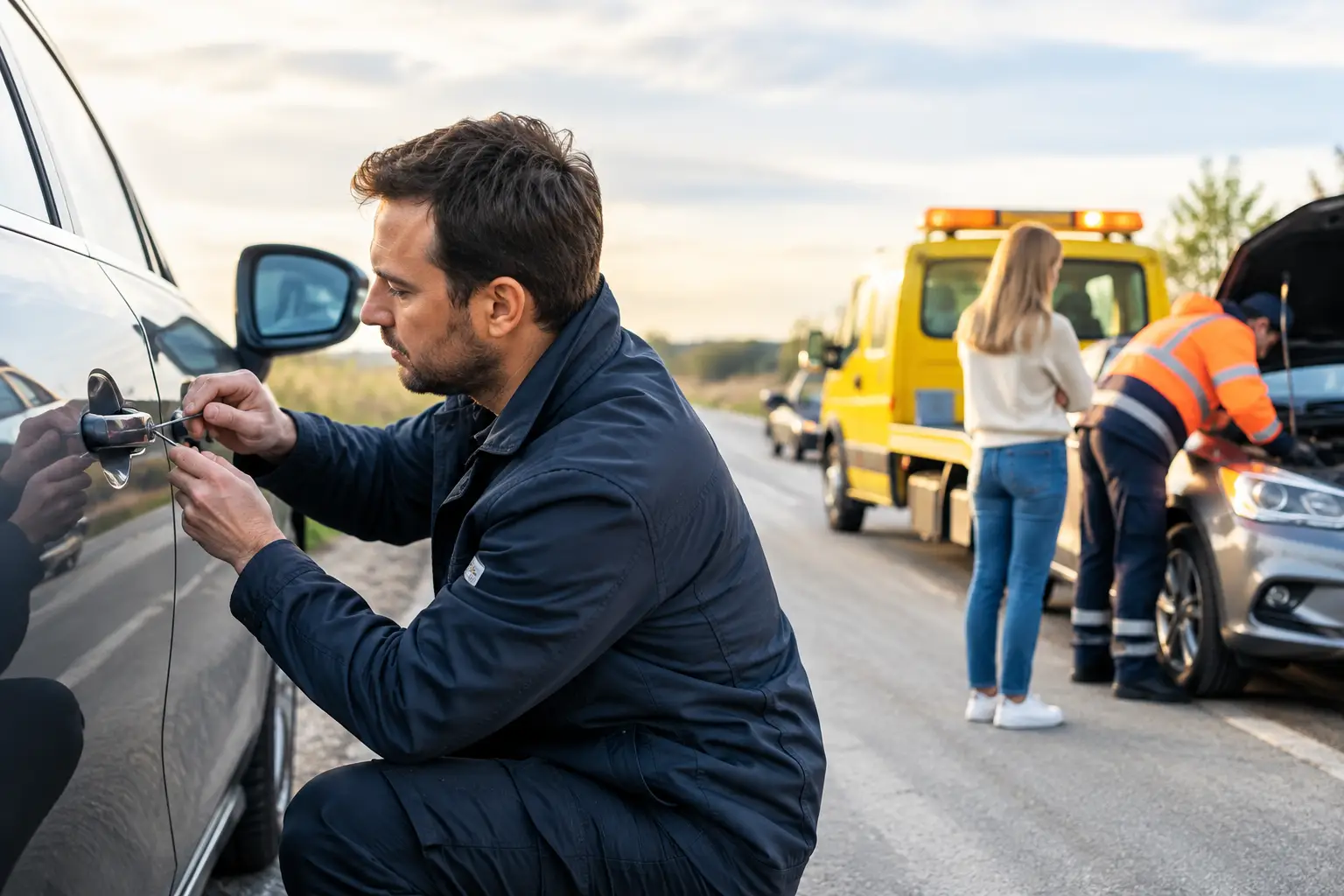
Roadside locksmith versus breakdown cover: know who to call for vehicle lockouts, lost keys and key faults across West Central Scotland, without delay.
How to Reprogram a Car Key Fob Safely
A key fob that suddenly stops locking the doors can feel like the start of an expensive problem. Sometimes it is only a flat battery or a lost synchronisation. Other times, the vehicle has rejected the key’s electronic identity and will not start at all. Knowing how to reprogram a car key fob begins with understanding which of those faults you actually have.
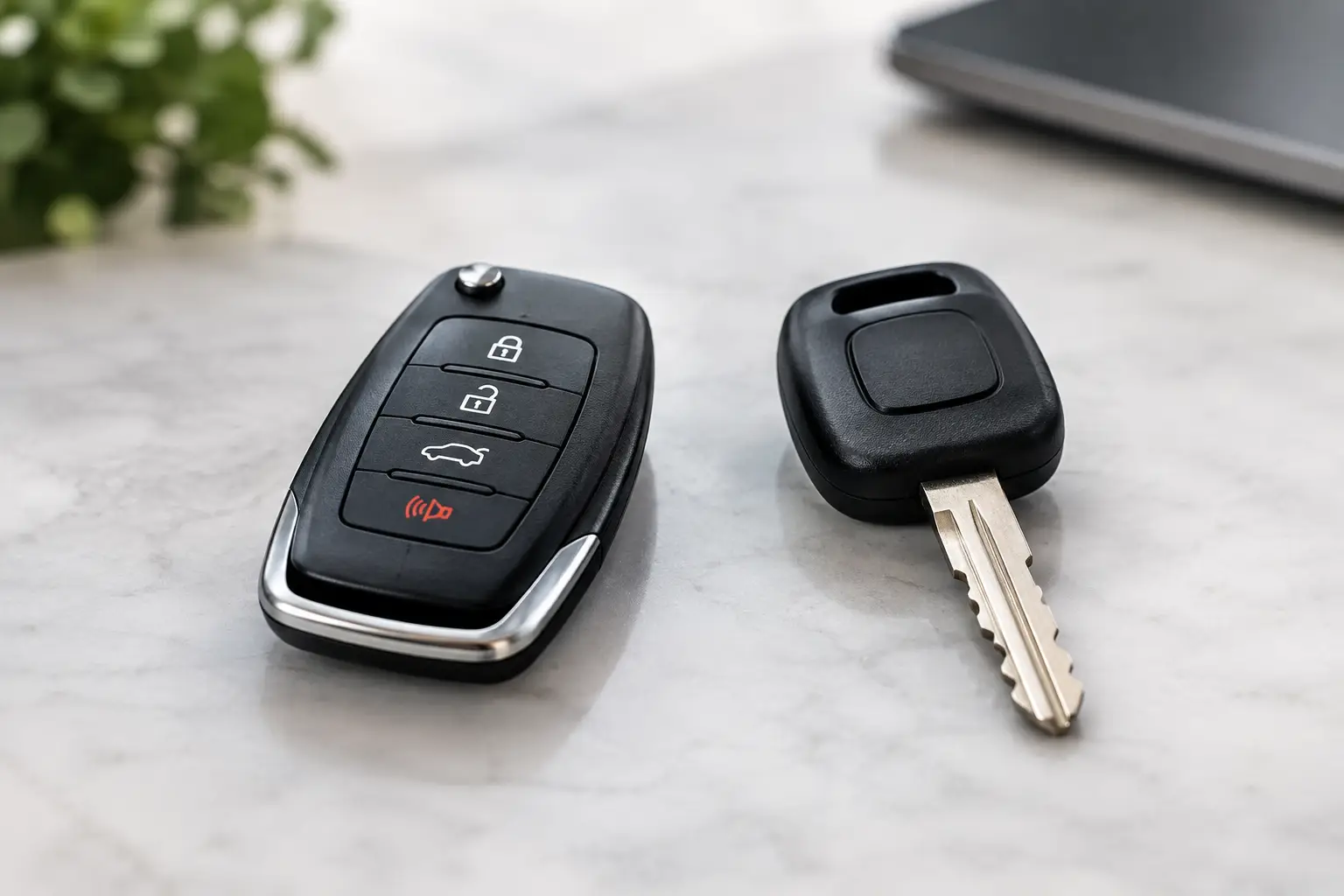
Do not assume every non-working fob needs full programming. Modern car keys often perform two separate jobs: the remote buttons operate central locking, while a transponder chip or proximity system communicates with the immobiliser. You may be able to restore the buttons yourself, but an immobiliser fault normally needs specialist diagnostic equipment and the correct security access.
First, identify what has stopped working
Try the spare key if you have one. This is the quickest way to narrow down the fault. If the spare locks, unlocks and starts the car normally, the issue is likely to be with the original fob, its battery, buttons, circuit board or programming. If neither key works, the fault may be with the vehicle battery, central locking system, aerial, receiver or immobiliser.
Pay attention to the symptoms. A fob that will not lock or unlock the car but still starts the engine may simply have lost remote synchronisation. A key that opens the car manually but leaves an immobiliser warning light on, or starts the engine briefly before it cuts out, is a different matter. That points towards the transponder or key programming side of the system.
On keyless vehicles, a warning such as “key not detected” can also be caused by a weak fob battery. Before treating it as a programming failure, try holding the fob against the designated emergency start point. Its position varies by manufacturer, but it may be near the steering column, centre console or start button.
Check the simple causes before reprogramming
Start with the coin-cell battery inside the fob. Use the battery type printed on the old cell or inside the casing, and fit a quality replacement the right way round. Avoid forcing the shell apart with a large screwdriver, as it is easy to crack the casing, damage the circuit board or lose the small transponder chip fitted in some keys.
After changing the battery, stand close to the car and test every button. Check that the buttons feel positive rather than soft, stuck or loose. If the fob works only when pressed very hard, or only at very close range, the issue may be a worn microswitch, damaged solder joint or failing circuit board rather than lost programming.
Also check the car battery if the central locking has become unreliable after the vehicle has been standing. Low vehicle voltage can cause strange electrical behaviour, including remote locking faults and immobiliser warnings. Repeatedly trying to programme a key on a weak battery can make diagnosis harder.
How to reprogram a car key fob for remote locking
Some older vehicles allow the remote locking portion of the fob to be synchronised from inside the car. The usual process involves using the ignition and pressing one or more fob buttons within a short time window. There is no single method that suits every make, model or year, so use the procedure in your vehicle handbook where one is provided.
The general approach is straightforward. Sit in the vehicle with all doors shut, use the ignition sequence specified by the manufacturer, then press the required remote button or button combination. The doors may cycle to confirm that the vehicle has accepted the fob. Test the remote outside the car once you have finished.
A few important points apply:
- Follow the manufacturer’s sequence exactly. One missed step or a delay of a few seconds can stop the process from working.
- Keep every working remote fob with you. On some cars, entering programming mode can require all remotes to be programmed again during the same session.
- Do not rely on a random procedure found for a similar-looking car. The same model can use different systems across production years.
- If the fob will not synchronise after a fresh battery and the correct procedure, stop rather than repeatedly cycling the ignition.
Remote resynchronisation does not usually add a new key to the immobiliser. It only restores communication between the fob buttons and the car’s locking system. That distinction can save a lot of wasted time.
When you need immobiliser or transponder programming
If the engine will not start with the key, the job may involve programming the transponder chip, smart key or proximity key to the vehicle. This is common after losing all keys, buying an additional key, replacing a damaged key, or fitting a replacement electronic module.
Post-1995 vehicles commonly use an immobiliser. The car checks the electronic code in the key before allowing the engine to run. Cutting the metal blade correctly is not enough. A key can turn in the ignition and still fail to start the car because its transponder has not been coded or has been coded incorrectly.
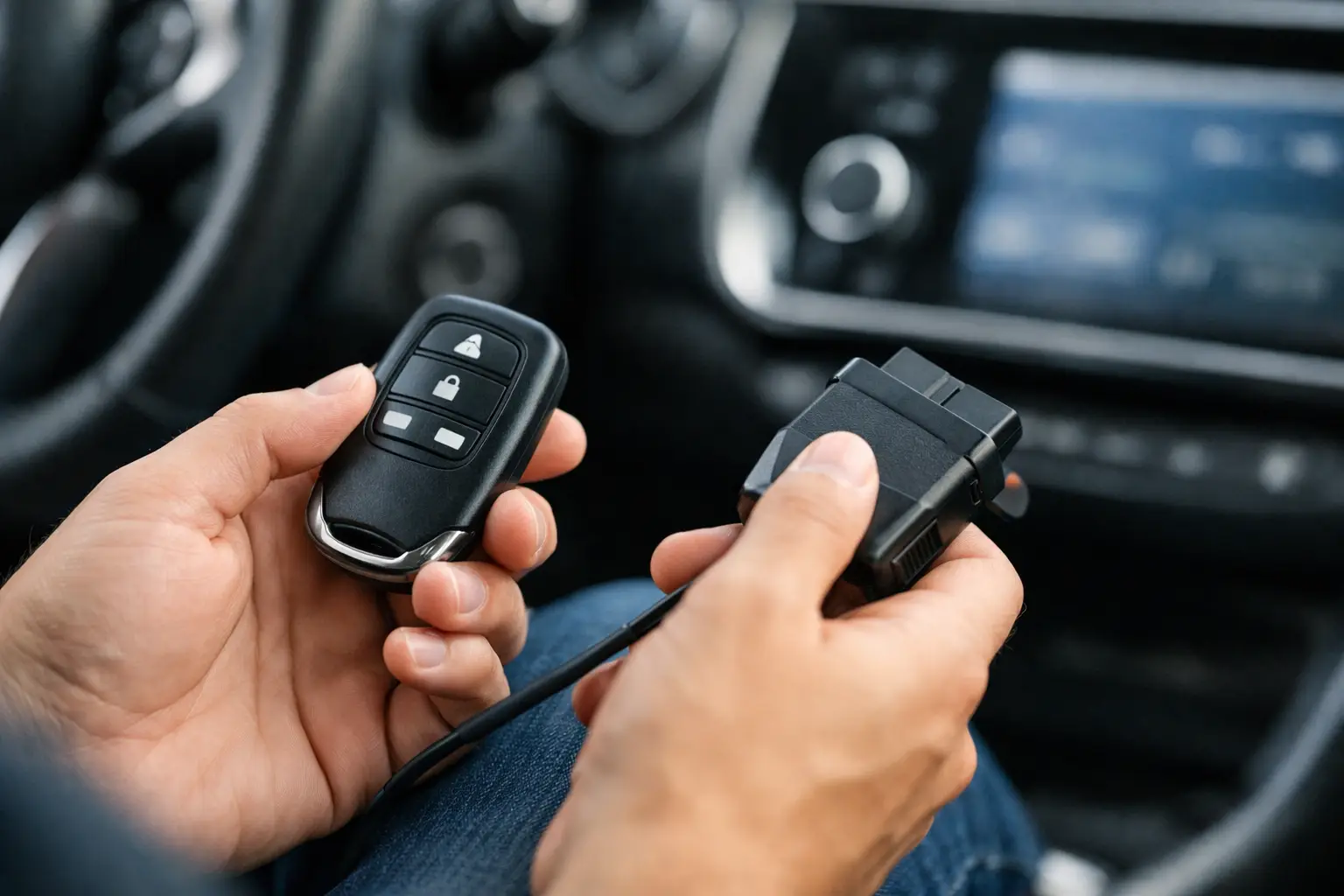
This work is vehicle-specific and may require specialist equipment, security data and diagnostic access. Some vehicles can accept an additional key through an owner procedure if an existing working key is present. Others require dealer-level tools, a programmed remote and access to the vehicle’s security system. Certain newer models also have online security protections, so there is no honest universal DIY shortcut.
Be careful with cheap replacement fobs. A fob may look identical but have the wrong frequency, an incompatible circuit board, a poor-quality chip or no usable transponder at all. Used keys can be especially troublesome because many are locked to the original vehicle and cannot be transferred. Buying the cheapest item first can mean paying twice once the key fails to programme.
Signs the problem is not programming
A key fob repair may be the sensible answer where the electronics are sound but the shell, buttons or blade are damaged. Cracked key cases, loose blades and worn buttons are common, particularly on keys carried with heavy keyrings. Replacing the shell can protect the circuit board and transponder without changing the coding, provided the components are moved carefully.
Water damage is less predictable. A fob that has been through the wash may work again temporarily, then fail weeks later as corrosion develops on the board. Do not keep pressing the buttons or repeatedly insert a wet key into the ignition. Remove the battery where possible and have it assessed before a minor fault becomes a complete key failure.
If the locks do not respond to either fob but work from the switch inside the car, the remote receiver, wiring or body control module could be at fault. If one door does not lock while the others do, the likely issue is the door lock actuator, not the key. A proper diagnosis matters because programming a perfectly good fob will not repair a mechanical or electrical fault in the vehicle.
When to call a specialist car locksmith
Call for specialist help if you have no working key, the car is immobilised, the fob has been lost, or the remote procedure has failed after basic checks. An automotive locksmith can test the key, read fault information where appropriate, cut a replacement blade and programme compatible transponder or remote systems on site for many vehicles.
For drivers across Glasgow, Cumbernauld, Paisley, Ayrshire and Greenock, Auto Locksmith Doctor Ltd deals with the practical side of these faults: replacement car keys, transponder programming, damaged fob shells, non-destructive entry and lost-key situations. Proof of ownership and identification will normally be required before security work is carried out. That protects you and the vehicle.
Avoid forcing a door, smashing a window or trying to bypass the ignition when a key has failed. Those choices often turn a key problem into a much larger repair bill. If the vehicle is in a safe place, keep the working or faulty fob dry, bring any spare key you have, and make a note of the registration, make, model and year. The right diagnosis is usually faster than guessing, and it gets you back on the road with a key you can rely on.

Related Posts