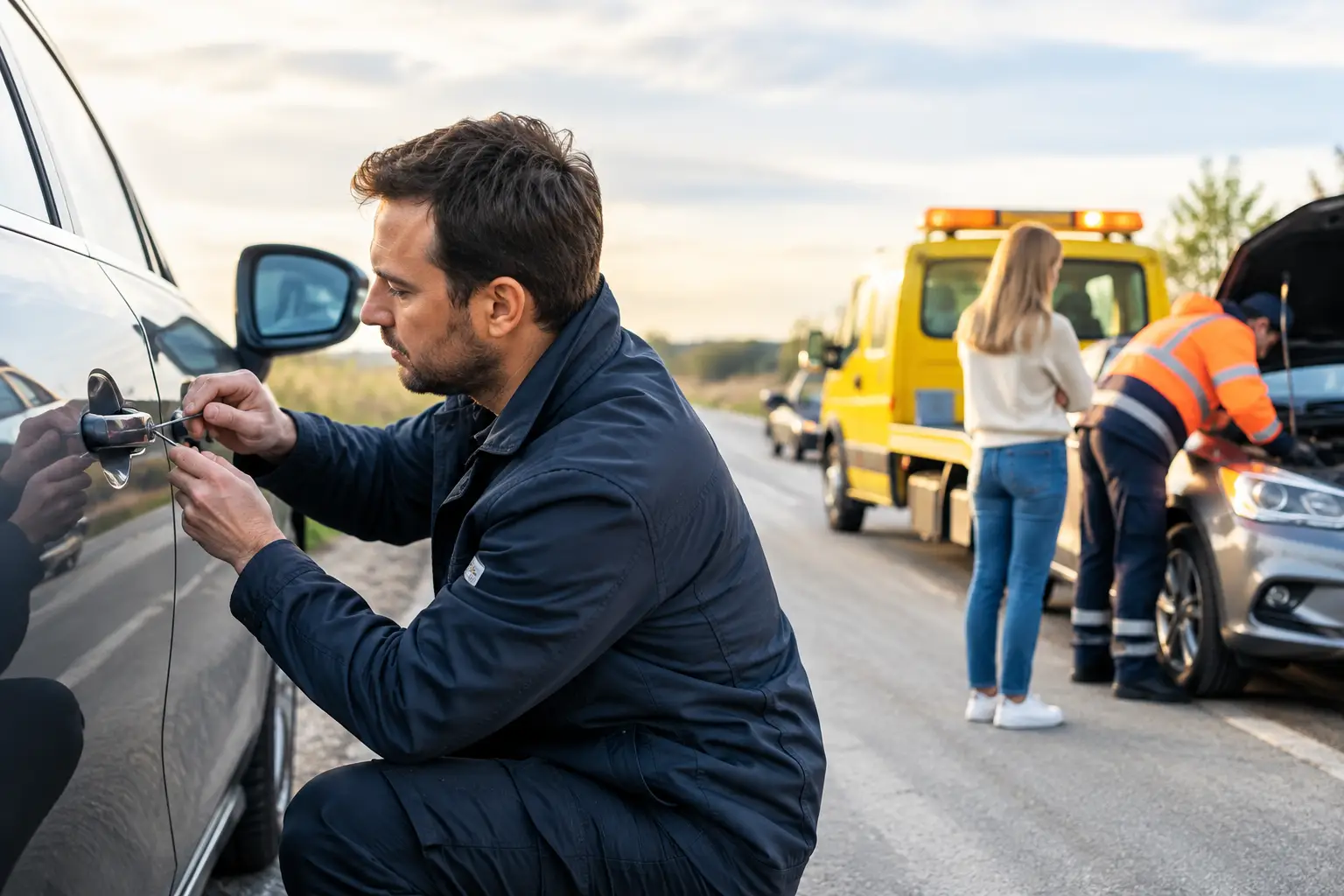
Roadside locksmith versus breakdown cover: know who to call for vehicle lockouts, lost keys and key faults across West Central Scotland, without delay.
Why Is My Car Key Not Detected? Common Causes
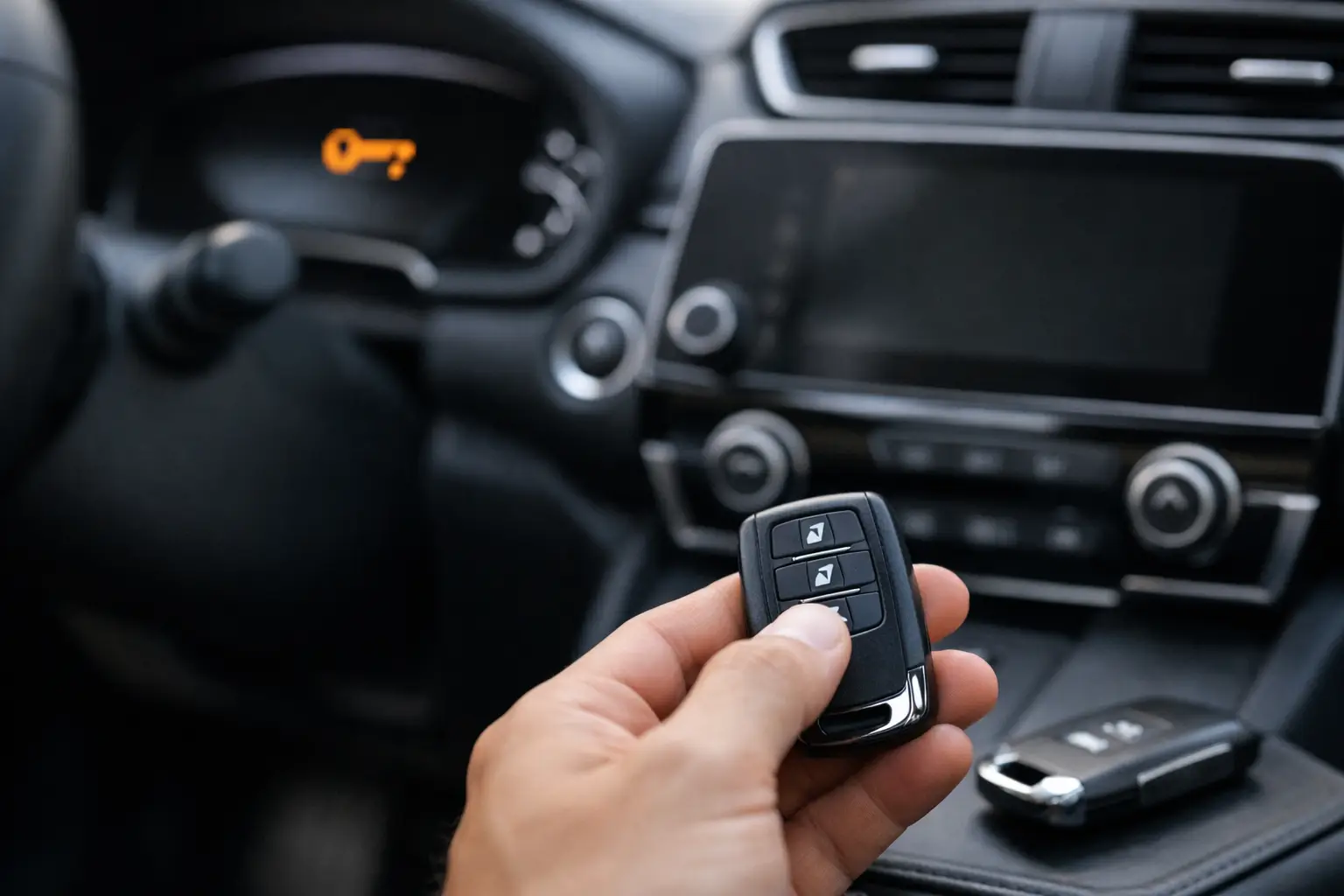
Your dashboard says “Key Not Detected”, the start button does nothing, and you are left sitting in a car that was working perfectly yesterday. If you are asking, why is my car key not detected, the fault is usually with the key fob battery, the key’s electronic chip, the vehicle’s receiver or, less commonly, the car battery. The message does not automatically mean an expensive dealer visit, but it does mean the immobiliser has not recognised an authorised key.
Modern cars are designed not to start until they receive the correct coded signal. That is good for security, but it can be frustrating when a small fault leaves you unable to get to work, collect the children or finish a job. Start with a few safe checks, then call a specialist auto locksmith if the problem remains.
Why is my car key not detected?
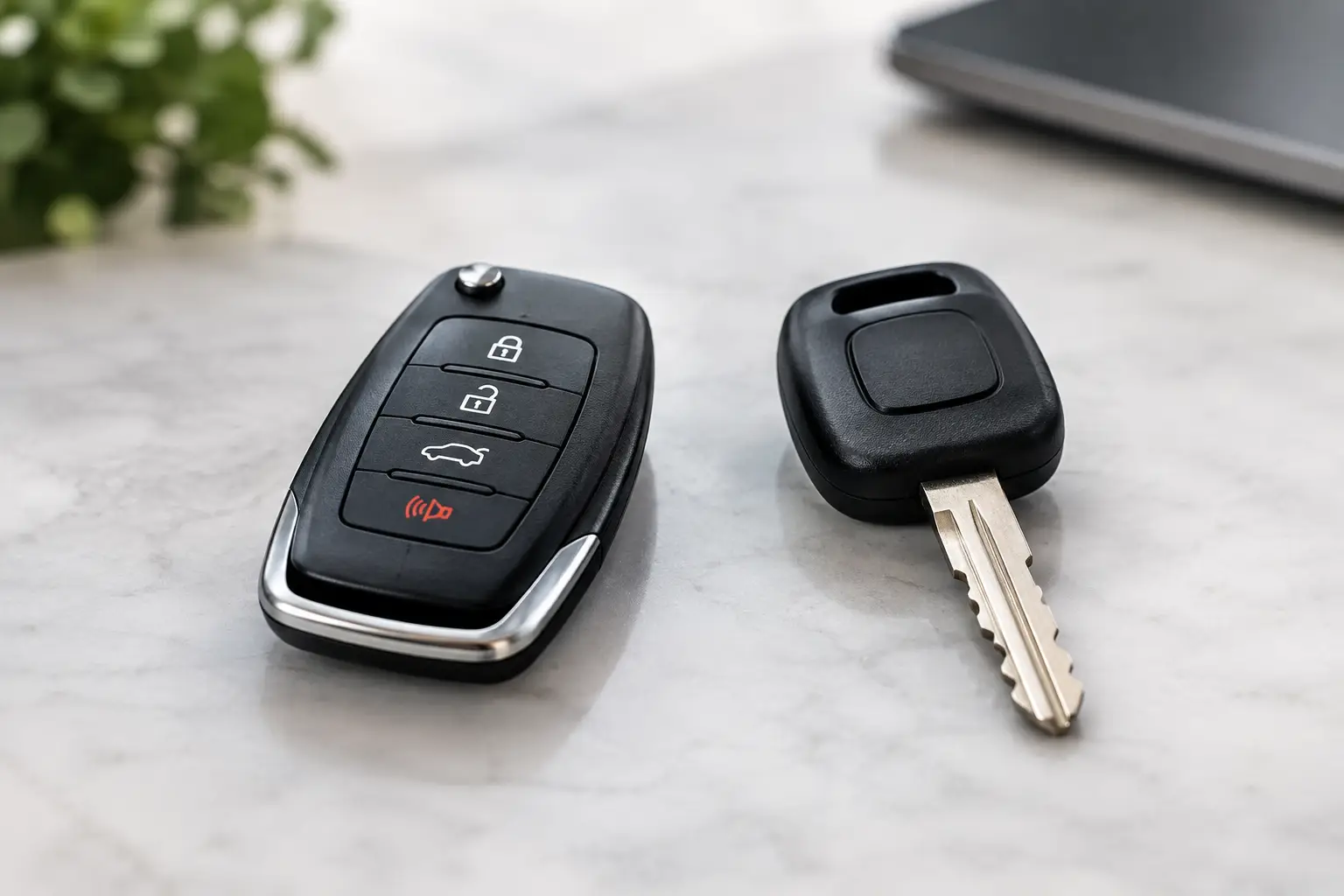
A proximity key, also called a keyless entry fob or smart key, communicates with the car over a short distance. When you press the start button or pull the door handle, the vehicle looks for the coded fob. If it cannot read that code clearly, it displays a warning and prevents the engine from starting.
The most common cause is a weak or flat fob battery. The battery may still have enough power to operate the remote locking occasionally, yet be too weak to provide a reliable signal for key detection. This is particularly common in cold weather, when battery performance drops. If the remote range has become shorter, you need to press buttons more than once, or the warning comes and goes, replace the fob battery before assuming the key has failed.
It is also possible for the fob battery to have been fitted incorrectly. Check the battery type against the marking inside the fob, make sure the positive and negative sides are the right way round, and confirm that the battery contacts are clean and firmly touching it. Do not force the casing shut, as damaged contacts can create another fault.
A flat vehicle battery can cause similar messages. The car may have enough electrical power for dashboard lights but not enough voltage for all control modules to communicate properly. Look for slow cranking, dim interior lights, multiple warning messages or central locking that has become sluggish. In that situation, the key may be fine and the vehicle battery or charging system needs attention.
A damaged or faulty key fob
Car keys take more punishment than most people realise. They get dropped on pavements, sat on, soaked in rain, left in pockets through a washing cycle and knocked around in tool bags. The plastic shell may look intact while the circuit board, aerial or battery terminals inside have been damaged.
Water damage is a frequent culprit. If the fob became wet, avoid repeatedly pressing buttons or fitting a new battery straight away. Moisture can cause corrosion or short circuits on the circuit board. Remove the battery if you can do so safely, leave the fob to dry naturally and have it inspected. Applying direct heat with a radiator, hairdryer or microwave can distort components and make a repair less likely.
Damage does not always stop the remote buttons from working. Many keys have separate functions inside one fob: remote locking, passive entry and an immobiliser transponder. A car may lock and unlock normally but still refuse to start because the transponder is not being read. Conversely, the engine may start using the emergency method while the remote buttons have failed.
A cracked key blade, worn ignition key or loose fob casing can also cause trouble on older vehicles. For cars with a traditional ignition barrel, the metal key opens and turns the lock, but the transponder chip is what allows the engine to run. Cutting a new metal blade alone will not solve an immobiliser issue unless the new key is correctly programmed.
Try the emergency start position
Most keyless cars have a backup method for a flat fob battery. The exact position varies by make and model, so check the owner’s handbook if it is available. Common locations include a marked area beside the steering column, inside the centre console, in a cup holder, or directly against the start button.
Hold the fob in the stated position, press the brake or clutch as normal and then press the start button. The car can sometimes read the transponder at close range even when the fob battery is weak. This may get you moving, but treat it as a warning rather than a permanent fix. Replace the battery promptly and keep an eye on whether the message returns.
If you have a spare key, try it. This is one of the quickest ways to narrow down the fault. If the spare starts the car, the vehicle receiver is likely working and the first key needs a battery, repair, replacement or reprogramming. If neither key is detected, the issue could be with the car battery, an antenna or receiver fault, a control module, or a programming problem affecting both keys.
Interference and where the key is kept
Electronic interference can occasionally prevent a car from seeing its key. A phone, another keyless fob, a power bank, radio equipment or certain security devices close to the key may interfere with its signal. Take the fob out of a packed bag or pocket and try again with it on its own.
The vehicle’s position can matter too. Problems can occur near strong radio sources, car park payment equipment or particular buildings, although this is not the usual cause. If the car starts normally after being moved a short distance, interference is more likely than a failed key. If the fault happens everywhere, focus on the key or vehicle system instead.
Do not store a spare keyless fob in the car. Apart from the obvious security risk, a nearby fob can sometimes confuse diagnosis and may keep certain systems awake, contributing to battery drain on some vehicles.
When the problem is the car, not the key
If a good battery and a working spare key do not resolve the warning, the car may have a fault in its key detection system. Proximity vehicles use aerials and receivers around the cabin, doors, boot area and steering column. Wiring faults, water ingress, damaged antennas and failed modules can stop the car recognising a key.
Previous electrical work can sometimes be relevant. An aftermarket alarm, stereo, dash cam, battery replacement or repair after accident damage may disturb wiring or introduce a low-voltage issue. That does not prove the work caused the fault, but it gives a technician useful information.
Some vehicles can also lose key programming after a severe flat battery, electrical surge or control-module fault. In that case, fitting another fob battery will not restore the coded relationship between key and immobiliser. The key needs proper diagnostic testing and, where appropriate, programming with suitable automotive equipment.
What not to do when your car key is not detected
Avoid turning a minor key issue into a lockout or a damaged vehicle. Do not force the ignition, lever open a door, pry apart a fob with a screwdriver, or repeatedly jump-start the vehicle without checking the battery condition. Forced entry can damage door frames, locks, weather seals and airbags, while incorrect electrical work can create costly faults.
Be cautious with cheap online replacement keys as well. A shell can be useful when the original electronics are sound, but a blank fob is not automatically ready to start your car. It may need the correct blade cut, a compatible transponder chip and programming to the vehicle. Compatibility depends on the exact make, model, year and key system, not just whether the fob looks similar.
When to call an auto locksmith
Call for specialist help if the car will not start after trying the emergency key position, replacing the fob battery correctly and testing a spare key. You should also get help if the key is lost, damaged, wet, snapped, locked inside the vehicle or giving intermittent warnings.
A specialist automotive locksmith can test the key, inspect the fob, check for transponder and immobiliser faults, cut replacement keys and programme suitable replacements on site for many vehicles. This is different from simply gaining access to the car. The aim is to get you back into the vehicle and leave you with a key that starts it reliably.
For drivers across Glasgow, Cumbernauld, Paisley, Ayrshire and Greenock, Auto Locksmith Doctor Ltd provides practical roadside help for key detection faults, lockouts and replacement car keys. Where access is needed, damage-free entry methods are used wherever possible, followed by the right checks to identify whether the fault is the key or the vehicle.
If the warning appears once and disappears after a new battery, keep the spare key somewhere safe and monitor it. If it returns, do not wait until you are stranded outside the house, at the shops or on a job. Getting the key checked early is usually simpler, quicker and less disruptive than dealing with a complete no-start later.

Related Posts