Does key cutting require original keys? Learn when a locksmith can cut a replacement from a code, lock or spare, including modern car keys. Fast.
Transponder Key Not Starting Car? Fix It Fast
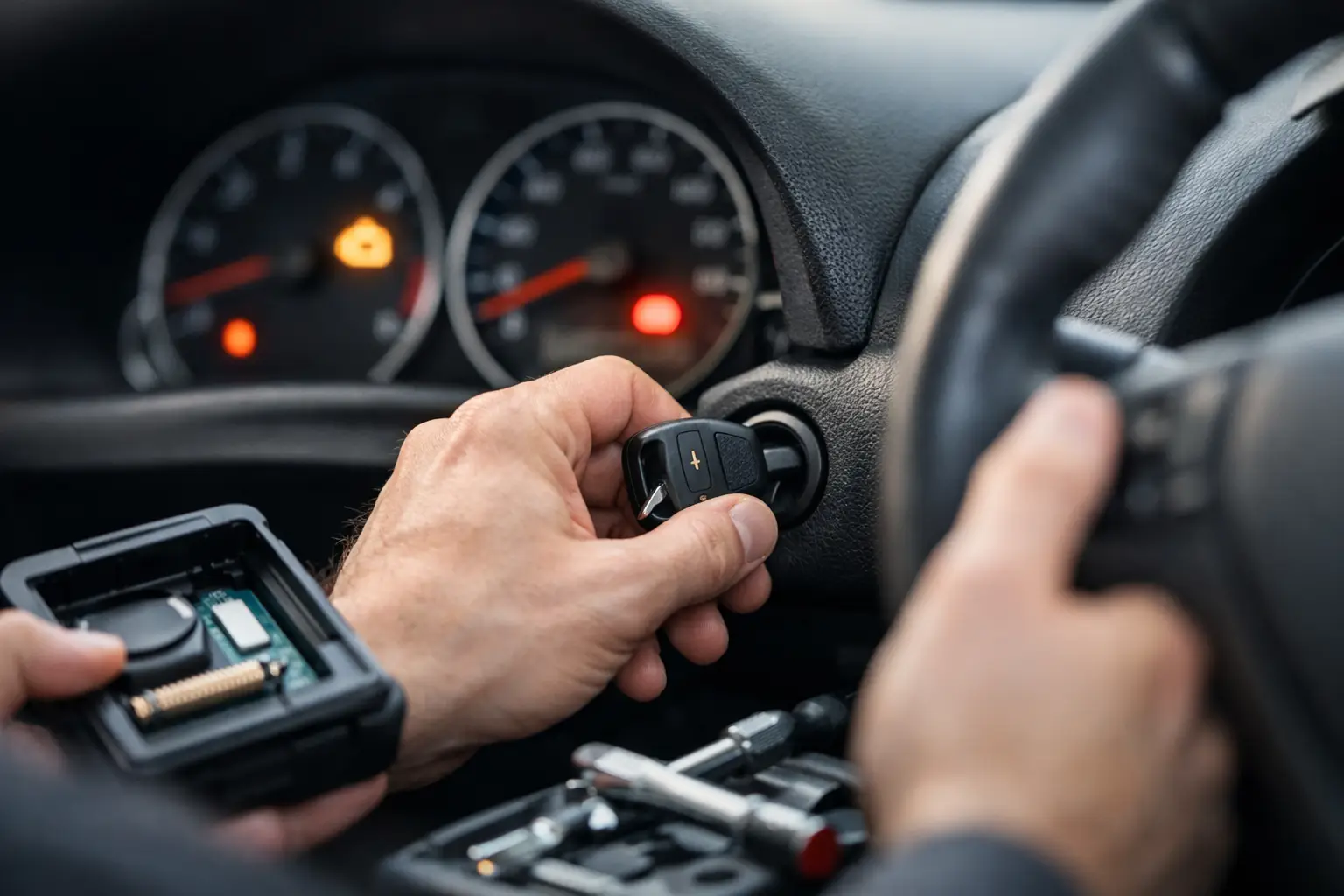
You turn the key, the dash wakes up, maybe the engine cranks, and then nothing happens. If your transponder key not starting car problem has appeared out of nowhere, the issue is often not the metal blade at all. It is usually the chip inside the key, the car’s immobilizer system, or a fault in how the vehicle is reading the key.
That matters because a transponder problem is different from a flat battery, a worn starter, or a fuel issue. Modern vehicles are designed to stop the engine from starting unless the correct coded key is recognized. So even when the key fits and turns normally, the car can still block ignition. The good news is that some causes are simple. Others need specialist programming, but they can usually be sorted without guesswork or damage.
Why a transponder key is not starting the car
A transponder key has a small chip inside it. When you insert the key and turn it, the vehicle’s immobilizer sends out a signal. If the chip replies with the right code, the car allows the engine to start. If not, the immobilizer keeps the vehicle disabled.
This is why two keys can look identical but behave very differently. One may unlock the doors and turn in the ignition, yet still fail to start the engine because the chip is missing, damaged, unprogrammed, or no longer being read properly.
In practical terms, there are a few common reasons this happens. The key may have taken a drop and cracked internally. The transponder chip may have come loose after a worn shell started shifting. The vehicle may have lost synchronization with the key after battery issues or electrical faults. In some cases, the antenna ring around the ignition barrel is the real problem, because it is not detecting the chip signal at all.
Common signs of a transponder key not starting car issue
The symptoms are usually fairly specific once you know what to look for. The engine may crank but not fire. It may start for a second and cut out. You may also see a security or immobilizer light flashing on the dashboard.
Sometimes the remote buttons still work but the car will not start. That throws people off, but remote locking and transponder authorization are often separate functions. A working fob does not always mean the chip is being accepted by the immobilizer.
You might also notice the opposite. The key starts the car, but only after several tries or after you hold it in a certain position. That can point to a weak transponder read, a damaged key shell, wear in the ignition area, or a problem with the receiver ring.
What you can try before calling for help
Start with the basics, because not every no-start problem is a failed transponder. If you have a spare key, try it first. That single step tells you a lot. If the spare starts the car normally, the original key is likely the issue. If neither key works, the fault may be in the vehicle’s immobilizer system, antenna, or related electronics.
Check the car battery as well. A weak vehicle battery can create strange electrical behavior, including immobilizer communication problems. If the dash lights are dim, the starter sounds slow, or other electrical systems are acting up, low voltage may be part of the problem.
Take a close look at the key. If the shell is split, taped together, badly worn, or recently repaired, the transponder chip may not be sitting where it should. Some people replace a damaged shell and accidentally leave the chip behind. In that case, the key will turn but the car will not recognize it.
If you use a separate remote fob and metal key, make sure the correct key is being used. It sounds obvious, but in busy households and work fleets, keys get mixed up more often than you would think.
When the problem is the key, not the car
A damaged transponder key is one of the most common causes. The metal part of the key can still be cut correctly, so it feels like it should work. But the chip is what authorizes the start.
This is especially common after a key has been dropped, soaked, crushed in a pocket, or repaired with a cheap aftermarket shell. On some models, the chip can become loose inside the casing. On others, previous repairs may have disturbed the internal components.
Programming issues can also cause trouble. A replacement key that has only been cut but not coded will unlock and turn, yet the immobilizer will reject it. Some vehicles are also fussy about clone keys or lower-quality replacements. What works briefly may become unreliable later.
When the problem is in the vehicle
If more than one key fails, attention usually shifts to the car. The immobilizer antenna ring around the ignition is a common culprit. Its job is to read the transponder chip when the key is turned. If that signal is weak or interrupted, the car behaves as if the wrong key is being used.
There can also be wiring faults, blown fuses, control module issues, or problems after jump-starting or battery replacement. On some vehicles, water ingress or prior electrical work can affect immobilizer components. This is where proper diagnostic equipment matters. Swapping parts at random gets expensive quickly.
It also depends on the make and model. Some systems are straightforward and fault patterns are well known. Others have tighter security layers and need a more methodical approach to identify whether the issue is the key, the reader coil, the immobilizer module, or the engine control unit communication.
Why DIY fixes often make it worse
There is a lot of bad advice around key and immobilizer problems. People are told to disconnect the battery for half an hour, spray the ignition, tape the chip near the steering column, or buy a cheap unprogrammed key online and hope for the best. Sometimes a workaround appears to help for a day or two. Often it just delays the real fix.
The biggest risk is misdiagnosis. If the key shell is replaced incorrectly, the chip can be lost. If a low-quality replacement is programmed poorly, it may create intermittent problems that are harder to trace later. If the issue is electrical and someone forces the ignition or tampers with the steering column trim, you end up with a second repair on top of the first.
For urgent situations, the right move is usually to confirm whether the key is transmitting properly, whether the vehicle is reading it, and whether the immobilizer is authorizing start. That points the repair in the right direction without wasting time.
How a specialist auto locksmith handles it
A proper automotive locksmith does more than cut keys. For transponder faults, the job starts with diagnosis. That means checking the existing key, testing whether the transponder chip is present and readable, and assessing how the car’s immobilizer system is responding.
If the key is the problem, the fix may be as simple as replacing the shell, transferring the chip correctly, cutting a new blade, or programming a new transponder key to the vehicle. If the car is not reading any valid key, the locksmith can narrow down whether the issue lies in the antenna ring, the immobilizer system, or a related fault that needs further repair.
This is where a specialist matters. General locksmiths may handle house locks well enough, but vehicle security systems are different. Modern keys, immobilizers, proximity systems, and onboard programming all require the right equipment and experience. Auto Locksmith Doctor Ltd deals with these issues as part of daily roadside work, which is exactly what you want when your car will not start and you need a clear answer fast.
When to call right away
If you are stranded at work, outside your home, on a school run, or relying on the vehicle for business, there is little point waiting and hoping the key suddenly starts cooperating. Call as soon as you have tried the spare key, checked the battery basics, and ruled out the obvious.
You should also get help quickly if the security light is flashing, the key has been damaged, the shell is broken, or the car starts intermittently and then cuts out. Intermittent transponder faults rarely improve on their own. They usually become more frequent until the key stops being recognized altogether.
A transponder key issue can feel like a major mechanical breakdown, but often it comes down to a coded chip, a failed read, or a key that needs proper programming. The important thing is not to force it or guess. A calm, accurate diagnosis gets you back on the road faster, with less hassle and less risk of turning a key problem into a bigger repair.

Related Posts