What causes car key snapping? Learn why keys break in locks or ignitions, what to do next, and how a specialist auto locksmith can help safely on site.
Remote Key Repair Review: Fix or Replace?
A failed remote key can turn an ordinary journey into a nuisance quickly. One minute the car will not unlock on the drive, the next you are standing in the rain pressing a button that does nothing. This remote key repair review explains what can usually be repaired, when replacement is the better option, and why the right answer depends on the fault rather than the appearance of the key.
For drivers across Glasgow, Cumbernauld, Paisley, Ayrshire and Greenock, the priority is simple: get the vehicle working again without paying for work that is not needed. A specialist auto locksmith can test the key, identify whether the issue is mechanical or electronic, and give you a clear route forward.
What does remote key repair actually cover?
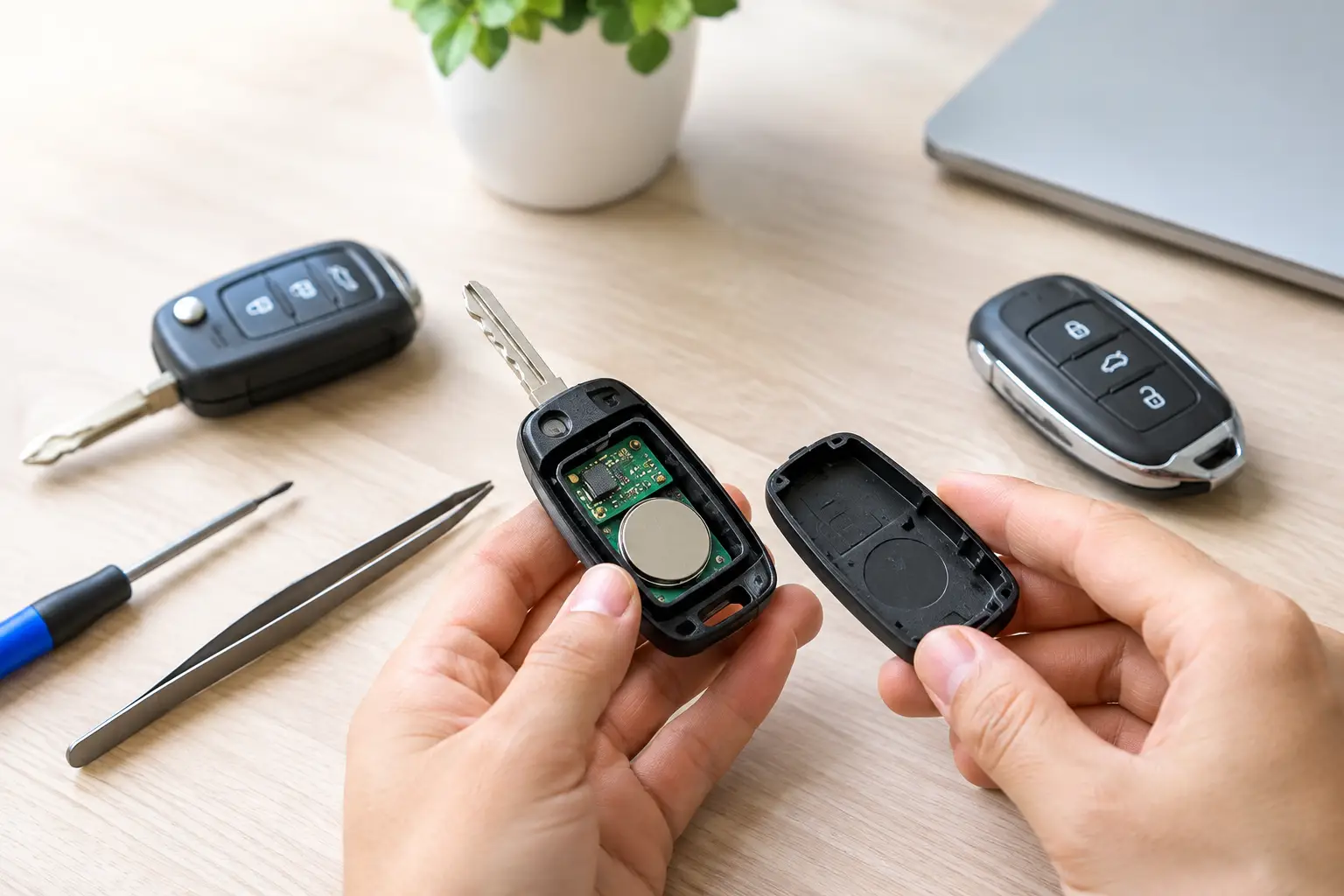
A remote key is more than a piece of plastic with buttons. Depending on the vehicle, it may contain a battery, circuit board, button microswitches, a transponder chip for the immobiliser, and a blade or emergency key. A fault in any one of these parts can leave you locked out or unable to start the car.
Repair is often possible when the key still starts the vehicle but the locking buttons have stopped responding. Common repairs include fitting a new battery, replacing a worn outer shell, repairing loose battery terminals, or replacing damaged button microswitches on the circuit board. If the key blade is intact and the electronics are healthy, a shell replacement can make an old, cracked fob feel like new for far less than a full dealer key.
That said, a new case will not cure an electronic fault. If water has reached the circuit board, the board has cracked after being dropped, or the remote has lost communication with the vehicle, a proper diagnosis matters. Fitting a cheap shell and hoping for the best can leave you with the same problem and a lighter wallet.
Remote key repair review: the faults we see most
Most key failures give clues before they stop working altogether. Perhaps you need to stand closer to the car, one button works but another does not, or the casing has split around the key blade. These details help narrow down the cause.
Flat battery or poor battery contact
This is the straightforward one, but it is not always just a flat battery. Batteries can be fitted the wrong way round, the contacts can become bent or corroded, and a low-quality cell may not hold its charge. A battery change is sensible when the remote range has gradually reduced or the key has stopped working after months of intermittent operation.
If a fresh, correctly fitted battery changes nothing, do not keep buying batteries. The fault may be with a button switch, the circuit board or the vehicle receiver.
Worn buttons and failed microswitches
Remote buttons take a lot of punishment, especially on family cars, work vans and vehicles used for frequent deliveries. The rubber button may wear through, but the more significant issue is often the tiny microswitch beneath it. When that switch fails, the button may feel loose, need excessive pressure, or do nothing at all.
Microswitch repair can be a good value solution where the board is otherwise sound. It is a precise job. Too much heat or poor soldering can damage the board, so this is not a repair to hand over to a general key cutter who does not work on vehicle electronics.
Split shell, loose blade or broken hinge
Flip keys commonly fail at the hinge. The blade becomes wobbly, the spring no longer flicks it out properly, or the plastic housing cracks where it carries the key blade. In many cases, the internal circuit board and transponder can be moved into a replacement shell, while a new blade is cut to match the existing key.
This can be an excellent repair if the remote still locks, unlocks and starts the car. It is not appropriate if the transponder chip has been lost from the old housing. Without that chip, many vehicles will crank but not start because the immobiliser will remain active.
Water damage and cracked circuit boards
Keys regularly go through washing machines, get dropped into puddles or sit in damp coat pockets. Water damage is unpredictable. A key may appear fine after drying, then corrode internally days or weeks later. Some boards can be cleaned and repaired; others are beyond reliable recovery.
A cracked circuit board after a heavy drop can cause similar symptoms. Where the remote signal cannot be restored consistently, replacement and programming is usually the honest recommendation. A key that works only occasionally is not dependable enough for daily use.
Repair, replacement or reprogramming?
The best choice comes down to what still works. If the car starts and the remote buttons are faulty, repair may be enough. If the remote functions but the blade or casing is broken, a new shell and cut blade may be the practical fix. If the key will not start the vehicle, or there is no usable circuit board or transponder to transfer, a replacement key will normally need to be cut and programmed to the car.
Reprogramming is sometimes needed after a battery issue or when a remote has gone out of sync, but it is not a cure-all. A dead board cannot be programmed back to life. Likewise, programming a new remote does not repair a worn ignition barrel or a central-locking fault on the vehicle itself.
Modern proximity keys add another layer. These keys allow keyless entry and push-button starting, but they still rely on coded electronics and a working vehicle system. They require specialist diagnostic equipment and correct programming procedures. The cheapest online replacement may look identical, yet it can be the wrong frequency, wrong specification or impossible to programme properly.
What to check before calling for help
You can save time by checking a few simple points without dismantling the key. Try the spare key if you have one. If it works, the vehicle is likely fine and the fault is in the first key. Check whether the remote works from different positions around the car, and note whether the engine starts normally.
It also helps to have the following ready when you call:
- the vehicle make, model, year and registration number;
- whether the key turns in the ignition or starts a push-button vehicle;
- which functions have failed: locking, unlocking, boot release or starting;
- whether the key has been dropped, washed or physically damaged.
Avoid forcing a damaged flip blade into the ignition or door lock. A broken blade can leave part of the key inside the lock, turning a repairable remote issue into a vehicle access problem. Avoid using superglue around the circuit board too. Glue can interfere with buttons and makes later repairs more difficult.
Why specialist diagnosis is worth it
A car key is tied to the vehicle’s security system. Post-1995 vehicles commonly use transponder technology, and many have remote central locking, immobiliser coding and keyless systems that general locksmiths do not routinely handle. The work requires more than cutting metal to shape.
Auto Locksmith Doctor Ltd deals specifically with vehicle keys, locks and programmed security systems. That means the fault can be assessed on site where possible, with the aim of repairing what is economical and replacing only what cannot be trusted. For a lockout, non-destructive entry methods protect the door, seals and lock mechanism rather than creating another repair bill.
There are situations where the dealership is suitable, particularly for certain high-security keys or where manufacturer warranty arrangements apply. However, dealer appointments can take time and may not help when you are stranded outside work, at home or on the roadside. A local automotive locksmith is often the more direct route for urgent access, replacement keys and remote faults.
The cost question: cheap now or reliable later?
A basic battery or shell repair will generally cost less than a complete programmed key. But price should not be the only test. If the board has suffered water damage and works only now and again, spending money on a cosmetic repair is false economy. Equally, replacing a whole key when only the shell has split is unnecessary.
Ask what has been tested, what part is being repaired, and whether the car has been checked for a separate central-locking fault. Clear answers matter. A fair repair should leave you with a key you can rely on, not a temporary fix that fails when you are late for work.
If your remote is becoming unreliable, deal with it before it becomes a lockout or a no-start. Keep the spare key somewhere safe, not in the car, and get a failing fob checked while you still have a working way to move the vehicle.

Related Posts