What causes car key snapping? Learn why keys break in locks or ignitions, what to do next, and how a specialist auto locksmith can help safely on site.
Does Key Cutting Require the Original Key? Explained
A missing car key can turn an ordinary morning into a complete standstill. You may be outside your home, at work or stranded in a supermarket car park, wondering: does key cutting require the original key? In many cases, no. A specialist auto locksmith can often make a new key without the original, but the correct method depends on your vehicle, its age and the type of key system it uses.
For older vehicles, the job may be mainly mechanical. For most modern cars, cutting the blade is only one part of the work. The replacement also needs to communicate correctly with the vehicle’s immobiliser before the engine will start.
Does key cutting require the original key?
The original key is helpful, but it is not always required. If you still have a working key, a locksmith can copy its physical profile accurately and, where needed, program an additional transponder or remote. This is normally the quickest and simplest route.
If every key is lost, a car locksmith can still often produce a replacement. Rather than copying a key, they identify the correct key cut for the vehicle through authorised methods. Depending on the car, this can involve obtaining a key code, reading the lock, or carefully decoding the existing lock. Proof that you own or are authorised to use the vehicle will be required before this work is carried out.
The important point is that a key which fits the door is not necessarily a key that starts the car. Most vehicles built from the mid-1990s onwards use an immobiliser. Without the correctly programmed chip, the engine may crank but will not run, or the key may not operate the vehicle at all.
What type of car key do you have?
The vehicle key type determines what is possible, how long it may take and what equipment is needed. It also explains why a cheap blank key from a shop or online seller does not always solve the problem.
Basic mechanical keys
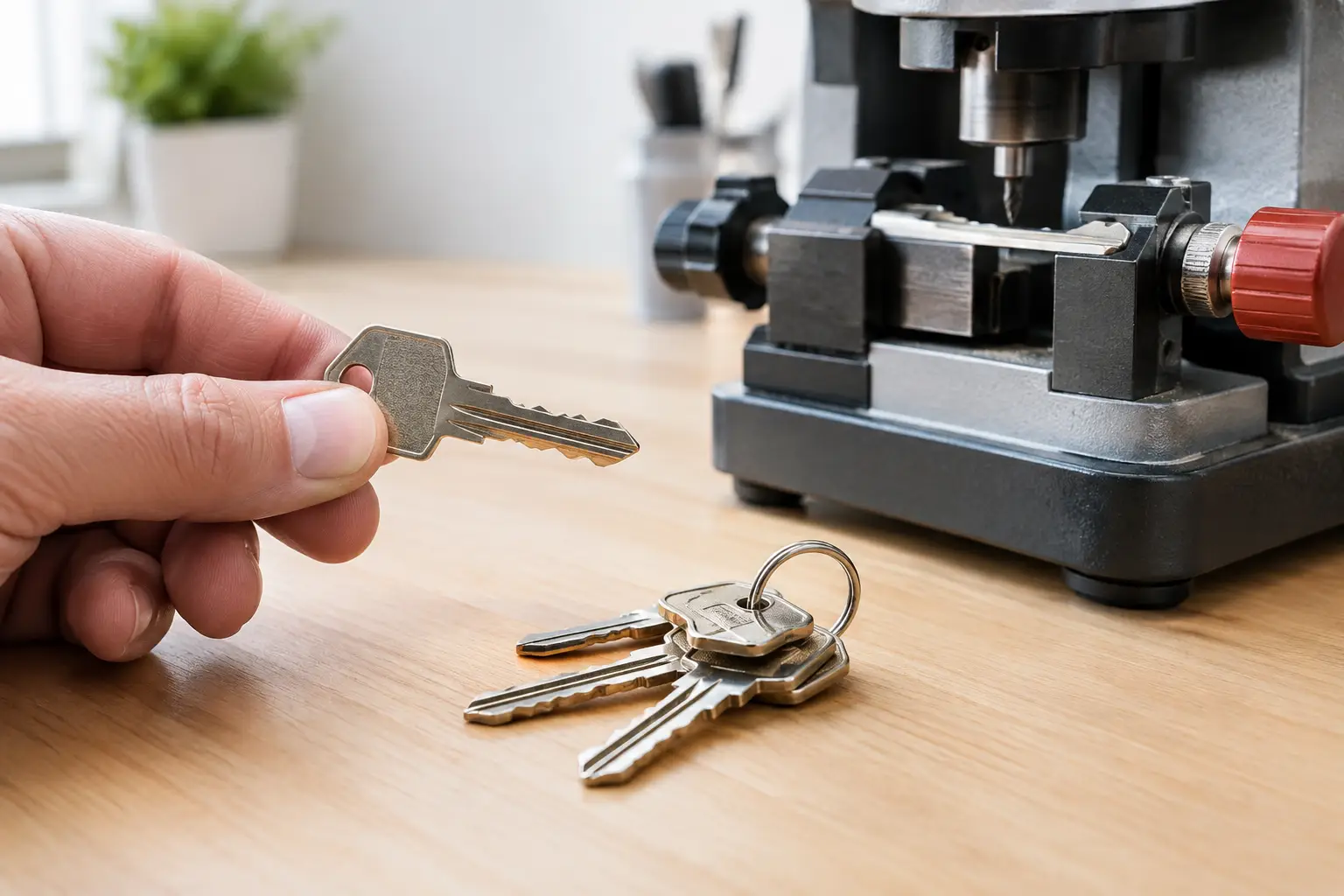
Some older cars use a plain metal key with no electronics. If the original is available, it can be duplicated directly. If it is lost, a locksmith may be able to cut a new one from the lock or key code. There is no programming stage, making these keys relatively straightforward.
Transponder keys
A transponder key contains a small chip, usually hidden in the plastic head. The chip sends an identification signal to the car when the key is turned in the ignition. The metal blade can be cut correctly, yet the car will still refuse to start if the chip is missing, incorrect or not programmed.
This is one of the most common situations we see. The customer has had a blade copied, but the replacement cannot start the vehicle. A proper replacement needs both accurate key cutting and immobiliser programming.
Remote and flip keys
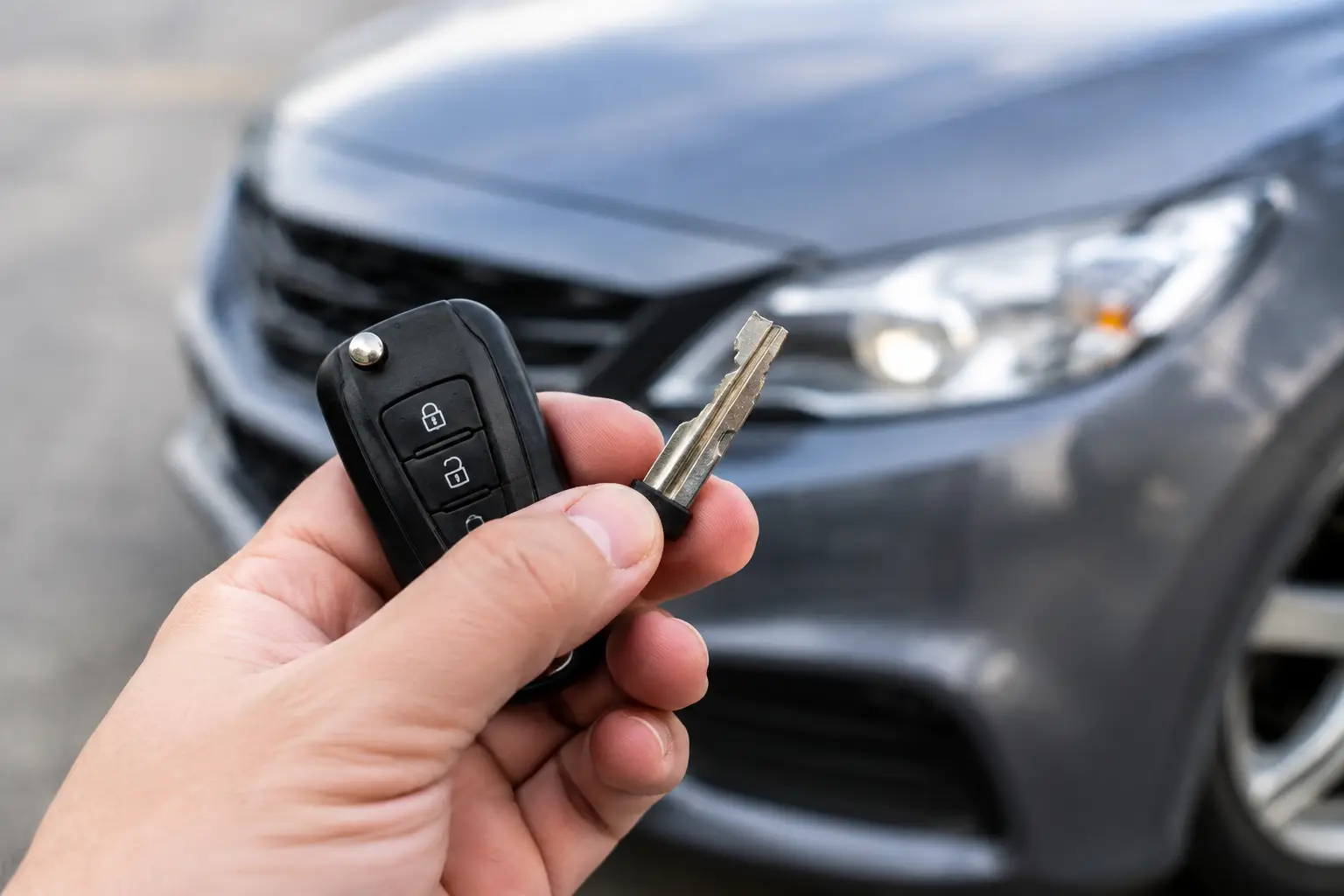
Remote keys and flip keys combine a cut blade, transponder and buttons for central locking. The blade may fold into the fob or release at the press of a button. A replacement can usually be supplied without the original, but the remote functions and transponder need to be matched to the vehicle.
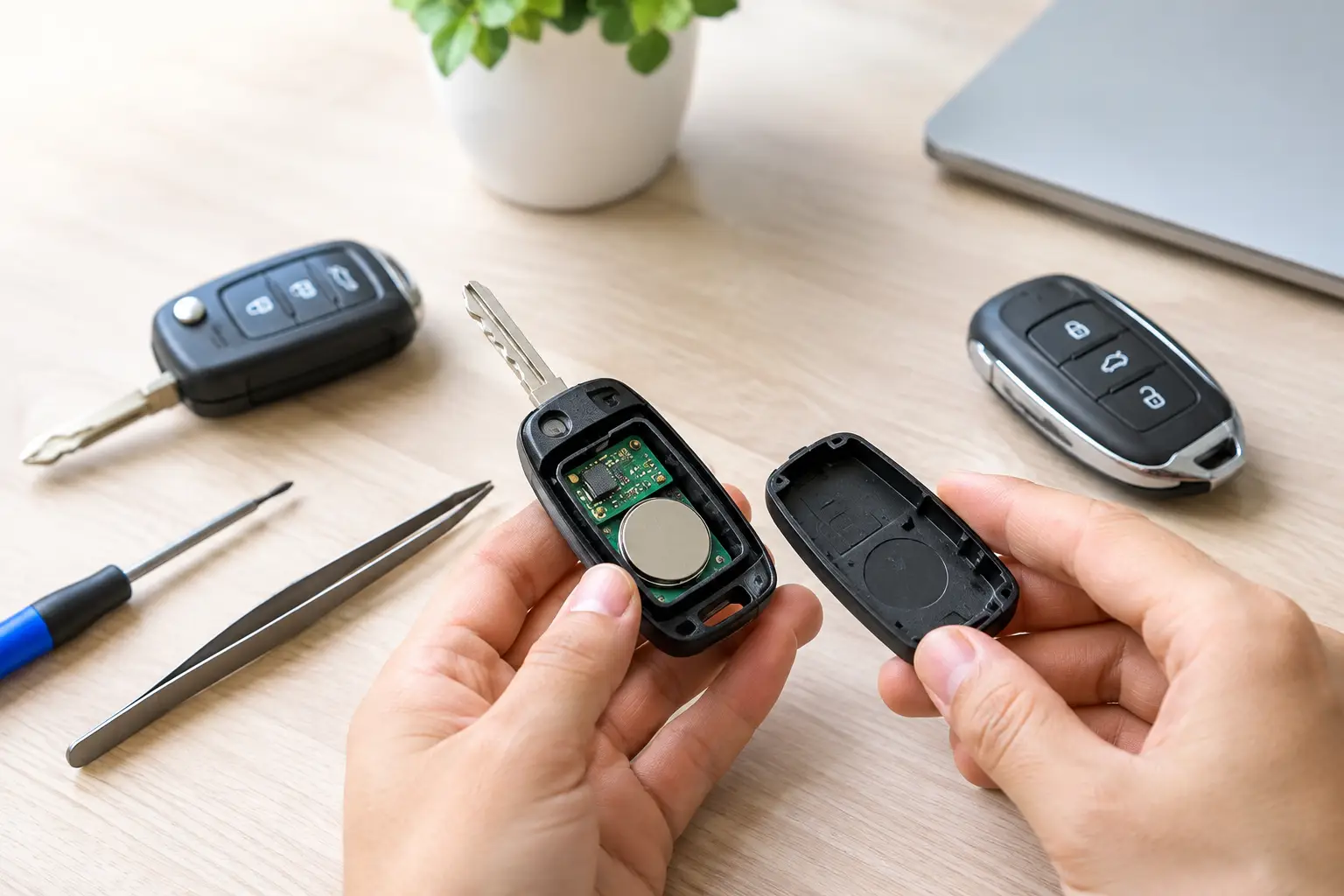
If the case is cracked but the electronics still work, a key fob shell replacement may be all that is needed. That is often more cost-effective than replacing and programming a complete new remote.
Keyless entry and proximity keys
Push-button-start vehicles use proximity keys or smart fobs. These are more complex than a conventional key because the car detects the fob nearby rather than requiring a blade in the ignition. Some smart keys still include an emergency mechanical blade for the door.
Lost proximity keys can often be replaced, but the work requires specialist diagnostic equipment and vehicle-specific procedures. The old key may also need to be removed from the vehicle’s memory where possible, particularly if it has been lost in a public place.
How a replacement is made with no original key
There is no one-size-fits-all process. A trained automotive locksmith assesses the vehicle first, confirms ownership and then chooses the safest suitable method.
For a straightforward mechanical lock, the locksmith may decode the lock to establish the correct cuts for a new blade. On some makes and models, an authorised key code can be used to cut the key precisely. This avoids guesswork and helps protect the lock from unnecessary wear.
For electronically coded cars, the next stage is programming. The locksmith connects approved diagnostic equipment or follows the appropriate vehicle procedure to add a replacement key or fob to the vehicle. On certain models, all keys need to be present during programming. On others, a lost-key procedure is required. The exact route depends on the manufacturer, model, year and security system fitted.
This is why it helps to have your registration number, make, model and year ready when you call. If you know whether the vehicle has a remote fob, keyless start or a standard ignition key, mention that too. It allows the locksmith to arrive with the right key stock and equipment.
When the original key makes the job easier
Having one working key is still a real advantage. It provides a direct physical pattern for cutting a spare and can make programming less involved on some vehicles. It also gives you a fallback while the extra key is being prepared.
A spare is especially worthwhile if your car has a remote or proximity system. Replacing a spare before it is needed is usually less stressful and often less costly than dealing with an all-keys-lost situation at the roadside. Tradespeople, families with shared cars and anyone who depends on their vehicle for work tend to benefit most from keeping a tested spare in a safe place.
Do not keep the spare inside the vehicle or hidden under it. That defeats the point and can create a security risk. Leave it with someone you trust or store it securely at home.
Why not force the lock or use a cheap copy?
A damaged door lock, broken ignition barrel or smashed window can turn a key problem into a much larger repair. Modern vehicle locks are designed to resist forced entry, and using the wrong tools can cause damage that is far more expensive than calling a specialist.
Cheap copies can also cause trouble. A poorly cut blade may stick in the lock or ignition. An unprogrammed chip will not satisfy the immobiliser, while a poor-quality remote casing may fail quickly. The lowest upfront price is not always the fair price if you have to pay again when it does not work.
A professional automotive locksmith should use non-destructive entry methods wherever possible, cut the correct blade and test the replacement properly. That means checking door operation, ignition operation, remote buttons where fitted, and the vehicle’s ability to start.
What to do if you have lost every car key
First, stay with the vehicle if it is safe to do so and avoid leaving it unsecured. Have your identification and vehicle ownership documents ready, or be prepared to show suitable evidence when the locksmith arrives. If the keys may have been stolen rather than simply misplaced, say so straight away.
Do not assume the main dealer is your only option. A specialist auto locksmith can often attend at your location, gain entry without damage where appropriate, cut a new key and program it on site. This can save the inconvenience and cost of arranging recovery, particularly when the car cannot be moved.
For drivers across Glasgow, Cumbernauld, Paisley, Ayrshire and Greenock, Auto Locksmith Doctor Ltd provides practical help with lost car keys, broken keys, vehicle entry and key programming. The aim is simple: get you safely back into your car and back on the road without unnecessary damage or delay.
If you have one working key, arrange a spare before it becomes urgent. If you have none, do not panic – an original key is often useful, but it is not always necessary to make a secure, working replacement.

Related Posts