Are aftermarket key fobs reliable? Learn what affects quality, programming and security, plus when a specialist replacement is the safer choice for cars.
A Practical Guide to Lost Car Keys in Glasgow
Losing your only car key can stop the day in its tracks. Whether you are outside your home in Glasgow, parked at work in Paisley, or stranded after shopping in Cumbernauld, this guide to lost car keys explains what to do next without making the problem more expensive.
The first priority is simple: do not force a door, smash a window or attempt to start the car with improvised tools. Modern vehicles have alarms, immobilisers and delicate lock components. A rushed DIY attempt can turn a lost-key job into a damaged-lock or broken-window repair.
What to Do When You Have Lost Your Car Keys
Take two minutes to check the obvious places before arranging a replacement. Look in coat pockets, bags, the vehicle boot, under seats and around the place where you last unloaded shopping or tools. If the car is at home, check whether a family member has moved the keys or whether a spare has been left with someone you trust.
If they are genuinely gone, gather the details that will help a specialist deal with it quickly. Have your vehicle registration, make, model, year and current location ready. If possible, find your photo ID and proof that you own or are authorised to use the vehicle. These checks protect you as well as the vehicle.
For an urgent lockout, a specialist auto locksmith can usually gain entry without damage, assess the key system and advise whether a replacement can be cut and programmed at the roadside. This is often quicker and more practical than arranging recovery to a main dealer, particularly when you need to get to work, collect children or keep a business vehicle moving.
Do not assume a spare will solve every problem
A spare key is useful, but it may not be a complete answer. If the lost key has a remote fob, proximity function or transponder chip, it could still unlock or start the vehicle if found by somebody else. Depending on the make and model, an auto locksmith may be able to programme the vehicle so the missing key no longer works.
This matters more with keyless entry systems. A proximity key does not need to be placed in the ignition, so keeping control of every working fob is sensible. Explain to the locksmith whether you believe the keys were misplaced somewhere safe or stolen. The recommended work can be different.
A Guide to Lost Car Keys by Key Type
The type of key determines what a replacement involves. Older vehicles may use a straightforward mechanical key, but most cars on UK roads use electronic security as well as a physical blade.
A basic metal key can sometimes be cut from the vehicle lock or key code. Even then, care is needed: worn locks and worn original keys can make copying unreliable. Cutting a key precisely is better than relying on a poor copy that may stick or damage the ignition over time.
Most vehicles built from the mid-1990s onwards use a transponder key. Inside the key is a small chip that communicates with the immobiliser. The blade may turn in the ignition, but the engine will not start until the transponder is recognised. That is why a cheap unprogrammed key shell or blade is not a complete replacement.
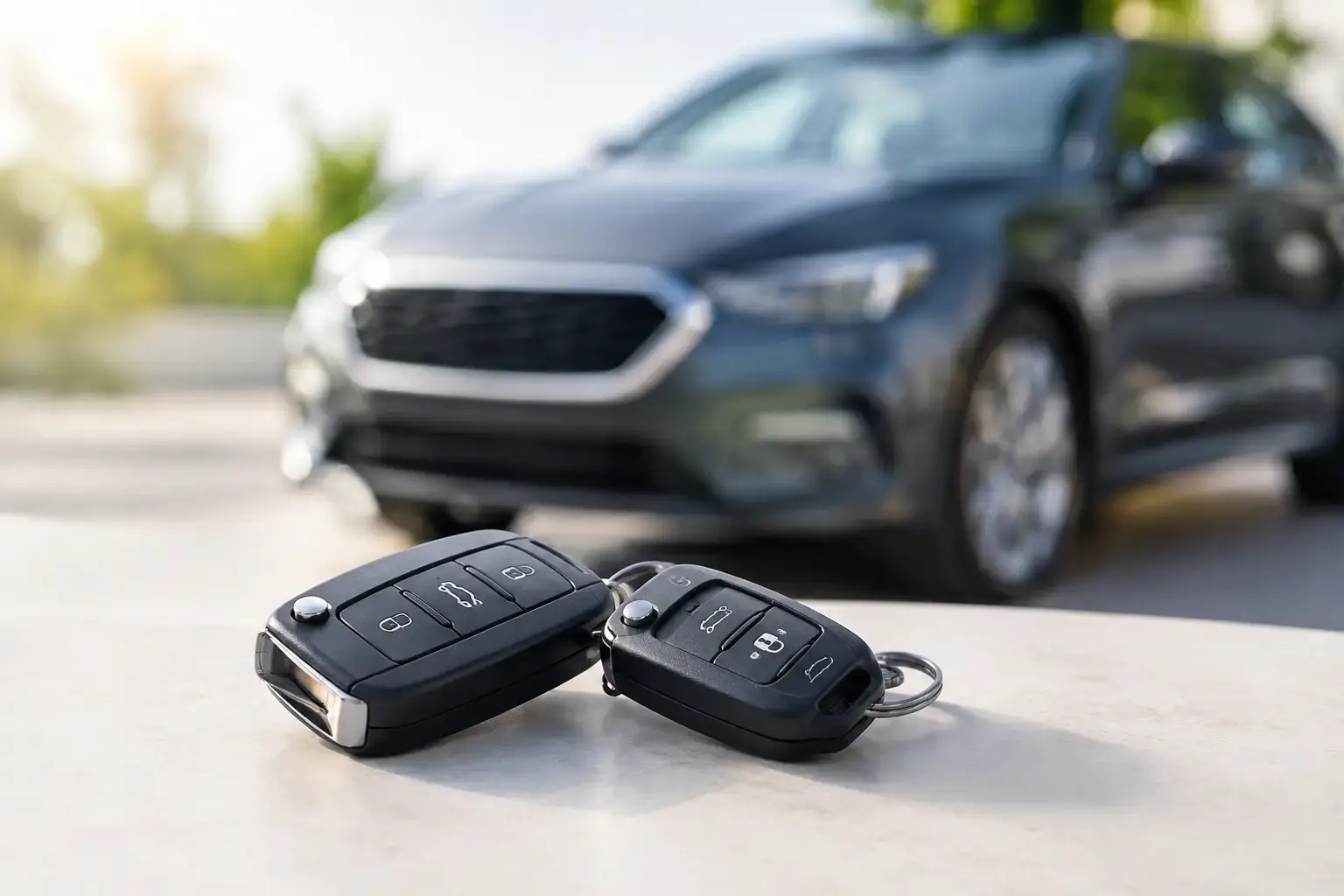
Remote keys combine a transponder with buttons for central locking. These need the correct remote unit, a correctly cut blade and programming where required. If the buttons have failed but the key still starts the car, the issue may be the fob case, battery, buttons or internal circuit rather than the entire key.
Keyless or proximity keys are more advanced still. The vehicle detects the fob when it is nearby, allowing push-button starting and, on some models, hands-free entry. Replacing one can require specialist diagnostic equipment and programming knowledge. It is not a job for a general locksmith who mainly deals with household locks.
How a Replacement Car Key Is Made
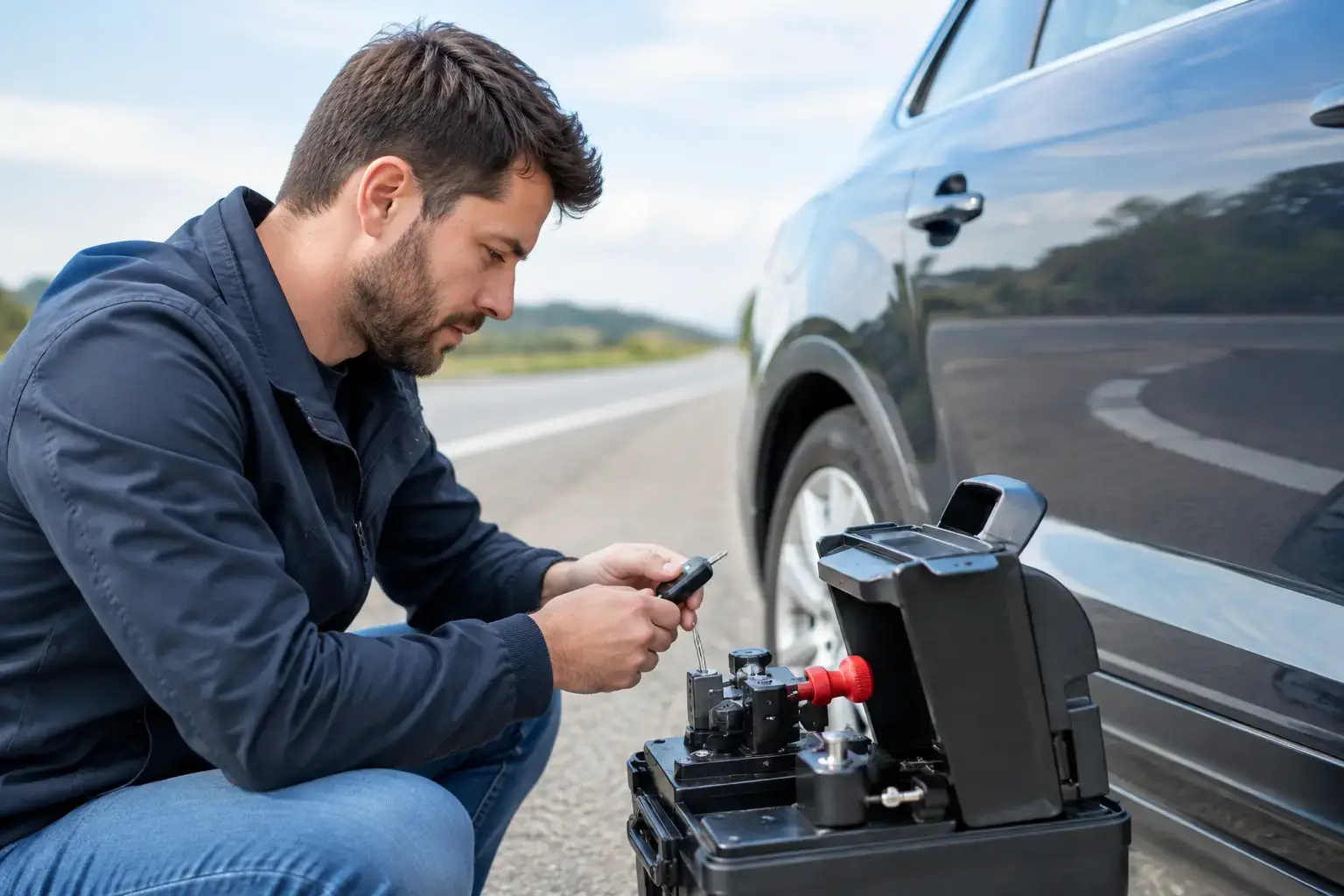
A proper replacement is not simply a matter of cutting a piece of metal. The locksmith first confirms the vehicle and ownership, then establishes the correct key specification. Access may be needed to retrieve key data, read the lock, use approved diagnostic equipment or work from an existing key where one is available.
The replacement blade is cut to operate the door and ignition locks. For electronically coded vehicles, the transponder or remote fob is then programmed to communicate with the car’s immobiliser and locking system. The locksmith should test entry, ignition operation and remote functions before leaving.
The exact process varies. Some cars can be completed at the vehicle in one visit; others need additional security data, a particular key unit or more time due to the manufacturer’s system. A reputable specialist should explain this plainly before work begins, rather than promising a one-size-fits-all fix.
Cost also depends on the key type, vehicle age, availability of the correct unit and whether all keys are missing. Replacing a working spare is usually simpler than creating a key from scratch after the last one has disappeared. Asking for a clear price based on your vehicle details is the sensible approach.
Why Damage-Free Entry Matters
Being locked out is frustrating, especially in rain, darkness or an unfamiliar area. It can be tempting to prise open a door frame, use a coat hanger or force the lock. These methods can bend the frame, tear weather seals, damage the locking mechanism and trigger alarm faults. The repair bill can exceed the cost of professional entry.
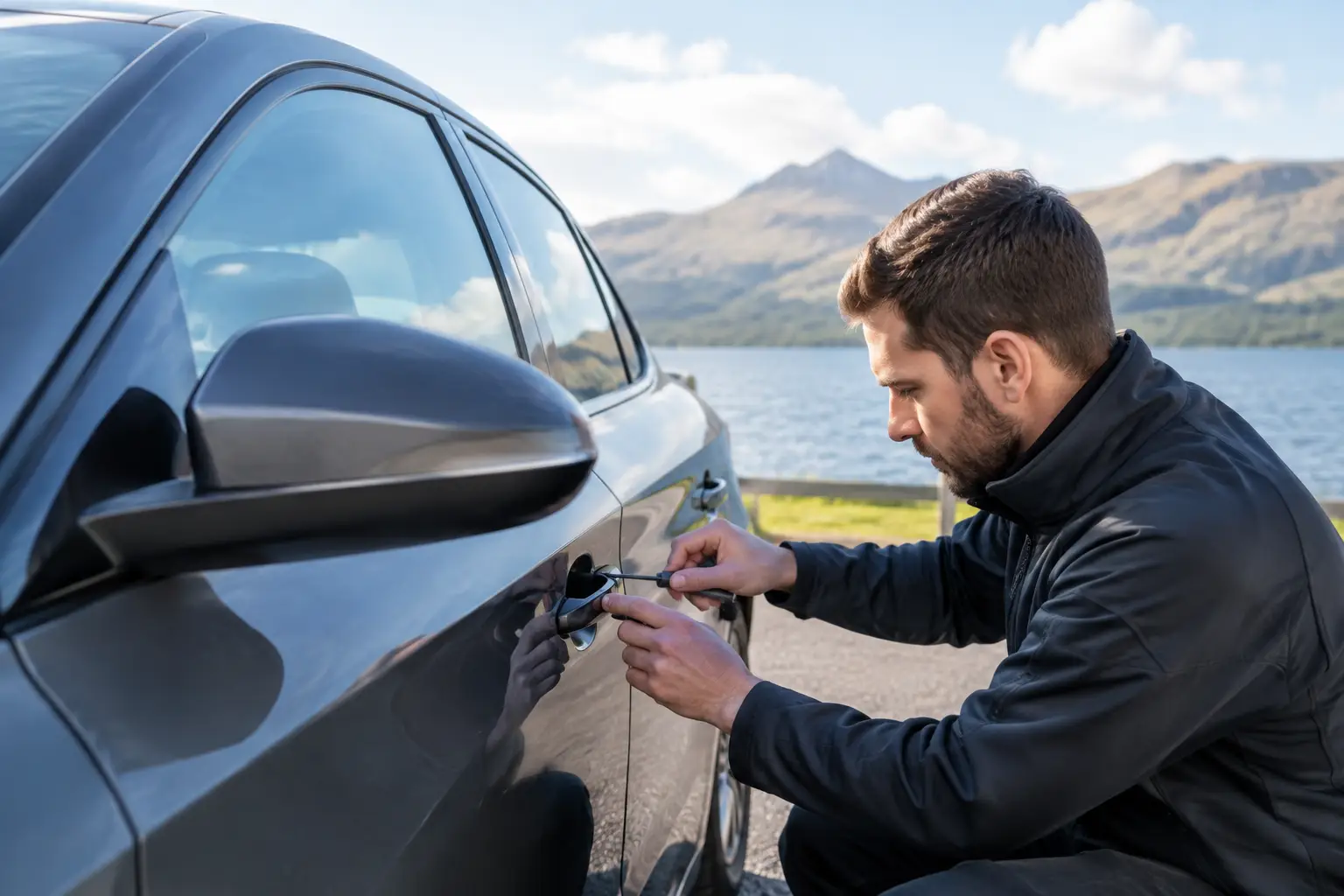
A trained automotive locksmith uses non-destructive methods wherever possible. The aim is to open the vehicle cleanly, without breaking glass or causing avoidable damage to locks, handles or trim. Once access is gained, the real fault can be identified. The key may be lost, snapped, locked inside, no longer recognised by the immobiliser or affected by a flat fob battery.
If your key has broken in the door or ignition, do not keep turning it. A broken fragment can be removed with the right tools, and the remaining key can be assessed for wear. Forcing it further in may damage the lock barrel and create a bigger repair.
When to Call an Auto Locksmith Rather Than a Dealer
A main dealer can supply replacement keys for many makes, but it is not always the best route when you are stranded. Dealers may require the vehicle to be brought to them, may need to order the key, and can have longer lead times. That can mean recovery costs and several days without your car.
A mobile auto locksmith is often better suited to an immediate problem. They come to the vehicle, deal with lockouts on location and have the equipment to cut and programme many replacement keys where you are parked. This is particularly helpful for commuters, tradespeople and families across West Central Scotland who cannot afford to lose use of the car.
There are limits, and honesty matters. Some specialist keys may need ordering, while certain faults involve the vehicle’s control modules rather than the key itself. In those cases, a good locksmith will tell you what is possible on site and what the next practical step should be.
Auto Locksmith Doctor Ltd provides specialist help for lost keys, locked vehicles, broken keys and programming faults across Glasgow, Paisley, Cumbernauld, Greenock and Ayrshire. The focus is on fast response, fair pricing and damage-free vehicle entry wherever possible.
Reduce the Risk of Another Lost-Key Emergency
Once you are back on the road, arrange a spare before you need one. It is normally cheaper and less stressful to duplicate a working key than to replace every key after the last one has gone missing. Keep the spare somewhere secure at home, not hidden inside the vehicle and not on the same keyring as the main key.
If you have a remote or proximity fob, replace weak batteries promptly and protect it from water damage. Avoid heavy keyrings where possible, especially on vehicles with an ignition barrel, as excess weight can contribute to wear over time. If a key starts sticking, the remote range drops, or the car intermittently displays a key warning, have it checked before it fails completely.
A lost car key is inconvenient, but it does not have to ruin the whole day. Keep your vehicle details handy, avoid damaging DIY entry attempts, and get a specialist involved early so you can return to the road with the right key and the right security in place.

Related Posts