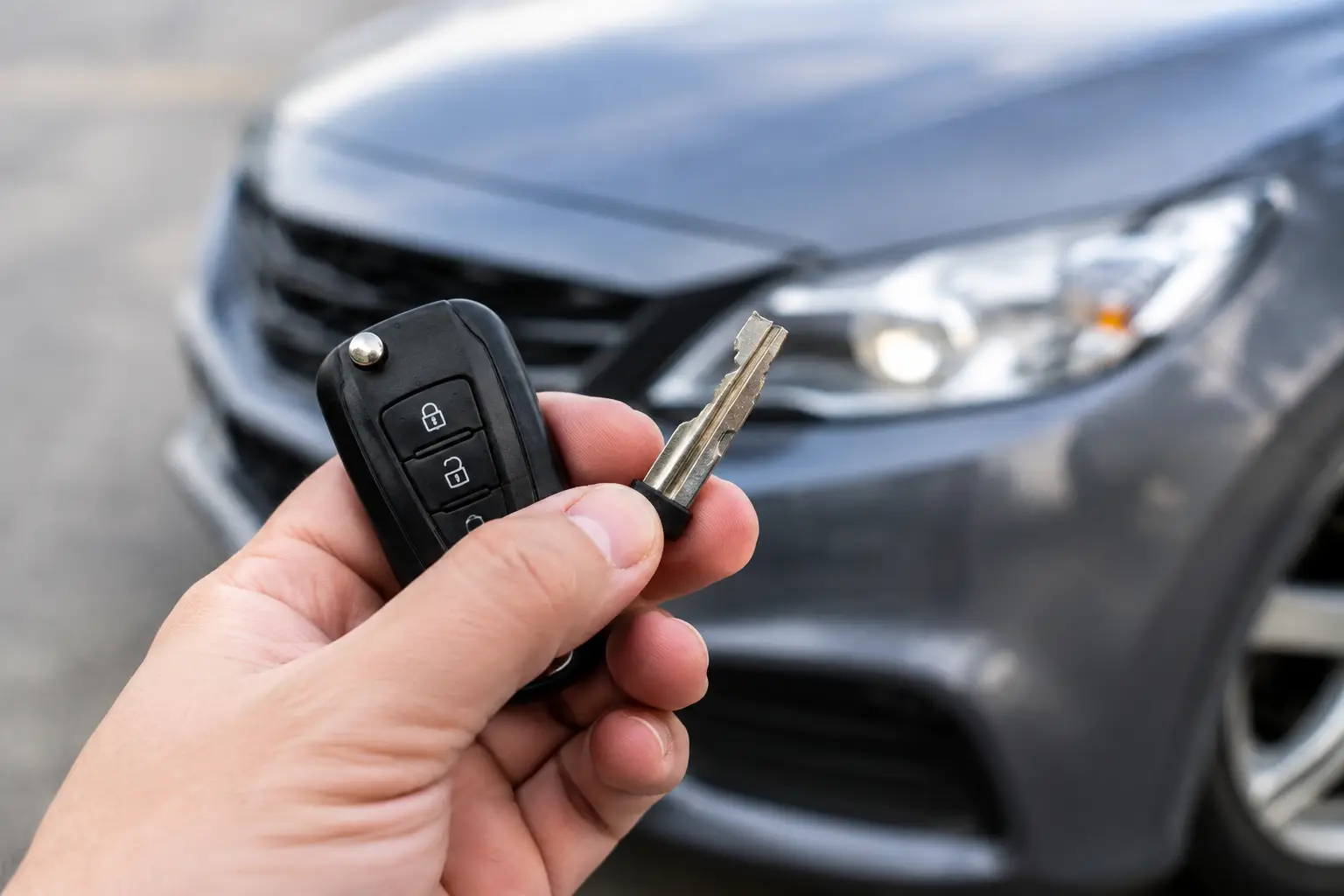
What causes car key snapping? Learn why keys break in locks or ignitions, what to do next, and how a specialist auto locksmith can help safely on site.
Key Fobs: What Fails and What to Do Next
You press the button in a supermarket car park, outside work or on your own drive, and nothing happens. Key fobs are easy to take for granted until they stop opening the car, start working only at close range or leave you unable to start the engine. The cause may be as simple as a flat battery, but modern vehicle keys can also fail because of damaged electronics, lost programming or a fault in the car itself.
For drivers across Glasgow, Cumbernauld, Paisley, Ayrshire and Greenock, the priority is usually straightforward: get into the vehicle, get moving again and avoid an expensive or damaging solution. Knowing what your key fob does, and what may have gone wrong, makes that process much less stressful.
What Key Fobs Actually Do
A key fob is the remote part of your vehicle key. On many cars it controls central locking, the boot release and sometimes remote starting, alarms or powered doors. In a basic remote key, pressing a button sends a coded radio signal to a receiver in the vehicle.
That is only one part of the system. Most cars produced from the mid-1990s onwards also have a transponder chip. This small chip communicates with the immobiliser when the key is in the ignition or, on keyless vehicles, when the fob is inside the car. If the vehicle does not recognise that chip, the engine may crank but not start, or it may not respond at all.
This distinction matters. A fob can have failed buttons while the transponder still starts the car. Equally, a new battery may restore the remote locking but not fix an immobiliser or programming fault. The right repair depends on which function has stopped working.
Why Key Fobs Stop Working
A Flat or Poorly Fitted Battery
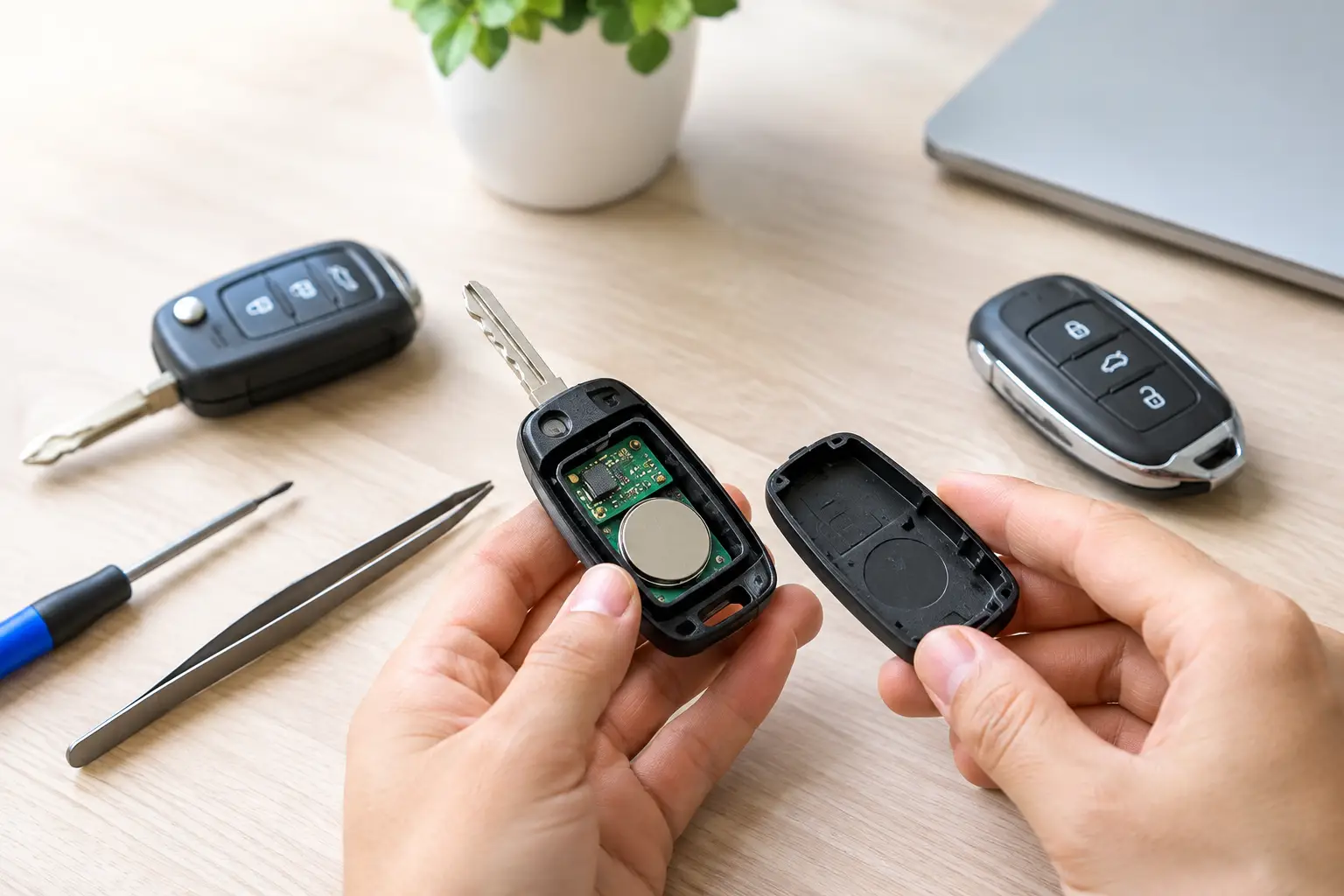
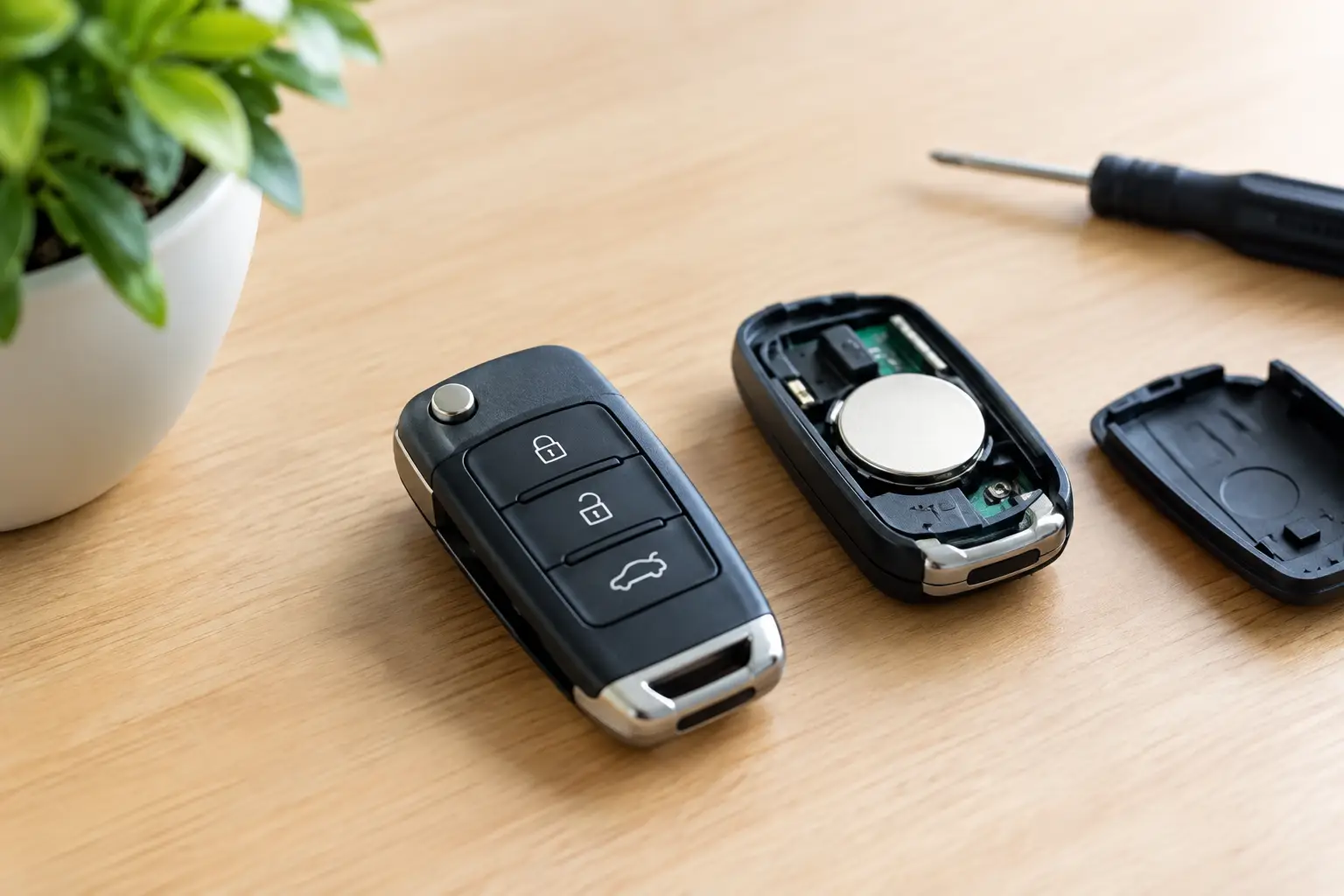
The battery is the first sensible thing to check, particularly if the remote range became shorter before it stopped responding. Most fobs use a small coin-cell battery, but the correct type varies by make and model. Fitting the wrong battery, putting it in the wrong way round or touching the contacts roughly can cause more problems than it solves.
If you replace the battery, inspect the metal contacts inside the case. They should be clean, secure and making firm contact with the battery. A battery change is normally simple, but some vehicles require the fob to be resynchronised afterwards. Do not assume that every key will immediately work again just because a fresh battery is fitted.
Worn Buttons, Cracked Cases and Water Damage
Car keys spend their lives in pockets, bags, toolboxes and cup holders. They get dropped onto pavements, squeezed under heavy items and exposed to rain. Over time, the rubber buttons can wear through, the case can split, or the soldered button switches on the circuit board can loosen.
A damaged shell is not always a reason to buy a complete new key. If the internal circuit board and transponder chip are intact, a key fob shell replacement can often protect the working electronics at a much lower cost. This is particularly useful when the key blade is loose, the button cover has torn or the fob no longer holds together properly.
Water damage needs more caution. If a fob has been through a washing machine, dropped in water or left in persistent rain, remove the battery if it is safe to do so and avoid repeatedly pressing the buttons. Moisture can corrode the circuit board and turn a repairable fault into a permanent one.
Lost Synchronisation or Failed Programming
Some remotes lose synchronisation after a battery goes completely flat, after certain electrical work or following repeated button presses out of range. On some makes, a simple vehicle-specific procedure restores the connection. On others, diagnostic equipment is needed.
Programming becomes more significant with replacement keys, transponder faults and proximity fobs. The new key has to be correctly matched to the vehicle’s immobiliser system. Cutting a blade that turns in the door or ignition is not enough if the vehicle cannot recognise the coded chip.
The Fault May Be in the Car
It is easy to blame the key, but a vehicle-side issue can give the same symptoms. A weak car battery, blown fuse, damaged door-lock actuator, faulty central-locking receiver or wiring fault can stop the remote from working. If your spare key has exactly the same issue, the car is more likely to be the source of the problem.
A specialist will test the key and assess the vehicle before recommending a replacement. That avoids paying for a new fob when the actual fault is elsewhere.
What to Do When Your Key Fob Fails
Start calmly and do not force the key or keep pressing the remote for several minutes. Check whether you have a spare key, and try it if you do. This is one of the quickest ways to separate a fob fault from a fault with the vehicle.
Many remote keys have a concealed mechanical blade. It may slide out from the fob or release with a small catch. This blade can usually open the driver’s door, even when the remote battery is flat. The alarm may sound on some vehicles when you enter this way, but placing the recognised key in the ignition or holding a keyless fob in the specified starting position will often stop it.
If the lock feels stiff, avoid twisting the blade hard. Door locks that are rarely used can seize, and a snapped key creates a second problem. A car locksmith can gain entry using non-destructive methods and deal with a damaged lock or broken key without causing unnecessary harm to the door, glass or trim.
Keep any broken parts of the fob, including the blade, circuit board and loose transponder chip. These components may be needed to repair the original key, cut a replacement blade or programme a replacement properly.
Repair or Replacement: Which Is the Better Option?
Repair makes sense when the issue is limited to the case, buttons, battery contacts or a minor circuit-board fault. It can preserve the original transponder and save the cost of replacing and programming a whole key. It is also often the best option when the remote works but the casing is becoming unreliable.
Replacement is usually the safer route where the circuit board is badly corroded, the fob has been lost, the transponder is missing or the key cannot be programmed correctly. The price varies with the vehicle. Older remote keys are often more straightforward, while smart proximity keys and newer premium models can require more specialist equipment and additional security steps.
Be cautious with cheap online fobs. They may look right but contain the wrong electronics, use poor-quality boards or arrive without a compatible transponder. Even a suitable aftermarket fob still needs correct cutting and programming. The apparent saving can disappear if it cannot be made to work.
When You Need an Auto Locksmith
Call a specialist automotive locksmith if you are locked out, the key has been lost or stolen, the blade has snapped, the remote has failed and you cannot start the car, or you need another working key. This is not just a matter of opening a door. Modern vehicle security systems need the right tools and knowledge to avoid damage and ensure the replacement key is accepted by the immobiliser.
Auto Locksmith Doctor Ltd provides on-location help for vehicle owners across West Central Scotland, including non-destructive entry, key cutting, transponder programming and key fob repair or replacement. For an urgent lockout, have the vehicle make, model, registration and your location ready when you call. If possible, say whether you have any key parts, a spare key or proof that the car is yours.
Looking After Your Key Fob
A little care reduces the chance of a roadside failure. Keep the fob dry, use a protective case if it is regularly carried with tools or loose coins, and replace the battery as soon as the range starts dropping. Do not leave a keyless fob in extreme heat or direct sun for long periods, especially in summer.
It is also worth having a spare programmed key before the original is lost or damaged. Doing this while you still have one working key is normally simpler and less disruptive than arranging a replacement when you are stranded.
A failed fob does not always mean a major bill or a trip to the dealership. Whether it needs a battery, a new shell, a repair or full programming depends on the fault and the vehicle. If you are stuck, protect the key parts you have, avoid forcing anything, and get a proper diagnosis before spending money on the wrong fix.

Related Posts