Are aftermarket key fobs reliable? Learn what affects quality, programming and security, plus when a specialist replacement is the safer choice for cars.
Transponder Cloning Service Review for Car Owners
You have one working key, the spare has disappeared, and the thought of being stranded outside your car is not appealing. That is usually when people start looking for a transponder cloning service review. Cloning can be a quick, sensible way to add a spare key, but only when the vehicle, key type and security system allow it.
The right question is not simply, “Can this key be copied?” It is, “Will the copied key start my car reliably, work as expected, and represent good value compared with programming a new key?” For drivers in Glasgow, Cumbernauld, Paisley, Ayrshire and Greenock, a specialist auto locksmith should be able to answer that clearly before any work starts.
What a transponder cloning service actually does
Most cars built from the mid-1990s onwards use an immobiliser. Inside the key is a small electronic chip called a transponder. When you turn the key in the ignition, or place a proximity key in the vehicle, the car checks for the correct electronic identity. If it does not recognise that identity, the engine will not start.
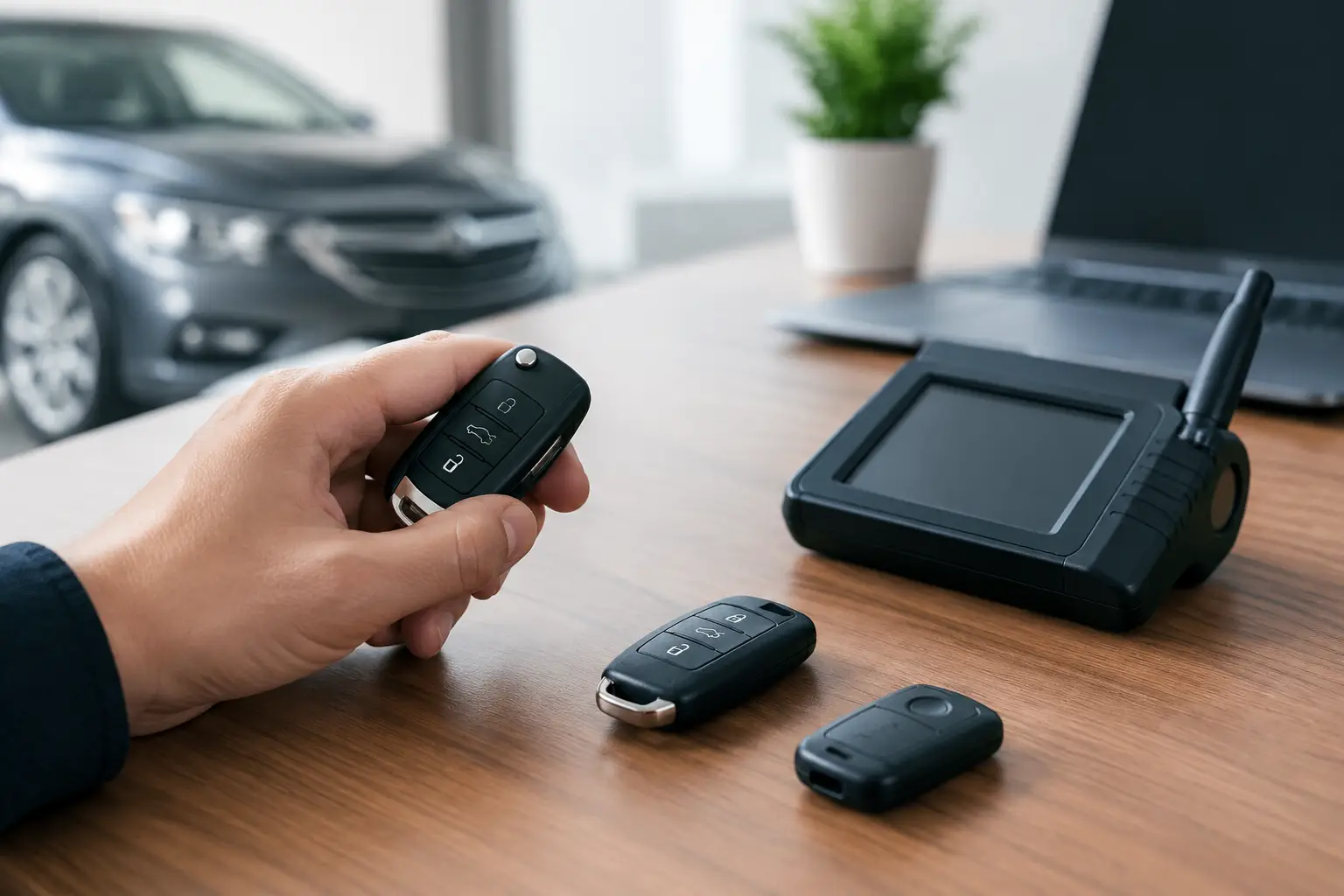
Cloning takes the data from an existing working transponder and writes it to a compatible blank chip in a new key. The new key is then cut to match the original blade. In the right circumstances, both keys will start the vehicle without altering the car’s existing immobiliser records.
That last point is why cloning appeals to many motorists. It can avoid connecting to the vehicle for a full key-programming procedure, and it may be quicker on some older and common vehicle systems. It is particularly useful when you still have a fully working key and simply want a spare before the original becomes worn, damaged or lost.
Cloning is not the same as copying the remote buttons. A key may have three separate functions: the metal blade opens the door and turns the ignition, the transponder starts the engine, and the remote operates central locking. A cloned transponder can start the car while the remote buttons still need separate programming, repair or replacement.
A transponder cloning service review should consider the car first
Any worthwhile review of a cloning service begins with compatibility, not promises. There is no universal blank key that works for every make and model. Some chips can be cloned directly. Others require data from the vehicle, a working original, a security code or a different programming method altogether.
Older fixed-code systems are often the most straightforward candidates. Many later vehicles use encrypted or crypto transponders that require specialist equipment and, in some cases, a calculation process using information read from the original key. Newer systems may have stronger manufacturer security, online access requirements or proximity-key technology that makes conventional cloning unsuitable.
A good locksmith will not claim that every key can be cloned while you wait. They should identify the vehicle correctly, examine the existing key, test its transponder where appropriate and explain the realistic options. If proper programming is the better repair, that should be said plainly.
This matters when comparing quotes. A low price for “key cloning” is of little use if the key will only unlock the door, if the remote is not included, or if the provider discovers on arrival that your system cannot be cloned. Ask what is included in the price: key cutting, the transponder chip, remote functions, testing and any call-out charge.
When cloning is a good option
Cloning is often a practical choice if you have one reliable working key and want a second key for everyday use. It can suit families sharing a vehicle, tradespeople who cannot afford a key failure during a working day, or anyone buying a used car supplied with only one key.
It can also reduce disruption. Depending on the vehicle, a cloned spare may be produced without lengthy access to the car’s diagnostic system. That can be useful when the car is parked at home, at work or on a busy roadside location.
There is a trade-off, however. A cloned key normally shares the same transponder identity as the original. The car may see both keys as the same key rather than two separately registered keys. For many motorists this is perfectly acceptable, but it is not always the ideal choice.
If a key has been stolen, rather than merely misplaced, cloning is usually not the answer. The lost or stolen key may still start the car. In that situation, the safer route is usually to programme replacement keys to the vehicle and remove the missing key from the immobiliser system where the vehicle allows it.
When programming a new key is the better choice
A properly programmed key has its own recognised identity in the vehicle’s memory. This is often preferable for newer cars, proximity keys and situations where security is the priority.
Programming is also normally required if you have lost every key. Without an existing working transponder to read, there is nothing to clone. The locksmith may need to gain non-destructive access, cut a key from the lock or key data, and programme a new transponder directly to the immobiliser.
The same applies when the existing key is intermittent. A weak or damaged transponder, worn circuit board or failing remote may not provide reliable data for a spare. Cloning a faulty key can reproduce the problem rather than solve it. The key should be checked first, especially if the car occasionally shows an immobiliser warning light or starts only after several attempts.
For high-value vehicles, fleet vehicles and cars with sophisticated keyless entry, separate programmed keys may offer better control. If one key later goes missing, it may be possible to remove that individual key from the vehicle’s authorised list. The exact options depend on the make, model and year.
What separates a dependable service from a cheap copy
The difference is rarely just the machine used. A specialist needs the right key blank, the correct chip type, accurate key cutting equipment and enough vehicle knowledge to know whether cloning is appropriate. Cutting a blade badly can damage a lock or leave you with a key that works only occasionally. Fitting the wrong transponder can leave you with a neatly cut key that will never start the engine.
A dependable service should also test the finished key properly. That means checking that it turns smoothly in the door and ignition where fitted, starts the engine, and operates the remote locking if that was part of the job. For push-button start vehicles, the test should include detecting the key in the cabin and confirming that the engine starts as it should.
Be cautious of vague adverts that quote one low price for every car key. The cost of a basic non-remote transponder key is not the same as a remote flip key or a proximity fob. Vehicle security systems vary widely, as do key blanks and programming requirements. Fair pricing means explaining the difference, not hiding it until the work is complete.
Questions worth asking before you book
Before arranging a visit, have the registration number, make, model and year ready. If you can, say whether the vehicle has a traditional ignition, remote flip key or push-button start. Then ask these practical questions:
- Can my current working key be cloned, or does it need to be programmed to the car?
- Does the quoted price include cutting the blade, the transponder and remote central locking functions?
- Will the new key have its own identity in the vehicle, or will it duplicate the original key’s transponder?
- If cloning is not suitable after inspection, what is the alternative and what will it cost?
A legitimate locksmith should also confirm that you own, lease or are authorised to deal with the vehicle. Car key work is security work. It should be carried out for the registered keeper or an authorised user, with sensible proof of entitlement where required.
Local help when a spare key cannot wait
If you have one working key, arranging a spare now is nearly always easier and less expensive than waiting for the last key to fail or disappear. A worn key blade can break, a remote case can split, and electronic faults do not always give much warning.
Auto Locksmith Doctor Ltd can assess whether cloning, full programming or key repair is the right route for your vehicle, with practical mobile help across West Central Scotland. The aim is simple: give you a key that works properly without damage to your vehicle or confusion over what you are paying for.
Keep your remaining working key safe, avoid leaving it in the car, and deal with a failing spare before it becomes an emergency at the side of the road.

Related Posts