Need key fob repair in Glasgow or West Central Scotland? Learn what causes fob faults, what can be fixed and when a replacement car key is needed today.
Car Key Fob Shell Replacement Explained
A key fob usually gives you plenty of warning before it fully fails. The buttons go soft, the case starts splitting at the seam, the key blade feels loose, or the battery cover keeps slipping off in your pocket. In many cases, car key fob shell replacement is the right fix. It can restore the feel and function of your remote without replacing the full key, but only if the electronics inside are still working.
That distinction matters. A damaged shell is often a straightforward repair. A damaged circuit board, failed transponder, or broken remote programming is a different job entirely. If you know the difference, you can avoid wasting money on the wrong part and get back on the road faster.
What a car key fob shell replacement actually fixes
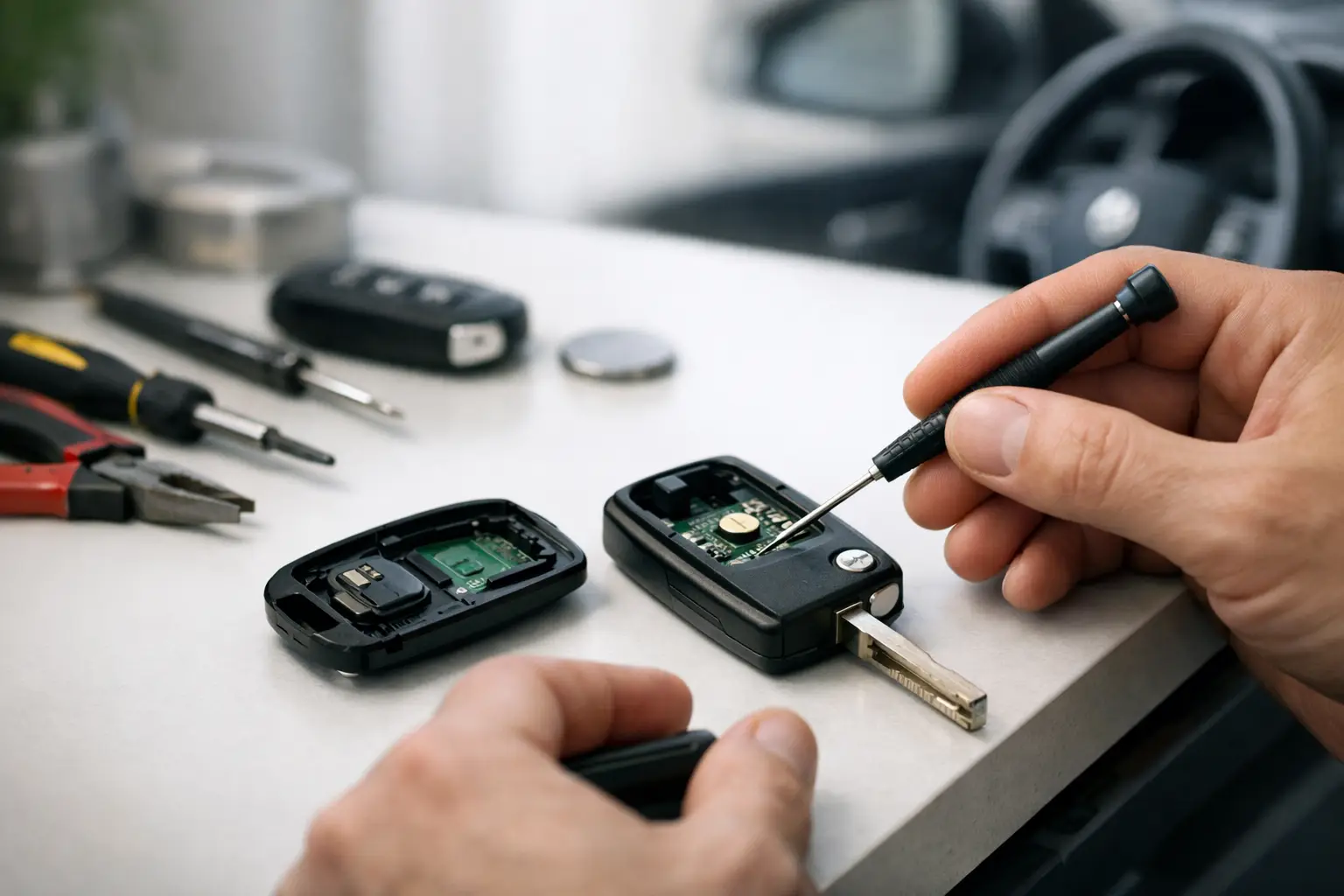
The shell is the outer casing of the key fob. It holds the remote board, battery, rubber buttons, and in many designs the flip key mechanism or emergency blade. Over time, that casing takes the abuse – drops on concrete, pressure in a pocket, worn button pads, cracked hinges, and battery covers that stop clipping shut.
A shell replacement deals with those physical problems. If your buttons only work when pressed hard, the casing has cracked open, or the blade no longer folds properly because the housing is worn, a new shell may solve it. In that situation, the working electronic parts are transferred from the old fob into the new casing.
What it does not fix is electronic failure. If the remote has stopped locking the car, the immobilizer chip is missing, or the circuit board is broken, a fresh shell will not bring it back to life. The outside may look new, but the key still will not communicate properly with the vehicle.
Signs the shell is the problem and not the programming
The simplest clue is this – if the remote worked before the casing broke, and the internals are intact, the shell is often the weak point. You might see the buttons torn through, the case separating, or the blade pin worn loose on a flip key.
Another common sign is when the battery sits badly because the back cover no longer holds firm. That can cause intermittent remote operation even though the board itself is still fine. Likewise, if the rubber button pad has collapsed, you may think the fob has failed when in reality the switch underneath still works.
On the other hand, if the fob has water damage, the board is corroded, or the car no longer recognizes the key in the ignition or push-to-start system, that points beyond the shell. The same goes for a snapped transponder chip or missing internal components after a DIY repair attempt.
When a shell replacement makes financial sense
For many drivers, cost is the main reason to consider this repair. A shell replacement is usually far cheaper than replacing and programming a complete key. If the remote board, chip, and blade are all usable, re-casing the key can be the sensible middle ground between living with a broken fob and paying for a full replacement.
It is especially worthwhile on older vehicles where the remote still works reliably but the casing has worn out from years of use. It can also make sense if you have a spare key with a damaged shell and want it dependable again before it becomes an emergency.
That said, cheap parts can create their own problems. A badly made aftermarket shell may fit poorly, wear quickly, or fail to hold the battery and blade correctly. Good value comes from getting the right shell for the exact key type and having it assembled properly.
Car key fob shell replacement on flip keys and smart keys
Not all fobs are built the same, and that changes the repair.
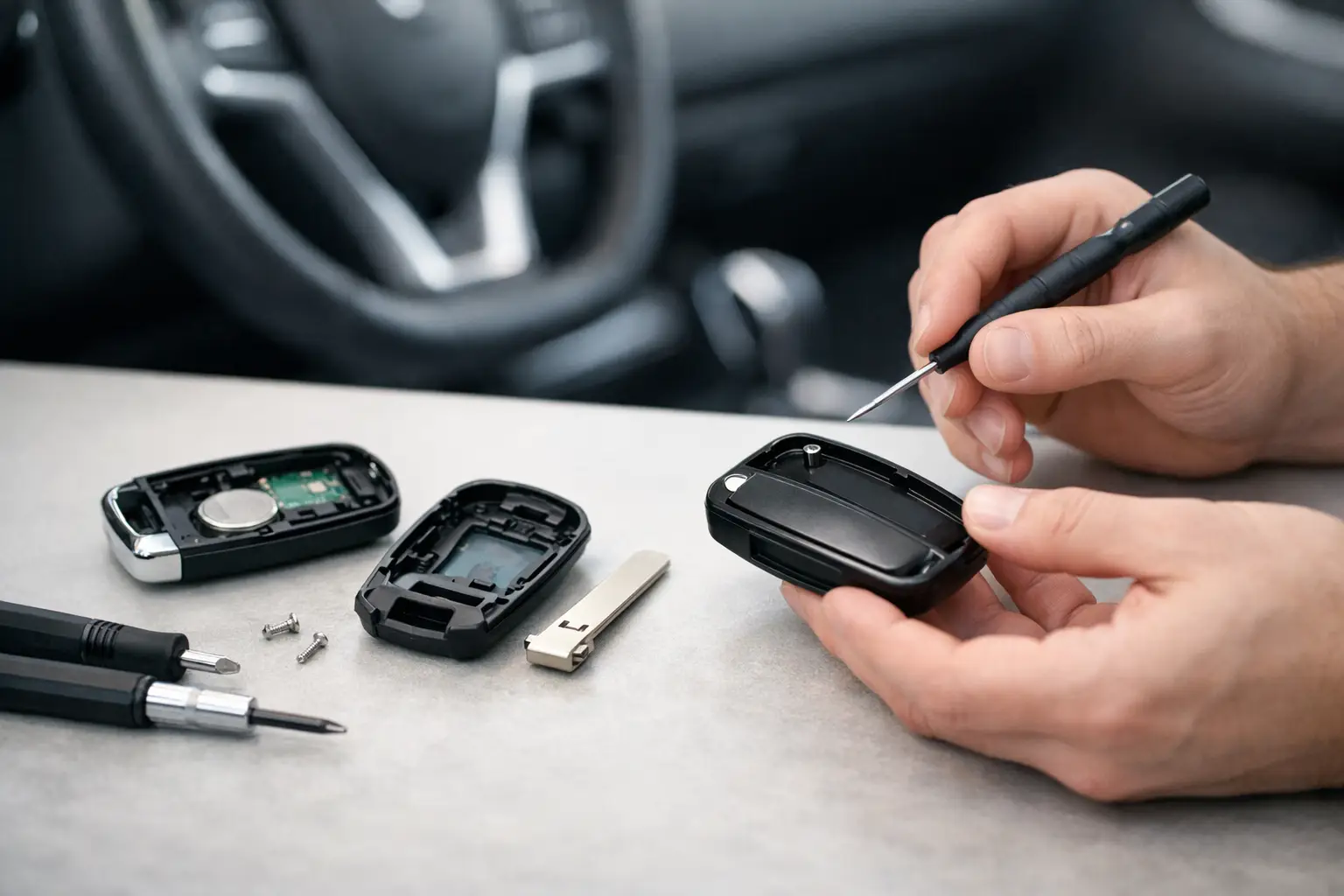
With flip keys, the shell often includes the spring-loaded mechanism that folds the blade in and out. When that mechanism wears or breaks, the blade may flop loose, refuse to lock open, or stop folding back into place. Replacing the shell can restore normal use, but the spring has to be fitted correctly and the blade transferred without damage.
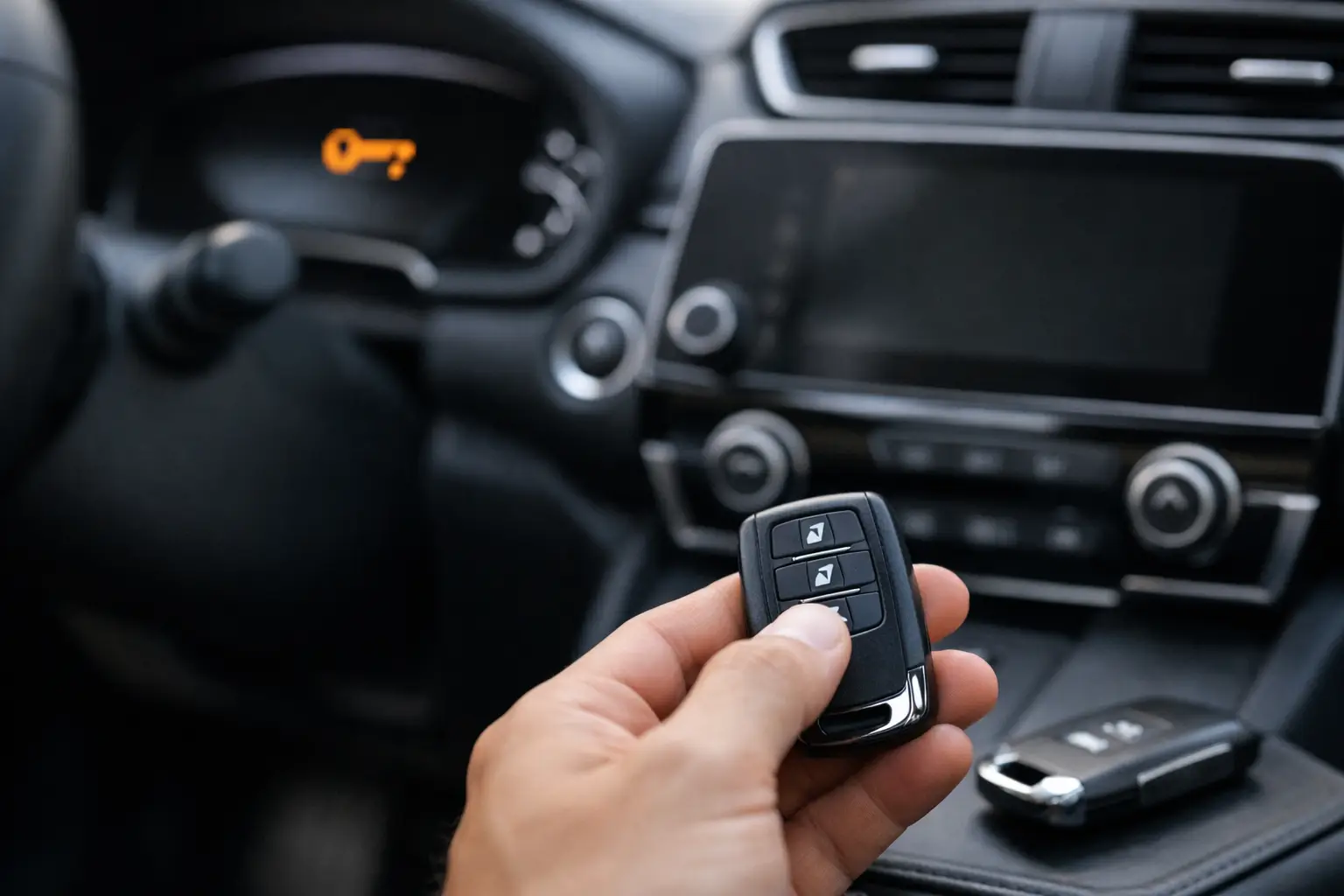
Smart keys and proximity fobs are different. These usually do not have a flip blade as the main working part, but they still rely on a casing that protects the electronics and battery compartment. If the shell cracks or the buttons fail physically, the case may still be replaceable. The catch is that smart keys are less forgiving if the internal board or coil is damaged during transfer.
This is where experience matters. The job can look simple from the outside, but some keys contain delicate chips, glued sections, or tiny contact points that are easy to damage if opened carelessly.
DIY or professional repair?
Some shell replacements are basic enough for a careful owner. If the key opens cleanly, the board lifts out easily, and there is no blade cutting involved, you may be able to swap the parts over yourself. That is more realistic on simpler remote keys where the electronics are clearly separated from the casing.
But plenty of jobs go wrong halfway through. Small transponder chips get lost. Flip-key springs are installed the wrong way. The blade pin is forced out and bends. The circuit board cracks under pressure. Then a cheap shell replacement becomes a full key replacement.
If the key is your only working key, the risk is higher. The same applies if your vehicle uses an immobilizer chip that must stay paired with the car. In those cases, professional handling is the safer option because the shell can be replaced while protecting the original internals.
Why matching the shell matters
A key fob may look almost identical to another version and still be wrong. The button layout, battery position, blade profile, internal clips, and chip recess all need to match. Even within the same make, different years and models can use very different housings.
That is why guessing based on appearance often leads to trouble. The shell may arrive looking right from the front but fail to hold the board securely or leave the buttons misaligned. Poor fit puts pressure on the board and can stop the buttons from making proper contact.
A proper match is based on the exact key type, not just the vehicle badge. For drivers who need the repair done quickly and correctly, that saves time and avoids the cycle of ordering parts twice.
What to expect from a proper shell replacement service
A good service starts by checking whether the shell is really the issue. There is no point replacing the casing if the remote board is dead or the transponder has failed. Once the key is assessed, the electronics and blade are transferred into a matching shell, the buttons are checked, and the key is tested for both remote use and starting function where applicable.
If the blade is badly worn or damaged, it may need additional work. If the casing failure has exposed the internals to moisture or impact damage, the repair may move beyond a simple shell swap. A specialist automotive locksmith can tell you quickly whether it is still worth repairing or whether a full replacement key is the better route.
For local drivers dealing with a cracked or failing key, that kind of straight answer matters. You want the key fixed without guesswork, unnecessary costs, or damage to the only key you have left. That is exactly why many people call a specialist rather than taking a chance on a generic repair.
Car key fob shell replacement is not always enough
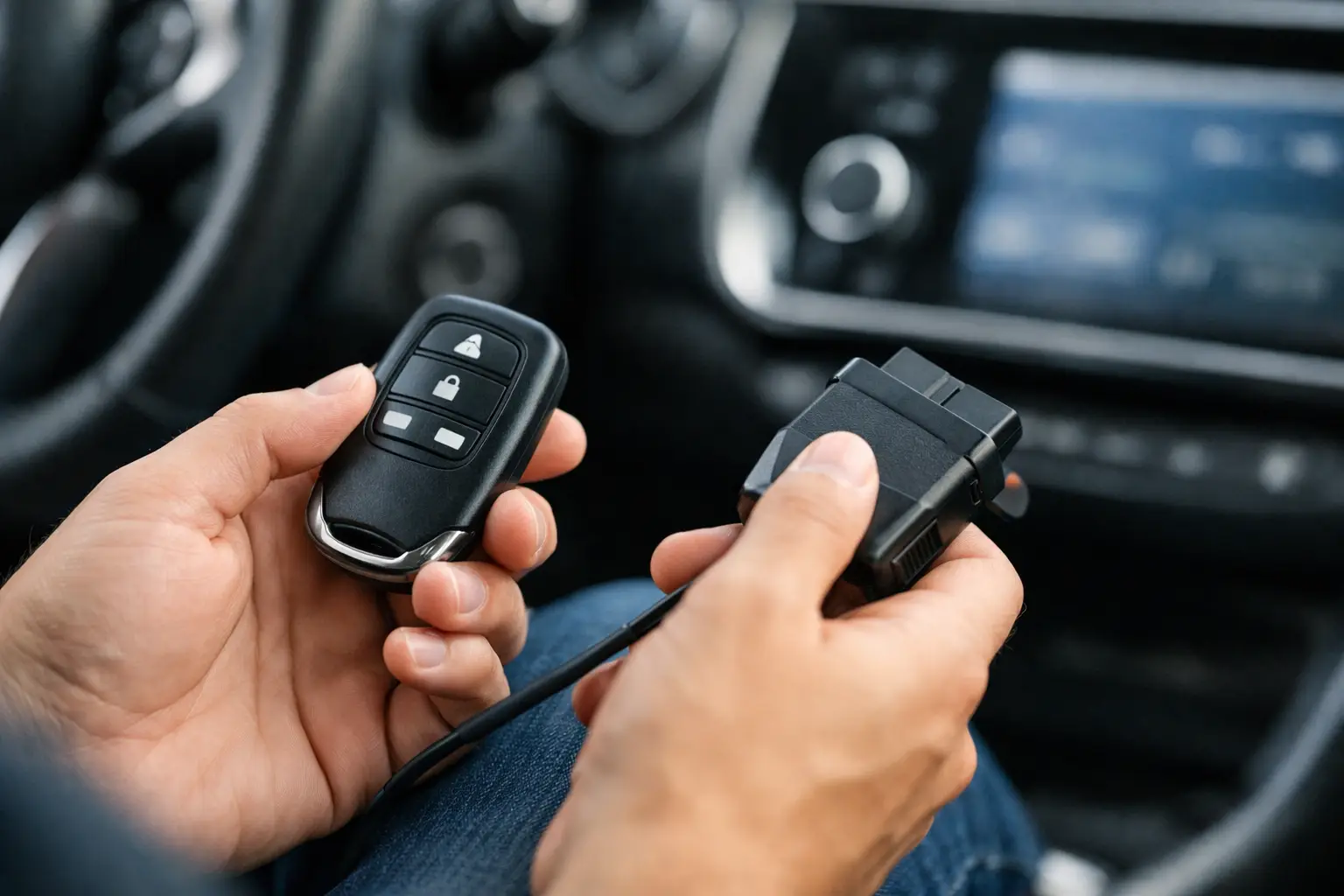
There are cases where the shell is only part of the story. If the key has been run over, soaked, or forced open, the board inside may already be compromised. If the car is showing immobilizer issues, not detecting the key, or failing to respond to the remote even with a fresh battery, a casing alone will not solve it.
That does not mean the situation is worse than it looks, only that the repair has to match the fault. Sometimes the right answer is shell replacement. Sometimes it is board repair, battery contact repair, reprogramming, or a completely new key. The most cost-effective option depends on what still works and what does not.
If your key fob is cracked, loose, or barely holding together, do not wait until it fails in a parking lot or outside your house on a wet morning. A worn shell is often easy to sort out when caught early, and a specialist can tell you quickly whether the fix is simple or whether the key needs more than a new case.

Related Posts