Does key cutting require original keys? Learn when a locksmith can cut a replacement from a code, lock or spare, including modern car keys. Fast.
Your Practical Guide to Car Key Chip Coding
A guide to car key chip coding is useful when your car key turns in the ignition but the engine will not start, a spare key has stopped working, or you need a replacement after losing the original. The small electronic chip inside many vehicle keys is what tells the immobiliser that the correct key is present. Without that recognition, the car may crank but refuse to run.
For drivers across Glasgow, Cumbernauld, Paisley, Greenock and Ayrshire, the practical point is simple: cutting a key blade is only part of the job. On most modern vehicles, the replacement key must also be correctly programmed to the car before you can drive away.
What car key chip coding actually means
Car key chip coding is the process of pairing a transponder chip, remote key or proximity key with a vehicle’s security system. The chip carries an identification code. When you place the key in the ignition, or bring a keyless fob into the car, an aerial around the ignition or cabin reads that code and checks it against the vehicle’s stored data.
If the code matches, the immobiliser permits the engine to start. If it does not match, the security system keeps the vehicle immobilised. This is why a perfectly cut metal key can open the door and turn the ignition, yet still fail to start the car.
Most cars built from the mid-1990s onwards use some form of electronic immobiliser. The technology differs between makes, models and years, but the principle remains much the same. A recognised key is needed as well as the right physical blade.
Transponder key, remote key or proximity key?
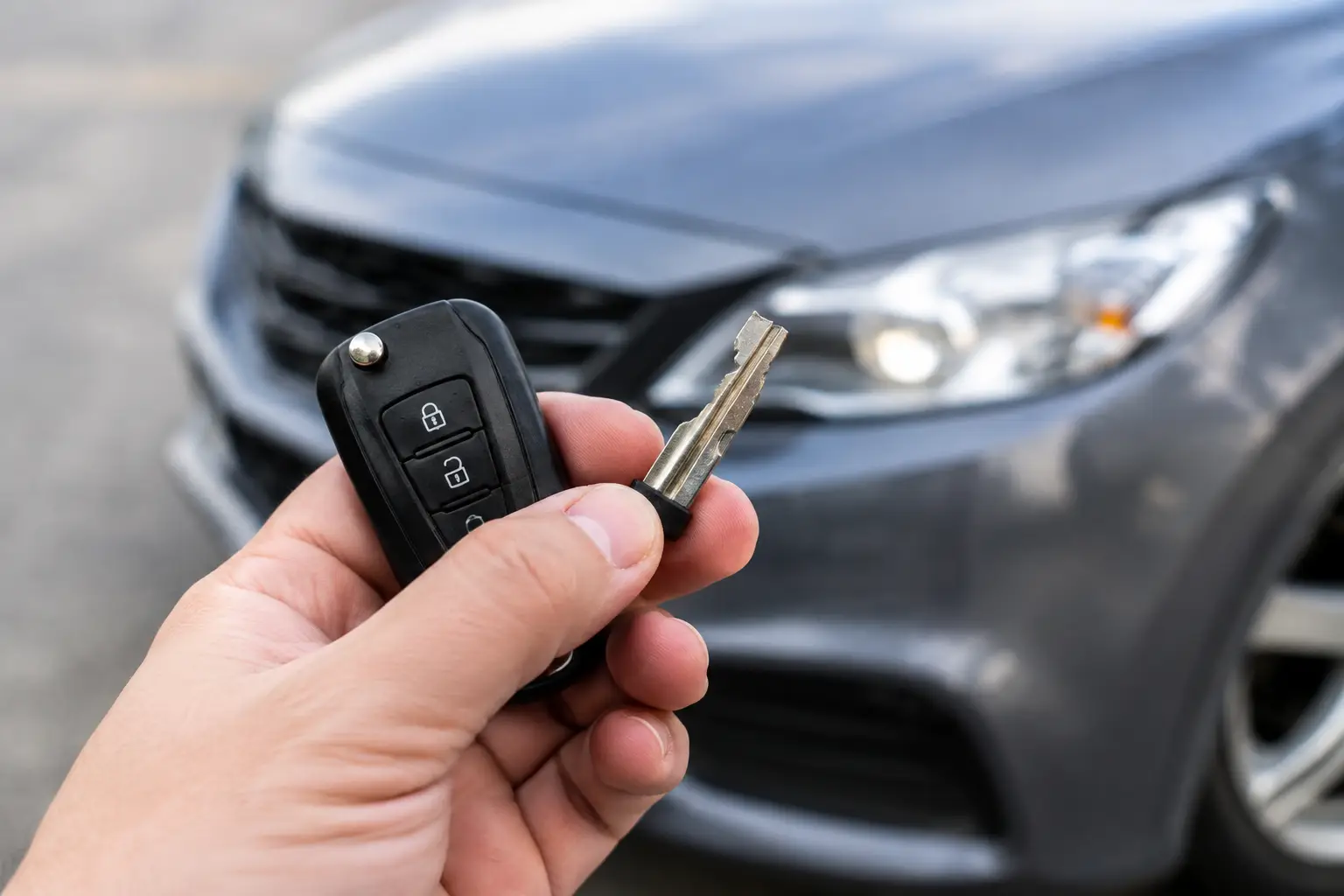
A basic transponder key usually has a metal blade and a chip hidden in the plastic head. It may not have buttons at all. A remote key combines the transponder with buttons for central locking, while a proximity or smart key communicates with the car without being inserted into an ignition barrel.
These systems can require different programming methods. On some vehicles, the remote locking functions and the immobiliser chip are programmed separately. On others, one procedure handles both. That is why the vehicle registration, make, model and year matter before any work begins.
When chip coding is needed
A replacement key nearly always needs coding, whether you have lost every key or simply want a reliable spare. It may also be required when a key has been damaged, the circuit board has failed, or an incorrect aftermarket key has been supplied.
There are a few situations where the fault is not coding at all. A flat remote battery can stop the buttons from operating central locking, but it will not normally affect the passive immobiliser chip in a standard transponder key. A worn ignition barrel, damaged key blade, flat vehicle battery or faulty aerial ring can create symptoms that look like a coding problem.
That distinction saves time and money. Before programming a new key, a competent automotive locksmith checks what the car is doing. Does the dashboard show an immobiliser warning? Does the engine turn over? Does one key work while another does not? Are the doors responding to the remote buttons? The answers point towards the right repair.
A guide to car key chip coding without guesswork
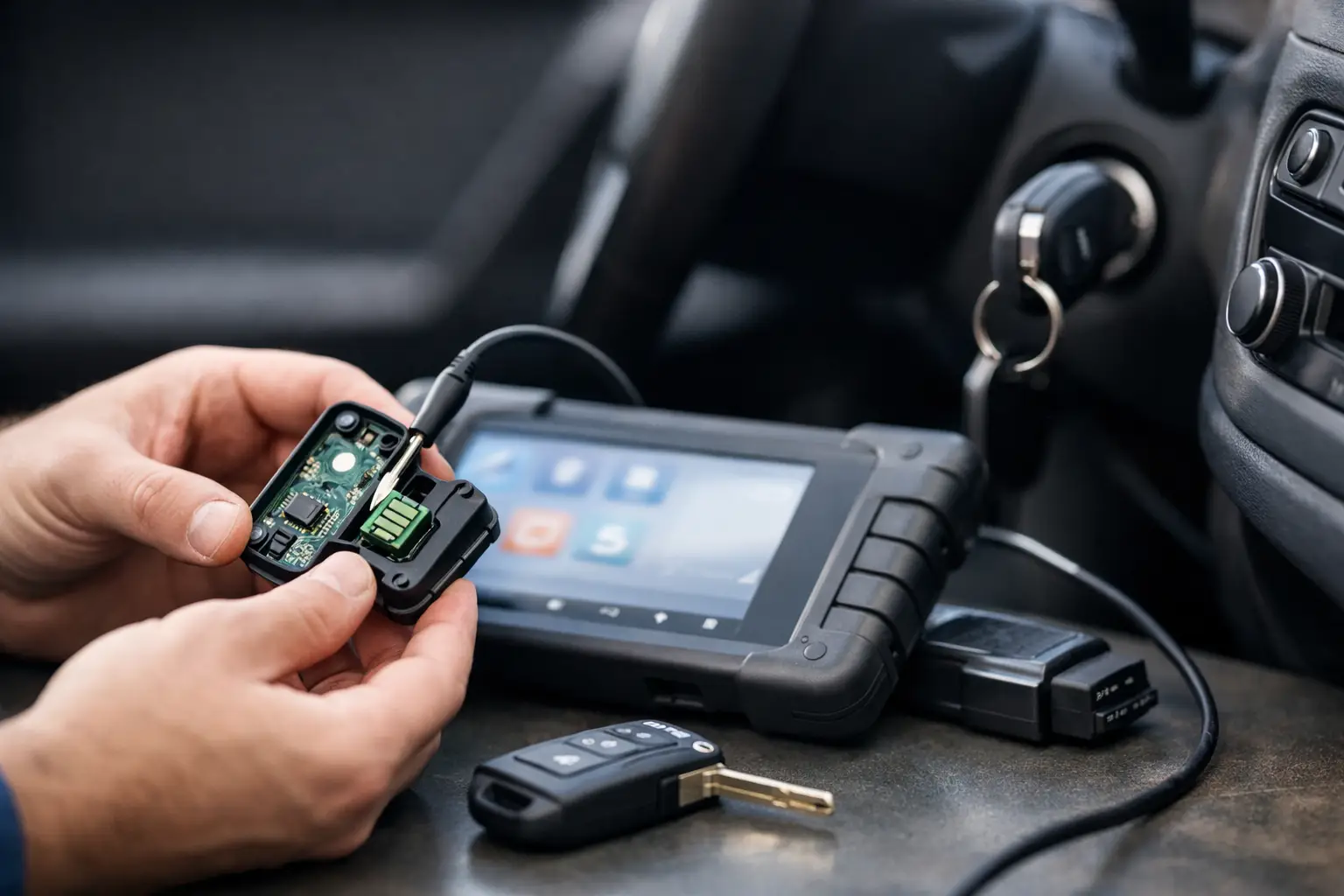
The safe route is to identify the exact vehicle and key type first, then test the existing key where possible. A specialist uses suitable diagnostic and programming equipment to communicate with the vehicle, read the required information and add, replace or erase keys as appropriate.
The process is not the same for every car. Some models allow an additional key to be programmed through the vehicle’s diagnostic port. Others require security data from the immobiliser, engine control unit or a dedicated module. Certain systems need the key prepared before it can be accepted, while other keys can only be programmed once.
This is also why cheap keys bought online can be a gamble. The case may look identical, but the blade profile, chip type, frequency, circuit board or key generation may be wrong. A used key can be another problem because many vehicle keys are locked to the first car they were programmed to. It may need specialist preparation, or it may not be reusable at all.
A professional replacement is not simply about making the engine start. The key should operate the locks correctly, start the vehicle consistently and suit the security system fitted to that particular model.
Coding a spare key versus replacing all keys
Having one working key makes the job more straightforward on many vehicles, as it gives the locksmith something to test against and can reduce the time needed to establish the correct specification. It does not always mean the job is quick, however. High-security systems can still require security access and careful programming.
When all keys are lost, the work is more involved. The vehicle may need to be opened without damage, a key blade cut, and the immobiliser system accessed so a new key can be introduced. On some cars, lost keys should also be removed from the vehicle memory. This prevents a missing key from being used to start the car if it later turns up in the wrong hands.
For this reason, a lost-key replacement is usually priced differently from coding an additional spare. The fair answer depends on the car, its security system, the key style and whether the vehicle is accessible at the time.
Why do car key chips stop working?
Transponder chips are generally reliable, but keys live hard lives. They get dropped on pavements, soaked in rain, crushed in pockets, put through washing machines and forced in worn ignition barrels. A cracked key head can let the chip move or break. On remote keys, damaged buttons, corroded battery contacts and failed circuit boards are common faults.
Sometimes the car is at fault rather than the key. An immobiliser antenna fault, wiring problem, low vehicle voltage or module issue can prevent the chip from being read. If every key fails at once, it is sensible to investigate the vehicle before assuming both keys suddenly need recoding.
Warning signs worth acting on include an intermittent immobiliser light, a key that works only after several attempts, remote buttons that need pressing repeatedly, a split key case, or a key that has been wet. Dealing with these early is far easier than being stranded outside work, at the supermarket or on the school run with no working key at all.
Can you code a car key yourself?
Occasionally, yes, but it depends heavily on the vehicle. Some older models have owner procedures for synchronising remote central locking, often involving the ignition and door locks. That is not necessarily immobiliser programming. It may make the buttons work while leaving the engine-start chip unchanged.
Modern key coding commonly needs specialist tools, accurate key data and experience with the manufacturer’s security system. An unsuitable procedure can waste money on the wrong key or leave the car with keys that no longer communicate properly. There is also a security reason for this complexity: vehicle makers are designed to stop unauthorised keys being added.
If you do buy a replacement shell, remember that moving a working chip and circuit board into a new shell is different from coding a new key. A shell repair can be a sensible, lower-cost option where the electronics are sound and only the case, blade or button pads are damaged.
What to have ready when you call a car locksmith
To programme a replacement key safely, a locksmith will need to confirm that you are entitled to the vehicle. Have your vehicle registration, make, model and approximate year available, along with proof of ownership and photographic identification where required. Tell them whether you have a working key, whether the car starts, and whether the remote locking works.
It also helps to say where the vehicle is parked. On-location key programming needs safe access to the vehicle and enough room to work. If the car is in a multi-storey car park, blocked on a drive, or has a flat battery, mention that at the start.
Auto Locksmith Doctor Ltd provides mobile car key replacement and programming across West Central Scotland, including non-destructive vehicle entry where keys are locked inside or all keys have been lost. The aim is to diagnose the actual fault, supply the correct key where possible and get you moving without unnecessary damage or delays.
A spare coded key is one of the simplest ways to avoid an expensive emergency. If your only key is cracked, unreliable or has been through the wash, arrange to have it checked before it becomes the key that leaves you unable to start the car.

Related Posts