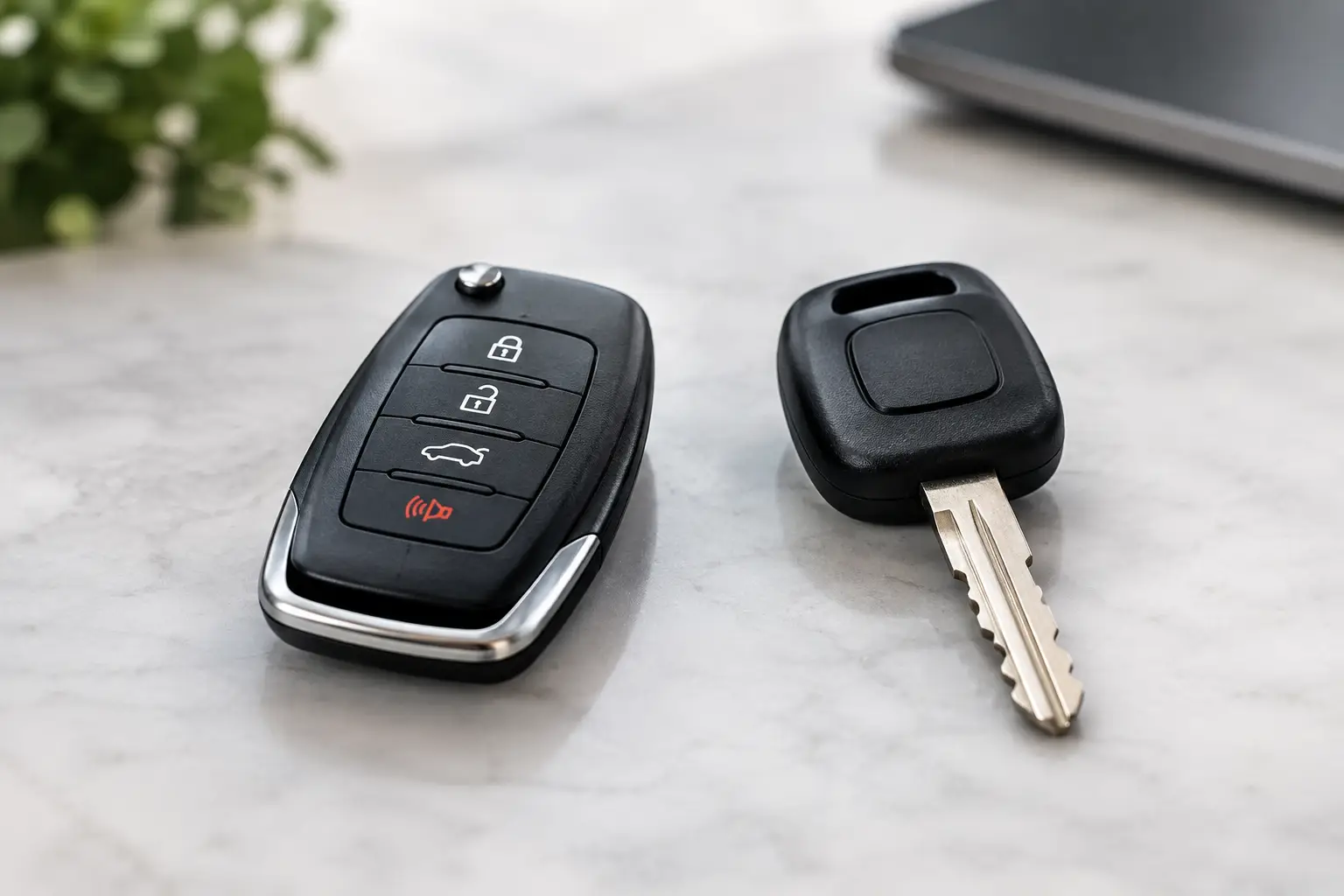
Smart key versus transponder key: learn how each works, what fails, replacement costs and when a Glasgow auto locksmith can get you moving again quickly.
Fixing Common Proximity Key Battery Issues
A proximity key usually fails at the worst possible time: outside the supermarket, on the drive before work, or when you have children and shopping to get home. Most proximity key battery issues begin with small warning signs – reduced locking range, an intermittent key warning on the dashboard, or a car that only starts when the fob is held close to the start button. Acting early can save a lockout and avoid unnecessary stress.
A weak fob battery is often a straightforward fix, but it is not the only possible cause. Modern keyless systems rely on the fob, the vehicle antennae, the car battery, door-lock sensors and the immobiliser all communicating correctly. Knowing what to check first helps you avoid changing parts that are not at fault.
How a proximity key works
Unlike a traditional remote key, a proximity key does not always need a button press to communicate with the vehicle. When the fob is within range, the car detects it through low-power radio signals. You can then unlock the doors by touching the handle and start the engine with the button, provided the immobiliser recognises the key.
The battery inside the fob powers this communication. Once its charge drops, the fob may still work occasionally, especially at very close range, but it can no longer send a reliable signal. That is why a car can seem to have an unpredictable fault when the real problem is simply a tired coin-cell battery.
Common signs of proximity key battery issues
The clearest sign is a dashboard message such as “Key battery low”, “Replace key battery” or “Key not detected”. Do not ignore it because the car is still starting. The warning is telling you the fob is nearing the point where it may not communicate at all.
You may also notice that you need to stand closer to the car before the doors unlock, or that passive entry works on one occasion and not the next. Some drivers find that the remote buttons still lock and unlock the vehicle, while keyless entry has stopped working. Others can unlock the car but receive a “key not detected” message when pressing the start button.
A weak battery can be more noticeable during cold weather. Low temperatures reduce battery performance, so a marginal fob may work indoors but fail when the car is parked outside overnight in Glasgow, Paisley or Ayrshire.
The car starts only when the fob is held close
Most push-button-start vehicles have an emergency recognition point. Depending on the make and model, this may be beside the start button, in a marked area of the centre console, inside a cup holder or against the steering column. Holding the fob in that position allows the vehicle to read its transponder even when the remote battery is weak or flat.
Check the vehicle handbook for the correct location. This is a useful temporary measure, not a reason to put off fitting a new battery. If the fob is damaged, water affected or has an internal fault, the emergency position may not solve the problem.
Replacing the battery without damaging the fob
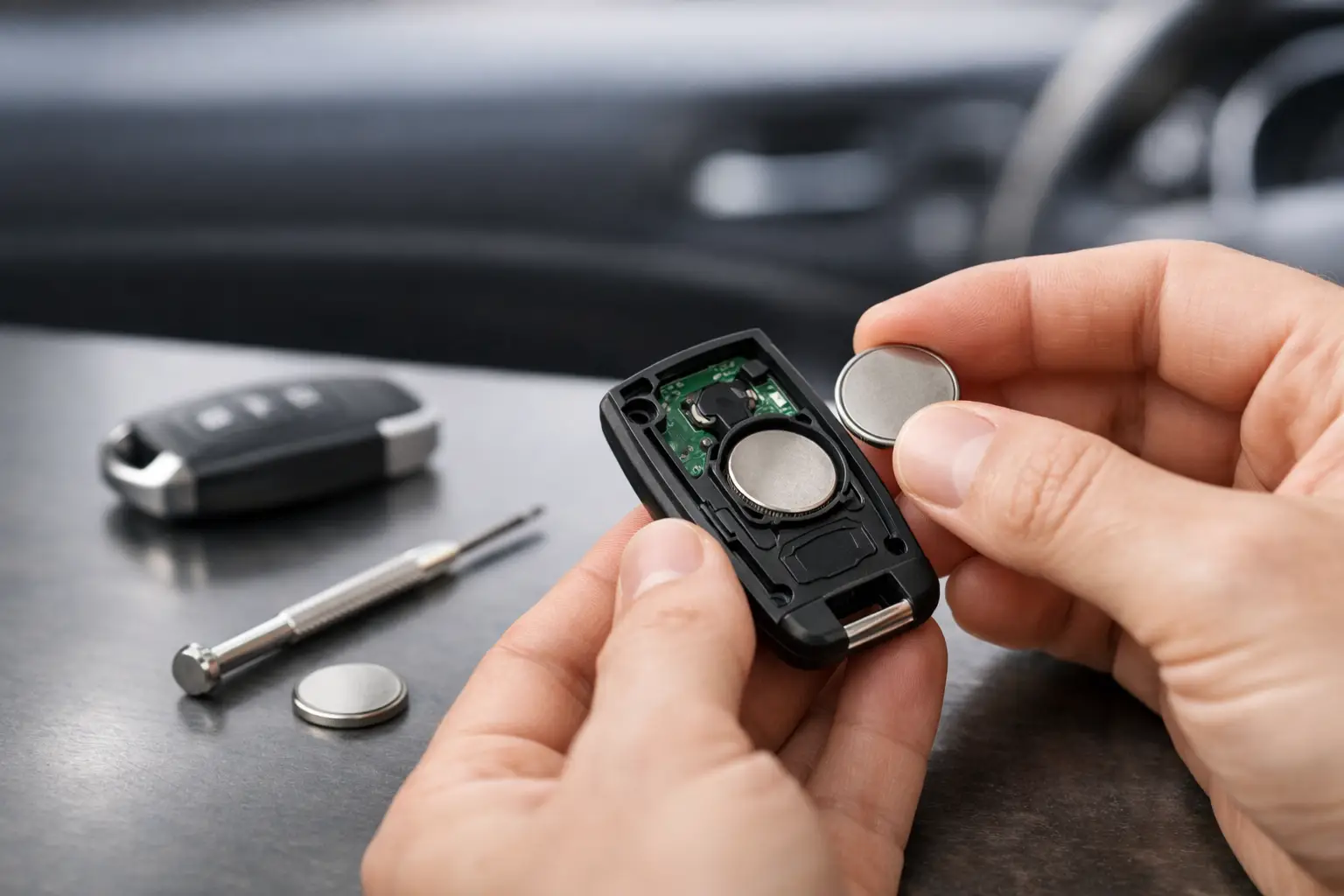
Before opening the key, identify the correct battery type. Many proximity fobs use a CR2032, CR2025 or CR2450 coin cell, but there is no universal battery. The number printed on the existing battery matters, as does the battery orientation. Fitting the wrong thickness or putting the new cell in upside down can stop the fob working.
Work on a clean, dry surface and use the mechanical emergency blade first if it needs to be removed. Most fobs have a small release catch and a narrow seam around the shell. Open it gently with a suitable plastic trim tool or a small flat tool protected with tape. Forcing the casing can crack the shell, damage the internal circuit board or break the retaining clips.
Once open, take note of the positive and negative markings before removing the old cell. Avoid touching the contacts unnecessarily and make sure the new battery sits firmly in place. Refit the cover evenly rather than pressing one corner down hard. Then test the lock, unlock and passive-entry functions beside the vehicle.
Changing the battery does not normally erase the key programming. If the key stops working immediately after a careful battery replacement, the cause may be a poor battery connection, a damaged fob shell, the wrong cell, or an existing fault that happened to appear at the same time.
When a new battery does not fix the problem
Not every keyless fault is a battery fault. If you have replaced the cell and the fob still will not operate, try the spare key if you have one. This is one of the quickest ways to narrow the problem down.
If the spare works normally, the original fob may have a damaged circuit board, worn button contacts, moisture damage or a broken battery terminal. A dropped key can look fine from the outside while a solder joint or internal aerial has failed. A worn or split shell can also let moisture and dirt into the electronics.
If neither key works, look at the vehicle rather than assuming both fobs have failed. A weak or flat car battery can affect central locking, keyless entry and immobiliser communication. The same applies to a blown fuse, a faulty door-handle sensor, receiver fault or an issue with the vehicle’s body control system. Repeated lock and unlock attempts can also flatten a struggling vehicle battery further.
Do not confuse remote locking with immobiliser recognition
The remote buttons and the immobiliser are related but separate functions. A fob with a flat battery may still start some cars when placed at the emergency recognition point because the transponder can be read at close range. Equally, a car may unlock remotely but refuse to start if there is an immobiliser or key-programming fault.
This distinction matters when diagnosing the problem. Replacing the battery is sensible if the warning signs point to it, but it will not repair a lost key code, a faulty transponder or a vehicle-side immobiliser issue.
Avoid turning a small fault into a lockout
When the fob starts behaving inconsistently, use the mechanical key blade before you are locked out completely. Find the hidden door-lock cover while you are at home, rather than trying to work it out in the rain at a petrol station. On many cars, the keyhole is behind a small cap on the driver’s door handle.
Keep a spare battery at home if your vehicle uses a proximity key, particularly before a long journey or winter travel. Choose a reputable, sealed battery and avoid old stock from the bottom of a drawer. Coin cells may look fine but lose charge over time.
It is also worth keeping the spare key in a safe place, not inside the vehicle and not on the same keyring as the main fob. A spare key is useful for more than lost keys. It tells you whether you have a single-fob fault or a wider vehicle problem.
When to call an automotive locksmith
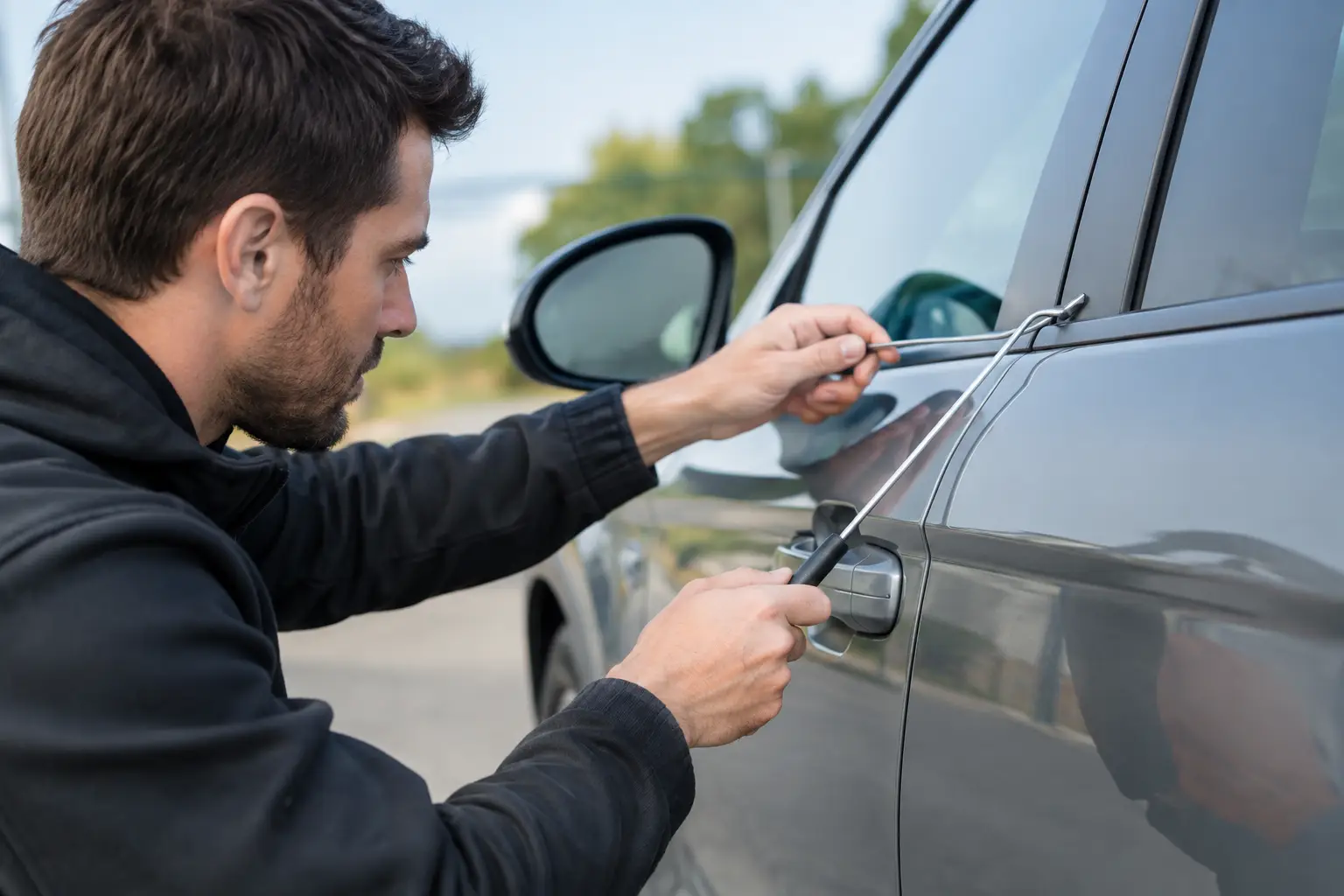
Call a specialist if the fob will not work after a correct battery change, the casing is broken, the car says “key not detected”, or you are locked out with no working key. A general locksmith may be able to help with a house lock, but modern vehicle keys often need specialist diagnostic equipment, key cutting tools and transponder programming knowledge.
Auto Locksmith Doctor Ltd provides damage-free vehicle entry, replacement keys, fob shell repairs and key programming across West Central Scotland. For drivers in Glasgow, Cumbernauld, Greenock, Paisley and Ayrshire, mobile help can be the practical answer when a proximity key issue has left the car unusable. If access cannot be gained on site, there is no charge for the opening attempt.
Do not keep forcing a faulty fob, prising door handles or repeatedly pressing the start button. Keep the key dry, use the emergency recognition point if your handbook specifies one, and get the fault checked before the next journey depends on it.

Related Posts