What causes car key snapping? Learn why keys break in locks or ignitions, what to do next, and how a specialist auto locksmith can help safely on site.
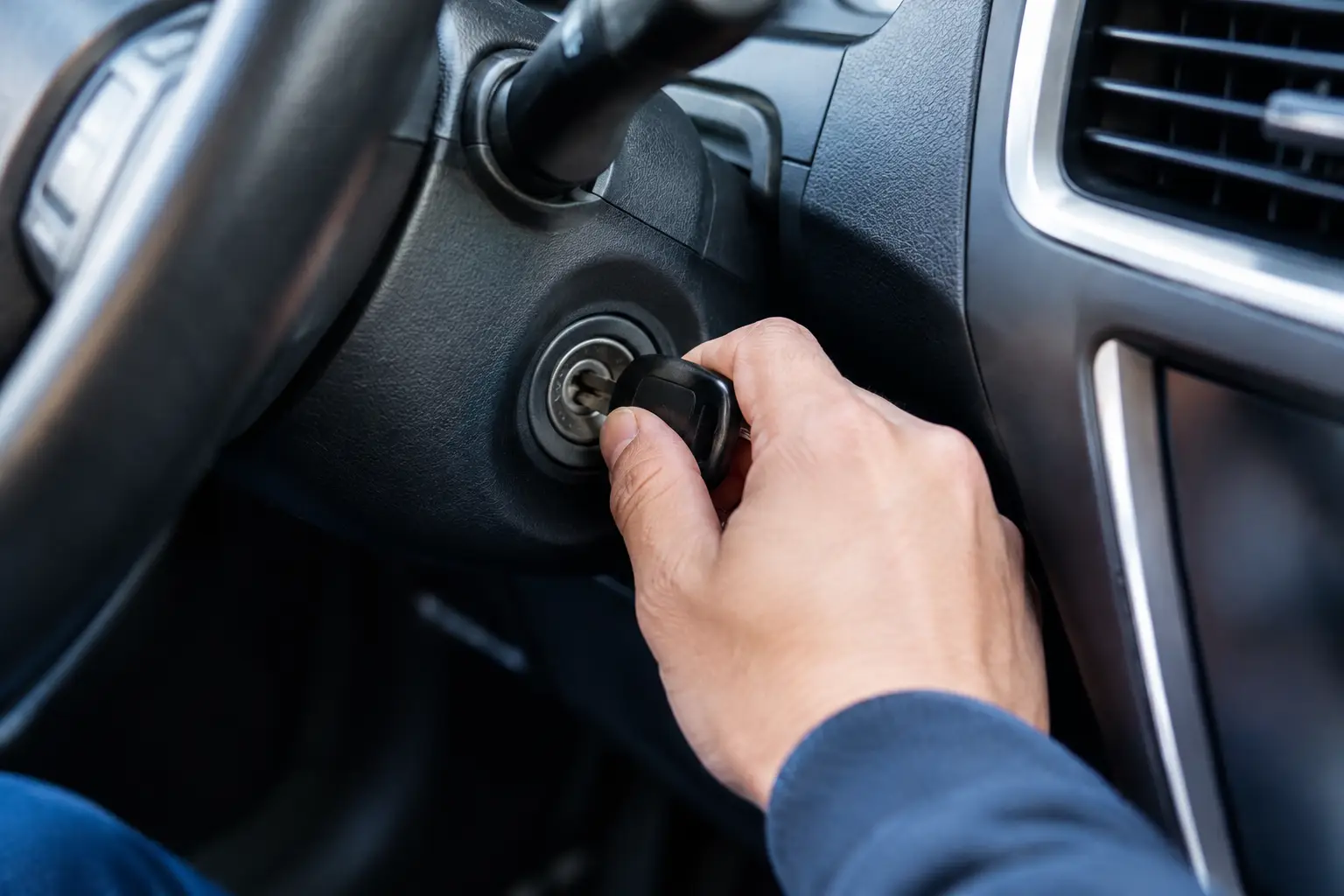
Stuck Ignition Key? What to Do Before It Breaks
A stuck ignition key is more than an inconvenience when you are outside work, on the school run or trying to get home. The temptation is to twist it harder, pull it with pliers or spray anything to hand into the barrel. That is often how a straightforward fault turns into a broken key, a damaged ignition lock and a car that needs more extensive repair.
Start by staying calm and avoid forcing anything. Ignition keys get stuck for several different reasons, from steering-lock pressure to a worn key blade or a failing ignition barrel. Some checks are safe to make at the roadside. Others need a specialist auto locksmith with the right tools and knowledge to protect the vehicle.
Why does an ignition key get stuck?
The most common cause is pressure on the steering lock. If the wheels were turned sharply when the car was parked, the steering wheel can bind against the lock mechanism. The key may then refuse to turn back to the removal position, even though it looks as if it should come out.
A worn key is another frequent culprit. Over years of use, the cuts on a mechanical key blade become rounded. The key may still start the car, but it no longer lifts the wafers inside the ignition barrel accurately. This can leave it jammed, difficult to turn or reluctant to come out.
The ignition barrel itself may also be worn or damaged. Internal wafers, springs and moving parts work every time you use the vehicle. Dirt, age and a heavily used keyring can all contribute to wear. On some cars, a faulty barrel begins with occasional sticking before failing altogether.
Automatic vehicles have an extra possible cause. Many will not release the key unless the selector is fully in Park. If the gear selector switch, linkage or shift-lock system is not recognising Park correctly, the key can remain trapped in the ignition.
Electronic faults matter too. Modern cars may use an ignition switch, steering column lock or key-release solenoid alongside the mechanical barrel. A weak vehicle battery, a failed switch or an electronic steering lock issue can prevent normal key removal. The right diagnosis depends on the car, its age and the symptoms.
Safe checks for a stuck ignition key
Before arranging assistance, try the following only if the key is intact and you are in a safe place. Use gentle pressure throughout. If the key feels as though it is bending, stop immediately.
Relieve the steering-lock pressure
Hold the key lightly in the ignition and turn the steering wheel left and right. Usually, one direction will be completely tight while the other has a small amount of movement. Apply gentle pressure towards the direction that moves while carefully turning the key towards the off or removal position.
Do not jerk the wheel or wrench the key. The goal is to take load off the steering lock, not overpower it. If the key releases, remove it and consider having a stiff ignition checked before it leaves you stranded again.
Check the gear selector
For an automatic, press the foot brake, make sure the handbrake is applied and move the selector firmly into Park. Keep pressure on the selector as you gently try the key again. It can also help to move the selector through its positions and back to Park, provided the vehicle is stationary and secure.
For a manual car, ensure the vehicle is in neutral and the handbrake is fully on. This will not normally control key removal in the same way, but it keeps the vehicle safe while you check the ignition.
Take pressure off the key
A heavy bunch of keys can pull down on the blade while driving, especially on older vehicles. Support the keyring with one hand and use the other to gently move the key towards its removal position. Avoid pulling directly outward while twisting, as this can bend the blade or damage the internal parts of the barrel.
Use the spare key if you have one
If the original key has come out but is difficult to use, try the spare key. A spare that turns smoothly is a strong sign that the everyday key is worn. Do not keep using the worn key until it breaks. A replacement key cut and programmed before total failure is usually less disruptive than dealing with a vehicle immobilised at the roadside.
What not to do when a key is jammed in the ignition
The wrong DIY fix can make the vehicle harder and more costly to repair. Avoid using pliers, grips or excessive leverage on the key. Car keys are designed to operate precisely inside the lock, not to withstand twisting force from tools.
Do not spray household oil, thick grease or random lubricants into the ignition barrel. These products can collect grit and contaminate the internal components. Some lock lubricants are suitable in specific situations, but they will not repair worn wafers, a broken steering lock or an electronic fault.
It is also unwise to strike the ignition housing, dismantle steering-column covers without experience or drill the barrel. Modern steering columns often contain airbags, immobiliser components and delicate wiring. Damage can quickly go beyond the original stuck key problem.
If the blade snaps, leave it in place where possible. Trying to hook out a broken section with improvised tools can push it deeper into the barrel. A specialist can remove the fragment properly, assess the lock and provide a correctly cut replacement key if required.
When a stuck ignition key needs professional help
Call a specialist auto locksmith if the steering-wheel check does not work, the key will not turn, the key is visibly worn or bent, or you feel any resistance that suggests it could break. Immediate help is also sensible if the car is blocking traffic, you are stranded away from home or the key is stuck with the engine running.
A vehicle-specific locksmith can assess whether the fault lies with the key, ignition barrel, steering lock, gear-selector interlock or vehicle electronics. This matters because the correct repair differs from car to car. Replacing a key will not fix a damaged barrel, and forcing a barrel will not solve an electronic steering-lock fault.
For many vehicles, the work can be completed at your location. That may include non-destructive key extraction, ignition-lock repair, replacement key cutting, transponder programming or key fob shell replacement. On coded vehicles, any new key must be compatible with the immobiliser as well as physically cut to operate the lock.
Auto Locksmith Doctor Ltd provides specialist automotive locksmith support across Glasgow, Cumbernauld, Paisley, Ayrshire and Greenock, using damage-free methods wherever possible. A proper diagnosis at the vehicle helps avoid paying for the wrong part or arranging recovery when a mobile repair is possible.
Can you drive with a faulty ignition barrel?
Sometimes, but it is a gamble. If the key has started sticking once, it can stick again without warning. You may arrive somewhere and find that the key will not come out, or remove it at home only to discover it will not turn when you next need the car.
There is also a safety and security consideration. A vehicle with an ignition that does not return properly, a key that cannot be removed or an unreliable steering lock should be checked promptly. Do not leave a car unattended with the engine running simply because the key will not release.
The sensible approach depends on the symptoms. A key that only sticks when the steering wheel is under load may need a change in parking habit and an inspection if it worsens. A key that binds every time, needs jiggling to start the vehicle or feels loose in the barrel is more likely to need repair before it fails completely.
Preventing the problem from returning
Use a lighter keyring and avoid using the ignition key as a tool for opening parcels or prising items apart. Keep a working spare key somewhere safe rather than in the vehicle. If your main key is visibly worn, cracked or held together with tape, arrange a replacement before it becomes an emergency.
Pay attention to early warning signs: a key that needs wiggled, a steering lock that feels unusually tight, an ignition that catches on removal or an automatic selector that does not always recognise Park. These are far easier to deal with before the key is trapped in a supermarket car park or outside your home at the end of a long day.
A stuck key is rarely improved by more force. Gentle checks may release it, but if it does not move freely, protect the key and the ignition barrel by getting the right help before a minor fault becomes a complete no-start.

Related Posts