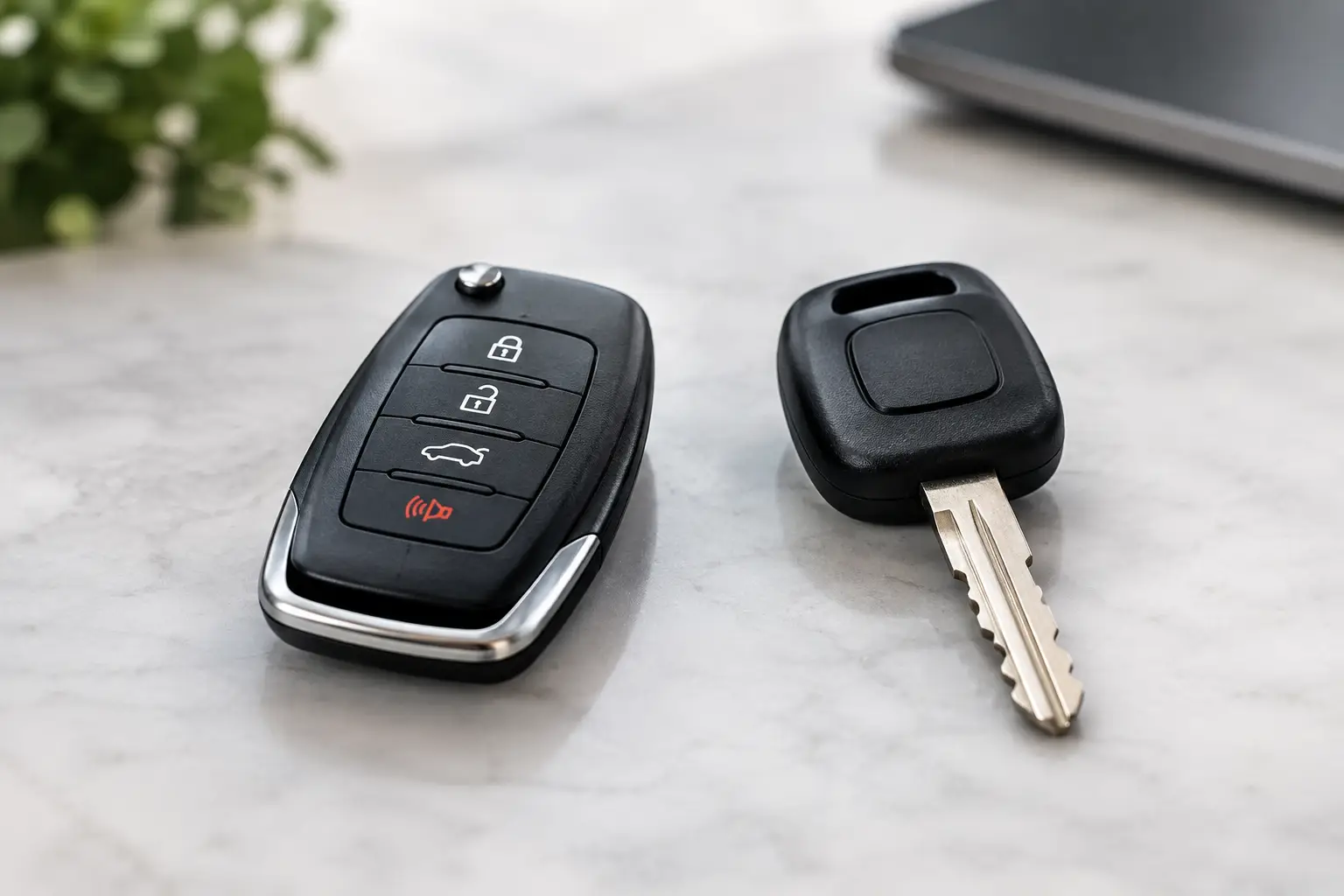
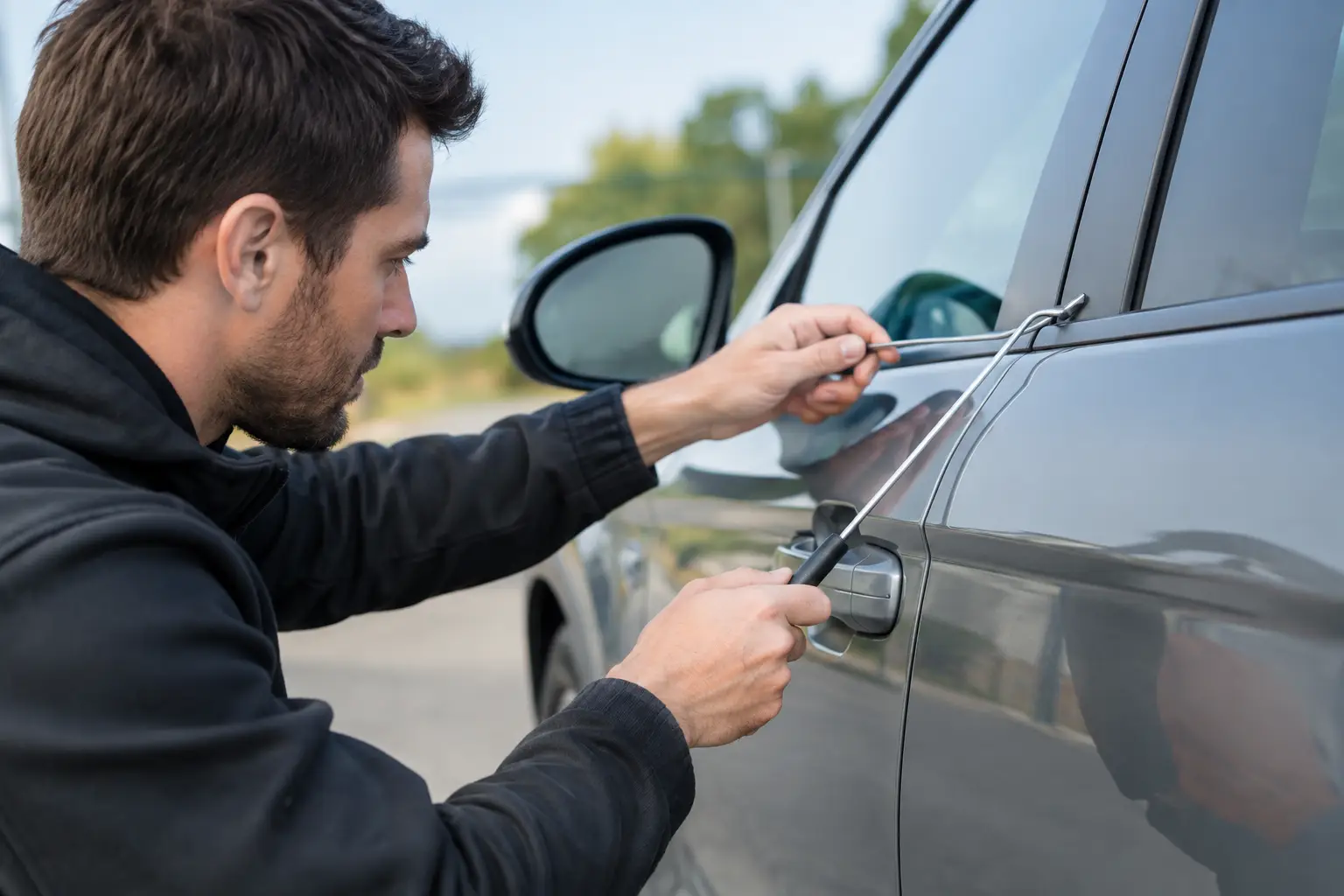
Smart key versus transponder key: learn how each works, what fails, replacement costs and when a Glasgow auto locksmith can get you moving again quickly.
How to Spot a Faulty Transponder Chip in Your Key
Your car key may still turn cleanly in the ignition, the dashboard may light up as normal, and yet the engine will not start. That is the classic situation where knowing how to spot a faulty transponder chip can save time, stress and the cost of replacing parts that are not actually at fault.
Most cars made since the mid-1990s use an immobiliser. The small transponder chip inside the key communicates with a reader around the ignition or, on keyless models, with the vehicle’s security system. If the car cannot recognise the chip, it will prevent the engine from running. This can look like a flat battery, a starter fault or a fuel problem, so it is worth checking the signs in the right order.
What a transponder chip actually does
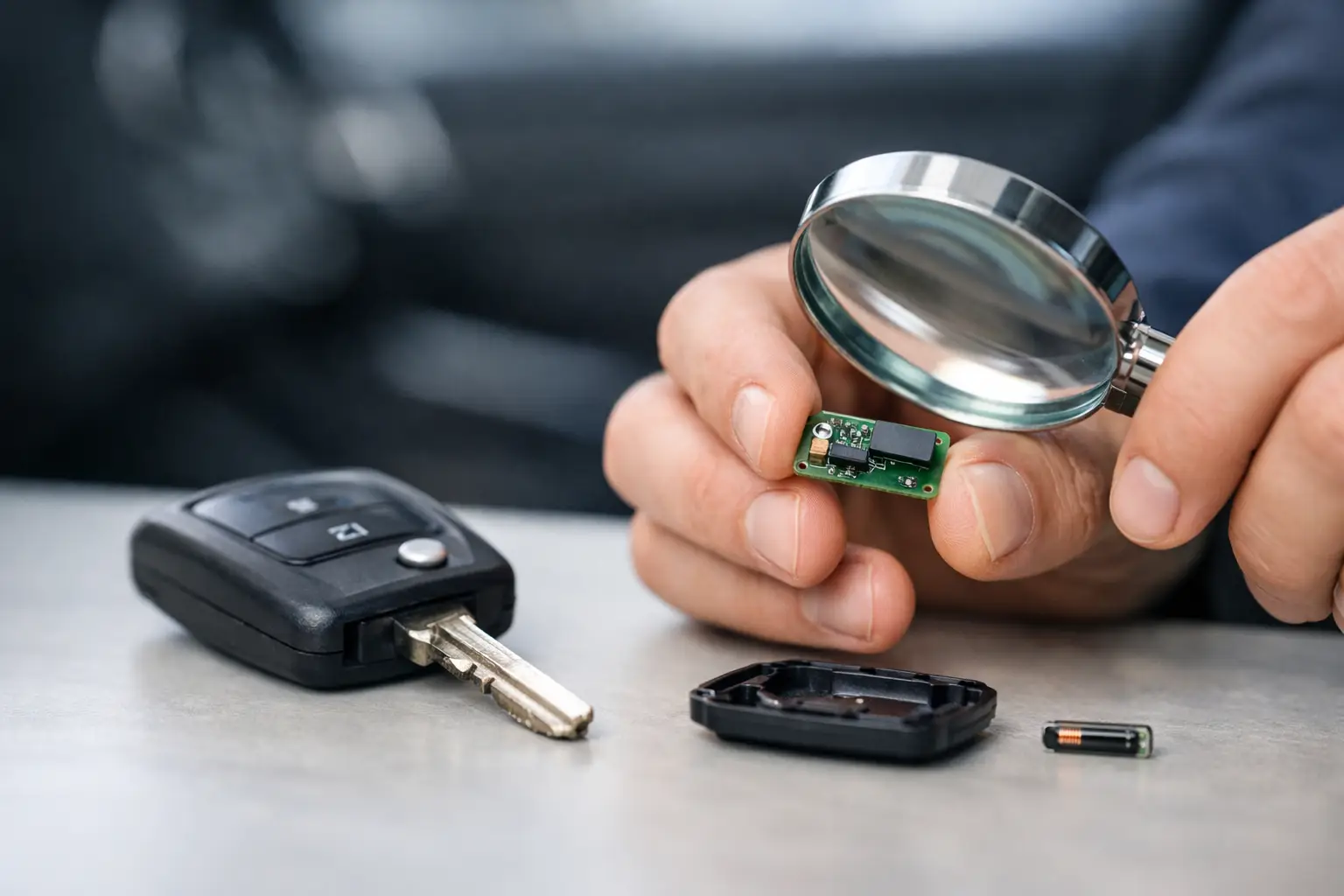
A transponder is a tiny electronic chip built into the key head or remote fob. It carries a unique code matched to your car’s immobiliser. When you put the key in the ignition, or bring a proximity key into the vehicle, the car checks that code before allowing the engine to start.
On many traditional keys, the chip does not rely on the coin battery in the remote fob. It is powered briefly by the signal from the ignition aerial. That means a remote locking button can stop working while the transponder still starts the car. The reverse can happen too: the buttons may lock and unlock the doors perfectly, but the car refuses to start because the chip is damaged, missing or no longer recognised.
The chip itself is normally very reliable. Problems are more likely after a key has been dropped, crushed, got wet, split open, repaired badly, or copied without transferring or programming the chip correctly.
Signs of a faulty transponder chip
The strongest sign is simple: the key turns, the engine cranks, but it either will not fire at all or starts and cuts out after a second or two. This is common on cars where the immobiliser allows the engine to begin running before shutting it down.
Look at the dashboard as you try to start the car. Many vehicles display an immobiliser warning light, a car-and-key symbol, a flashing key icon or a message such as “key not detected”. The exact warning varies by make and model. A light that stays on or flashes unusually while you are attempting to start is a useful clue, although it does not prove that the chip is the only fault.
A problem that affects one key but not another is even more telling. If your spare key starts the vehicle every time, the vehicle’s battery, starter, fuel system and main immobiliser are less likely to be the issue. Your usual key needs inspecting, testing or replacing.
Intermittent starting can also point to a failing key. Perhaps it works after several attempts, only when held in a certain position, or after the key case has been squeezed together. Do not assume this will sort itself out. A loose chip can eventually stop being read altogether, often at the most inconvenient moment.
A key shell that has come apart
A cracked or loose remote casing deserves attention. On some keys, the transponder is a separate, small black or glass capsule fitted into a recess in the key shell. If the casing has split after a fall, that chip may be loose, damaged or lost during a battery change.
This is particularly easy to miss when someone moves the circuit board into a replacement key shell but overlooks the transponder. The remote buttons may work because the circuit board is present, but the engine will not start because the immobiliser chip was left in the old case.
Rule out the common lookalikes first
A dead remote battery is not usually the same as a transponder failure. If the central locking has stopped responding but the car starts normally when the key is placed in the ignition, replace the fob battery and check the battery contacts. That is generally a remote-control issue, not an immobiliser issue.
Likewise, if the engine does not crank at all and the dashboard lights are weak or flickering, check the vehicle battery first. A low car battery can create a range of warning lights and electronic faults. If jump-starting the vehicle restores normal starting, the transponder was probably not the cause.
Mechanical wear is another separate problem. A badly worn blade may not turn the ignition lock properly, while a damaged ignition barrel may feel stiff or fail to return. In those cases, the key may never reach the stage where the immobiliser reads it. For push-button-start vehicles, a weak key fob battery can sometimes prevent the car detecting the fob at normal range, but many models have an emergency reader position or backup starting procedure. Check the vehicle handbook before assuming the key is faulty.
It also depends on the vehicle. Some makes show a clear immobiliser warning, while others give very little information. Some systems store fault codes that need specialist diagnostic equipment to read. That is why guessing based on one symptom alone can lead you in the wrong direction.
How to spot a faulty transponder chip safely
Start with the spare key if you have one. Try it in the same conditions and with the same vehicle battery state. If the spare works and the main key does not, stop repeatedly trying the faulty key. You have narrowed the problem down without risking damage to the lock or draining the battery.
Next, inspect the key closely. Check for a split case, signs of water entry, a missing insert, loose internal parts or damage from being run over or bent in a pocket. Do not prise open a sealed key unless you know where the chip is located. A transponder can be small enough to fall out unnoticed, and some glass transponder capsules break easily.
If you recently changed the fob battery or fitted a new shell, check whether the car stopped starting immediately afterwards. That timing matters. It may mean the chip was not moved across, the wrong shell was used, or the chip was damaged during the repair.
For a keyless vehicle, try the manufacturer’s emergency detection method if one is provided. This is often holding the fob against a marked area on the steering column or placing it in a specific compartment. If the car starts only using that backup position, the fob battery or detection range may be the problem. If it still says the key is not detected, professional testing is sensible.
Avoid using online advice that suggests bypassing the immobiliser, taping an old chip near the ignition or forcing the ignition barrel. Those shortcuts can compromise vehicle security, cause further faults and create problems for future repairs. The proper answer is to test the key and immobiliser system, then cut, transfer or programme the correct replacement where needed.
When the fault may be in the car, not the key
A key that has worked reliably for years can still be innocent. The aerial ring around the ignition, wiring, immobiliser module, body control unit or vehicle battery can all cause a no-start condition that resembles a faulty chip.
If neither of your keys starts the car, especially if both fail at the same time, the vehicle-side system needs checking. The same applies if an immobiliser warning remains on with every key, or if the car has had water damage, electrical work, a flat battery or a control-module issue. A qualified automotive locksmith can test the keys and identify whether programming is required, while some electrical faults may need a garage diagnosis.
Get the right key tested before buying another one
Cheap replacement keys can be useful only when they are the correct type, cut accurately and programmed to the vehicle. A blank key with the wrong transponder type will never start the car, no matter how well the blade fits. Some used keys cannot be reused on another vehicle without specialist preparation, and others are best avoided altogether.
A specialist automotive locksmith can read and test compatible transponders, inspect the key casing, confirm whether the chip is present and programme a replacement key where the vehicle allows it. This is often quicker and more practical than arranging recovery to a dealer, particularly when you are stranded at home, at work or in a car park.
For drivers across Glasgow, Cumbernauld, Paisley, Ayrshire and Greenock, Auto Locksmith Doctor Ltd can assess key and immobiliser-related starting problems on site. A proper test gives you a clear answer: faulty key, lost chip, programming issue or a fault on the vehicle itself.
If your key is starting the car only occasionally, arrange help before it becomes a complete no-start. Keeping a tested spare key in a safe place is far easier than dealing with an immobilised car when you need to be somewhere.

Related Posts