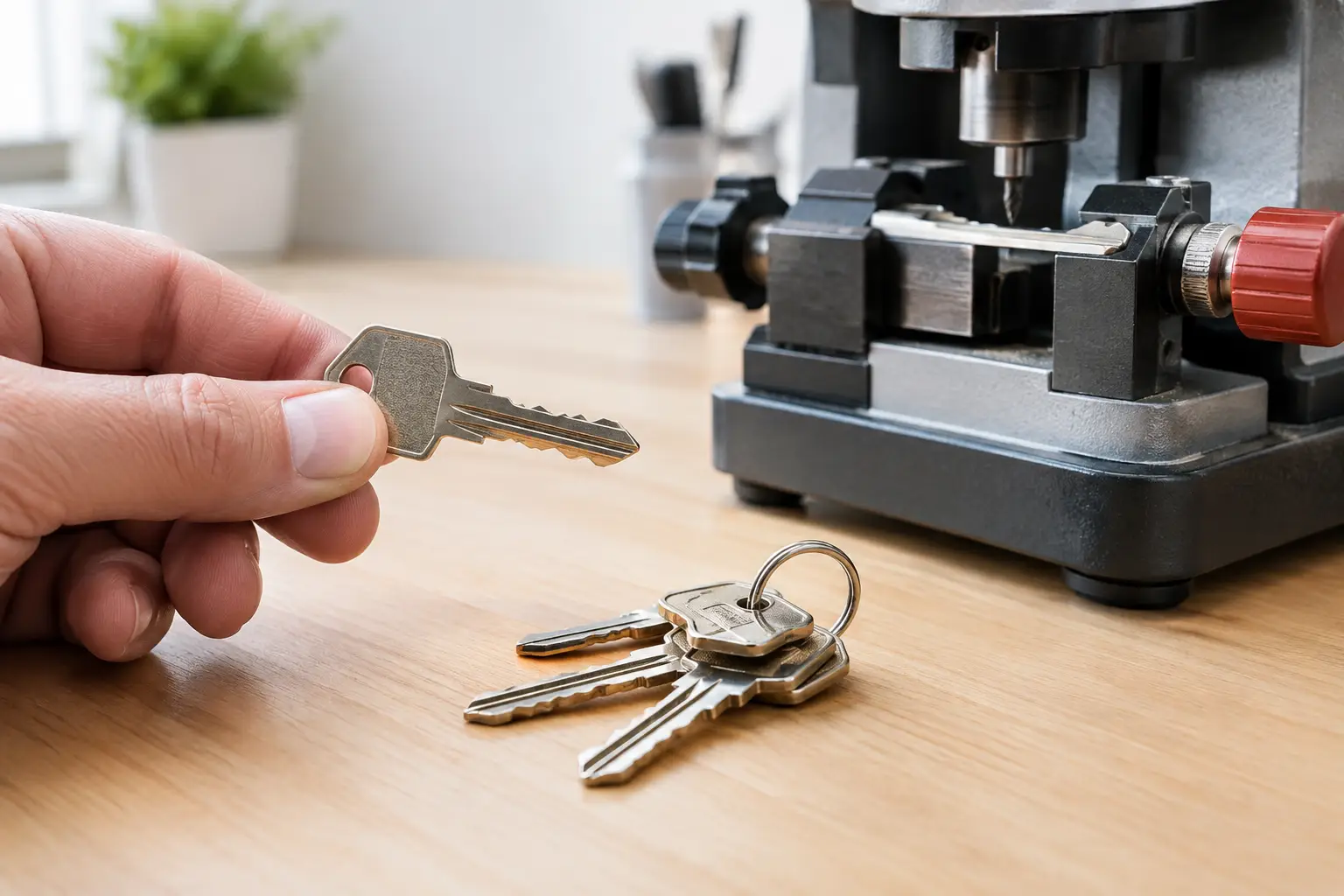
Does key cutting require original keys? Learn when a locksmith can cut a replacement from a code, lock or spare, including modern car keys. Fast.
How to Fix Jammed Car Lock Without Damage
A jammed car lock is rarely improved by more force. If the key will not turn, the door will not release, or the remote has stopped responding, forcing the issue can snap a key, damage the lock barrel or leave you with a more expensive repair. Knowing how to fix jammed car lock problems starts with identifying whether the fault is mechanical, electrical or caused by the weather.
For drivers across Glasgow, Cumbernauld, Paisley, Ayrshire and Greenock, this often happens at the worst possible time: before work, on the school run or when tools are needed from a van. Start calmly, avoid improvised tools, and use the checks below before deciding whether professional assistance is needed.
Start With the Symptom, Not Force
A mechanical lock problem usually affects one door and is most obvious when using the physical key. The key may not go fully into the barrel, may turn only part way, or turn without opening the door. Dirt, corrosion, a worn key, a frozen mechanism or internal damage can all cause this.
A central-locking fault is different. The remote may do nothing, one or more doors may remain locked, or you may hear a weak click inside the door but no release. In that case, the key fob battery, vehicle battery, fuse, wiring, door actuator or the car’s control system may be responsible. Spraying lubricant into the exterior keyhole will not fix an electrical fault.
There is also a third possibility: the lock works, but the door latch is stuck. This is more common after freezing weather, a heavy door slam or a worn latch mechanism. If the interior handle, exterior handle and central locking all fail to release one door, the latch may need attention rather than the lock barrel itself.
How to Fix a Jammed Car Lock Safely
First, inspect the key. Look for a bent blade, worn teeth, cracks around the head or signs that it has been twisted before. A visibly damaged key should not be forced into the lock. If you have a spare mechanical key, try it gently. A spare that works points to a worn original key rather than a failed lock.
If the key will enter but feels stiff, use a proper lock lubricant designed for vehicle lock cylinders. A dry PTFE or graphite-based lubricant is generally the safer choice because it does not leave a heavy, dirt-catching residue. Apply a small amount, insert and remove the key gently a few times, then try turning it without twisting hard against resistance.
Avoid using thick oils, grease or large amounts of general-purpose spray. They may provide a short-term improvement, but can collect grit inside the barrel and make the problem return. Never push wire, screwdrivers, hair grips or other objects into the lock. Modern vehicle locks are precise components, and a small amount of internal damage can stop the correct key from operating them.
If the lock is frozen, do not pour boiling water over the handle or keyhole. The sudden temperature change can affect surrounding trim and glass, while water left in the mechanism can freeze again. A purpose-made lock de-icer is a better option. Warm the key in your hands or use gentle warmth around the door area where safe to do so, then try the key carefully. Keep naked flames well away from the vehicle.
When the key turns but the door remains shut, do not repeatedly pull the handle with all your strength. Try locking and unlocking the vehicle again with the remote, then gently press the door inward while operating the handle. Sometimes pressure on a sticky latch prevents it from releasing. If this does not work after a few careful attempts, stop before damaging the handle or linkage.
When the Remote Will Not Open the Car
If every door has stopped responding to the fob, begin with the simplest checks. Try the spare fob if you have one and replace the battery in the remote with the correct type. Make sure the battery is fitted the right way round and that the contacts inside the fob are clean and secure.
A weak car battery can also prevent central locking from operating correctly. Signs include dim interior lights, a slow cranking engine, warning messages or no response from the remote at all. If the vehicle battery is flat, gaining access without causing damage may be the first problem to solve before charging or replacing it.
If one door remains jammed while the others operate normally, the likely cause is a failed actuator, damaged wiring in the door loom, a worn latch or a problem with that door’s lock mechanism. This is not normally a roadside DIY repair. The interior door card may need to be removed, often with the door shut, and the faulty part diagnosed properly.
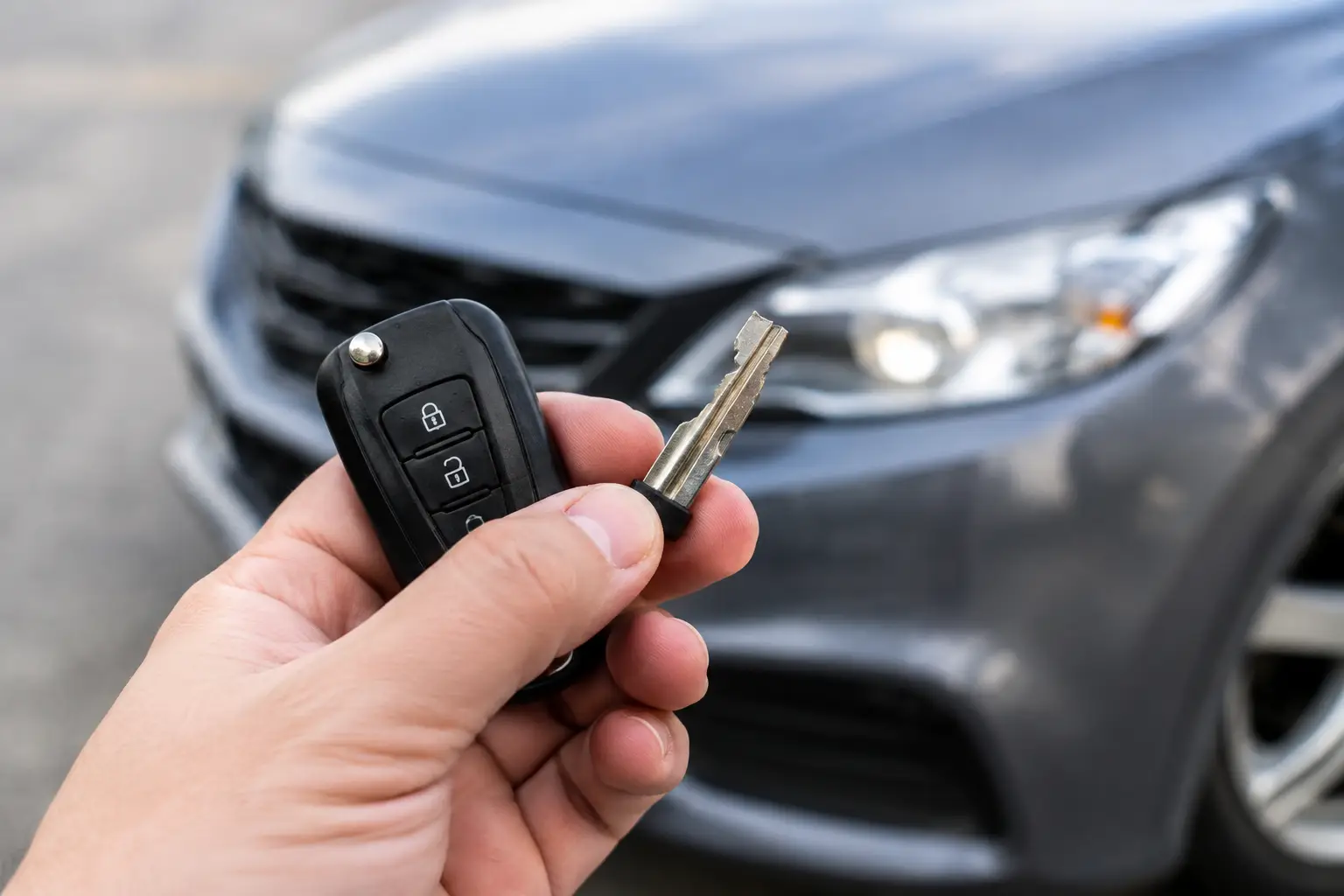
Some cars hide the mechanical key barrel behind a small cover on the door handle. Your key fob may contain an emergency blade, even if you have never used it. Check the vehicle handbook for the correct access method. Using the emergency key can get you into the vehicle when the remote battery is flat, but it may still trigger the alarm on some models until the ignition recognises the coded key.
Do Not Turn a Small Fault Into a Broken Key
The main risk with a jammed lock is snapping the key inside the barrel. Keys are strongest when inserted straight and turned smoothly. They are far more likely to break when they are bent sideways, used as a lever or forced against a seized mechanism.
Stop immediately if the key starts flexing, catches sharply, turns only with excessive effort or comes out with metal dust on it. These are warning signs that the key blade or lock wafers are wearing. A key that has already cracked at the plastic head or remote casing should be replaced before it fails completely. A damaged fob shell can allow the transponder chip to fall out, leaving the vehicle unable to start even after the door has been opened.
It also matters which key you are using. Many post-1995 vehicles use a transponder chip or proximity system linked to the immobiliser. A newly cut metal blade may open the door but will not necessarily start the engine unless it is programmed correctly. That is why a car key issue should be handled by an automotive locksmith rather than treated like a standard house-key problem.
When to Call a Car Locksmith
Call for specialist help when the key is stuck or broken in the lock, the lock cylinder spins freely, the door will not release after sensible checks, or the vehicle is completely inaccessible. It is also the right move when you have lost the only working key, the remote has failed and the emergency blade will not operate the door, or central locking has left you locked out.
A specialist automotive locksmith can assess the lock, gain entry using non-destructive methods where possible, remove broken key pieces, cut replacement keys and programme transponder or remote keys. This avoids the damage that can come from forcing a window, prising a door frame or trying to dismantle trim without the right tools.
For a roadside lockout in West Central Scotland, Auto Locksmith Doctor Ltd can diagnose whether the issue is the key, barrel, latch, fob or vehicle electronics and work to regain access without unnecessary damage. Having the registration, make, model, approximate year and your location ready helps get the right solution moving quickly.
A sticking lock is often an early warning rather than a one-off inconvenience. Once you are back in the vehicle, arrange to deal with a worn key or intermittent lock before it leaves you stranded in the rain, outside work or miles from home.

Related Posts