Does key cutting require original keys? Learn when a locksmith can cut a replacement from a code, lock or spare, including modern car keys. Fast.
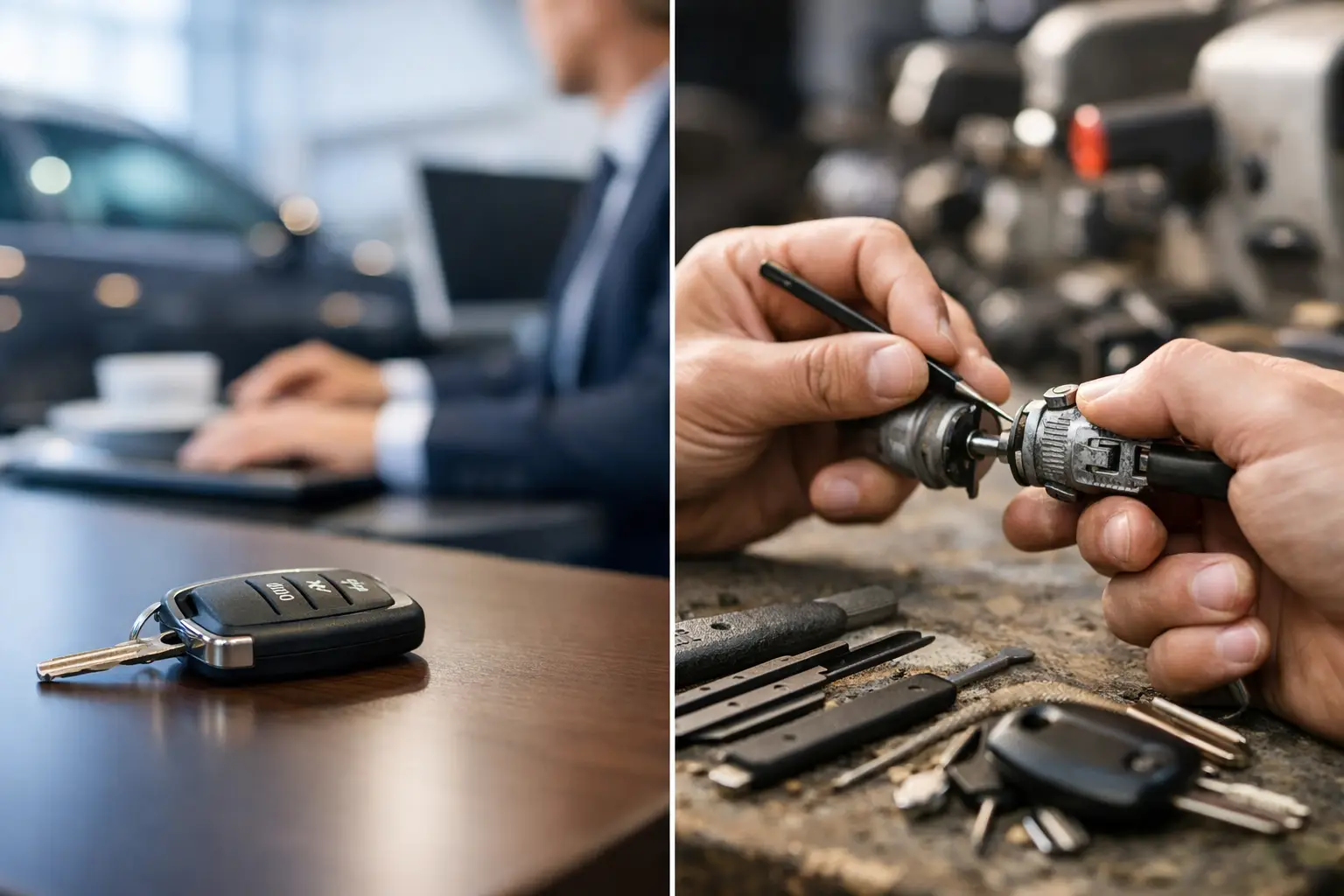
Dealer Keys Versus Locksmith: Which Costs Less?
You are standing outside the car with the shopping in the rain, the key is missing, and the first question is usually simple: dealer keys versus locksmith, which is the better call? The honest answer depends on the vehicle, the key type and how urgent the problem is. But for many lost, broken or locked-in car key problems, a specialist auto locksmith can get you moving sooner and often for less.
A main dealer has a clear role. They can order manufacturer-approved parts and deal with warranty work, recalls and some complex vehicle-specific issues. A specialist automotive locksmith, however, is set up to diagnose and resolve key and access problems where the car has stopped. That means coming to your location, gaining entry without damage where possible, cutting a replacement key and programming it to the vehicle’s immobiliser.
Dealer keys versus locksmith: the main differences
The biggest difference is not simply where the replacement key comes from. It is the process around it. A dealership generally works through a booking system and may need the vehicle brought to its premises. If every working key has been lost, arranging transport can add time, inconvenience and recovery costs before the key issue is even addressed.
An automotive locksmith works at the roadside, at home, at your workplace or wherever the vehicle is stranded. For drivers across Glasgow, Cumbernauld, Paisley, Ayrshire and Greenock, that can mean the difference between a same-day solution and being without the car for several days.
A dealer may supply an original equipment key, while a locksmith can supply a suitable replacement remote, transponder key or proximity key and programme it correctly. The right choice depends on the make, model, year and what functions you need. If you have a newer keyless vehicle, for example, the replacement must communicate correctly with both the central locking system and the immobiliser. The physical blade alone is not enough.
Cost: what are you actually paying for?
Dealer prices can be higher because of genuine part pricing, dealership labour rates and the time involved in ordering and booking the work. That does not automatically make the dealer the wrong choice. Some vehicles have highly restricted key systems, and genuine dealer parts can be appropriate where a particular feature, warranty requirement or manufacturer process demands them.
For a straightforward replacement, spare key or emergency all-keys-lost job, a specialist locksmith will often be more cost-effective. There is no need to pay for a recovery vehicle just to get the car to a workshop, and the work is focused solely on the lock, key and security system.
Ask for a clear price based on the problem, not a vague starting figure. A proper quote should account for the type of key, whether any existing working keys remain, key cutting, transponder or remote programming, and the call-out location. Very cheap quotes can become expensive if programming, emergency attendance or additional parts are added later.
Speed: where is the car and how quickly do you need it?
If your car is safely at home and you can manage without it, waiting for a dealer-ordered key might be acceptable. If you are locked out at a supermarket, stuck after work or unable to start the van needed for tomorrow morning’s job, speed matters far more.
A mobile auto locksmith can attend the vehicle and complete many jobs on site. That includes non-destructive entry when keys are locked inside, extracting a snapped key, cutting a replacement blade and programming compatible keys. There are exceptions. Certain prestige models, very new systems or cars with severe electrical faults may require extra parts, specialist procedures or dealer involvement. A reliable locksmith should say that plainly rather than promise a fix before checking the vehicle.
For urgent situations, do not force the door, smash a window or try improvised tools from the internet. Modern doors contain wiring, airbags, window mechanisms and weather seals that are costly to damage. Damage-free access is normally the sensible starting point.
What type of car key do you have?
The key type has a major effect on the dealer keys versus locksmith decision. Older cars may use a basic mechanical key that can be cut from a pattern or decoded from the lock. Most vehicles built from the mid-1990s onwards have an immobiliser system, which means a chip inside the key must be recognised before the engine will start.
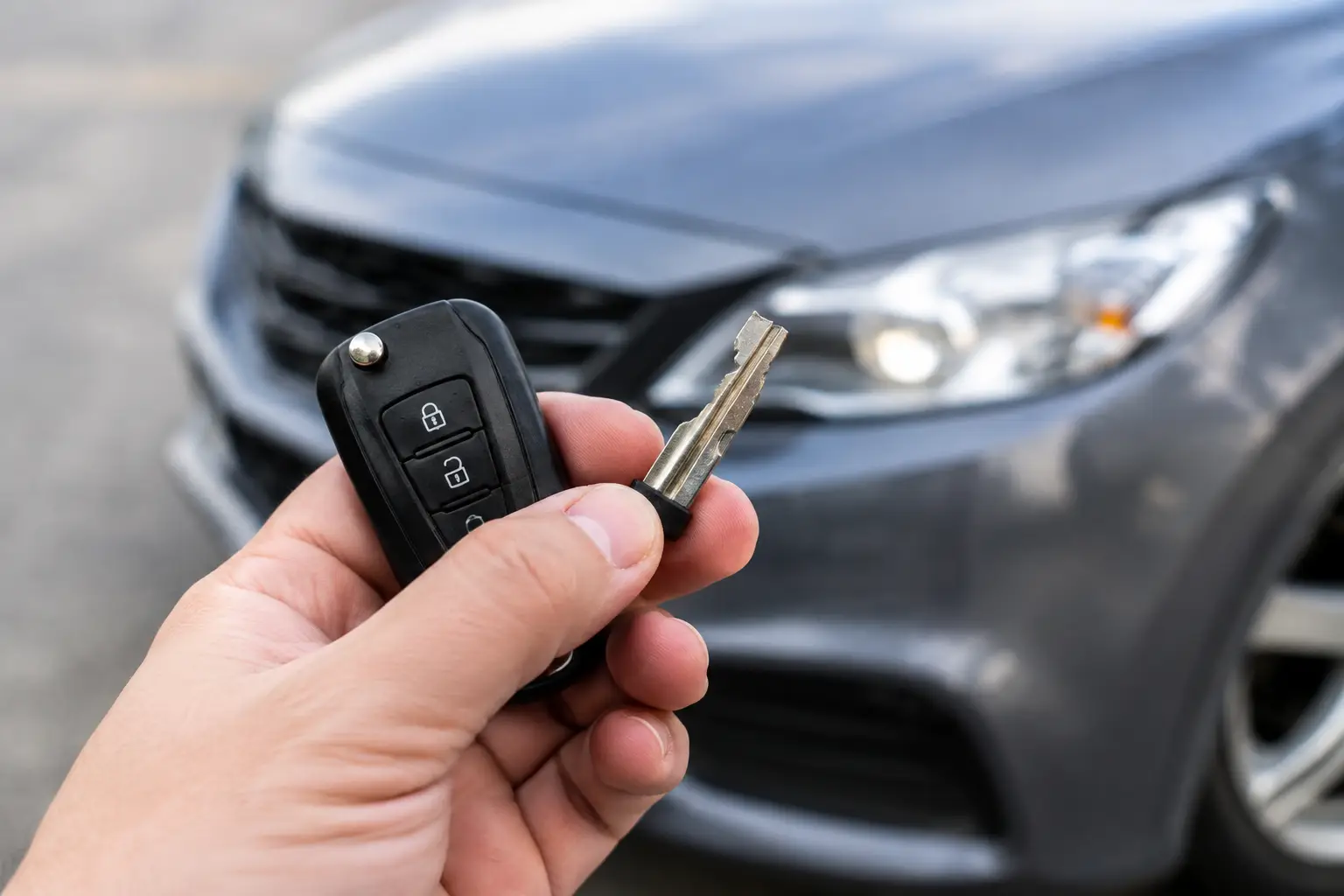
A remote key adds buttons for locking and unlocking. A flip key combines the remote and blade in one unit. A proximity or smart key allows keyless entry and push-button starting. Each system needs a different approach, but they all require more than copying the metal profile.
When a key is programmed, the locksmith is matching it to the vehicle’s security system. On an all-keys-lost job, this may involve accessing vehicle modules, reading security data and removing the missing keys from the system where possible. That last point matters. If the lost key is later found by someone else, it should not still be able to start the car.
A replacement key fob shell is a separate issue. If the electronics still work but the buttons, casing or key blade have worn out, a shell repair may be a practical lower-cost option. It is not the answer to a failed transponder, water-damaged circuit board or key that is no longer recognised by the car.
When a dealer is the sensible option
There are situations where the dealer route makes sense. Manufacturer warranty work should normally go through the dealer network. A newly purchased vehicle with a fault in its factory-supplied key may be covered, and a recall or known model-specific issue could be dealt with under manufacturer terms.
The dealer may also be the correct route when a vehicle has a system that is not currently supported by independent equipment, or when an original key with a very particular specification is required. This is more likely with very new models and certain high-security systems.
Even then, it is worth separating the problem. You may need a dealer-supplied part, but still need an automotive locksmith to open a locked car without damage, make it safe at the roadside or help avoid recovery costs. The practical question is not who wins in every case. It is who can solve your specific problem properly.
When a specialist auto locksmith is the better call
A locksmith is usually the more direct option when the issue is access, lost keys, a broken key, a faulty remote, a spare key requirement or immobiliser programming. It is particularly useful when the vehicle cannot be driven to a dealer.
Choose a specialist rather than a general locksmith. Car locks and keys are their own field. The technician needs knowledge of vehicle entry methods, lock decoding, transponder systems, remote frequencies, immobiliser procedures and the risks of working around modern electronics. A general domestic locksmith may be excellent with house locks but not equipped to programme a car key or deal with a keyless-start fault.
At Auto Locksmith Doctor Ltd, the focus is on vehicle access and replacement key work, using non-destructive methods wherever possible. If a vehicle cannot be opened on site, there is no charge for the opening attempt. That is the sort of straightforward reassurance worth looking for when you are already dealing with a stressful breakdown in your day.
Before you call, have the right details ready
The more accurate the information, the quicker the right solution can be arranged. Have the registration number, make, model, year and your location ready. Explain whether the key is lost, locked inside, snapped, damaged or simply not starting the car. Mention whether you have any working spare keys and whether the vehicle is manual, automatic, keyless or push-button start.
You will normally need to show proof that you own or are authorised to use the vehicle. This protects you, the vehicle owner and the technician. A legitimate service should not treat vehicle security casually.
If the fault seems electrical, describe the symptoms rather than assuming it is the key. A dead car battery, damaged ignition barrel, failed central locking motor or vehicle module fault can look like a key problem. A good auto locksmith will assess what is in front of them and explain the likely next step clearly.
The best choice is the one that gets the right key or access solution without wasted time, unnecessary damage or surprise costs. If you are stranded in West Central Scotland, speak to a specialist who can assess the vehicle where it is and tell you plainly what can be done.

Related Posts