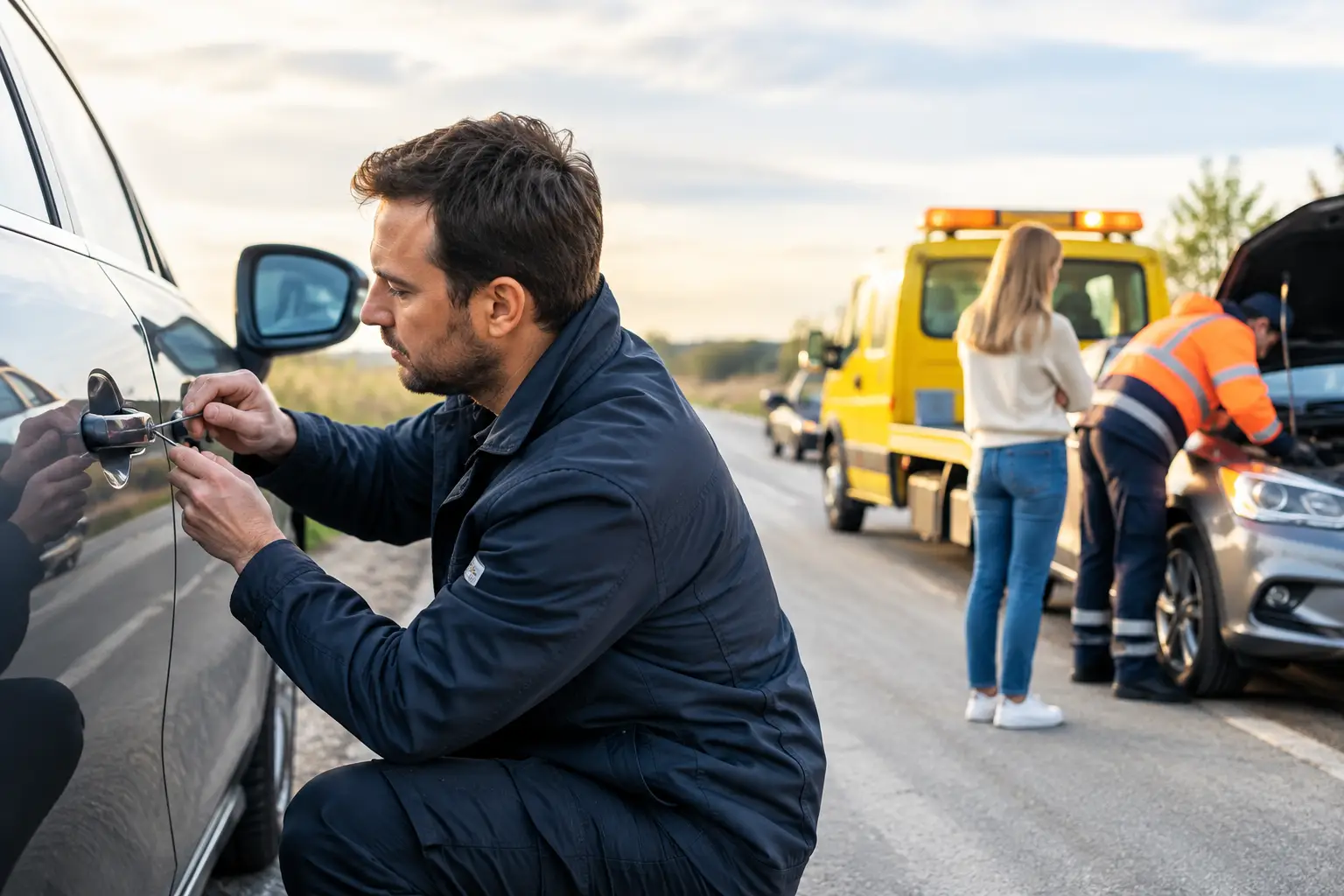
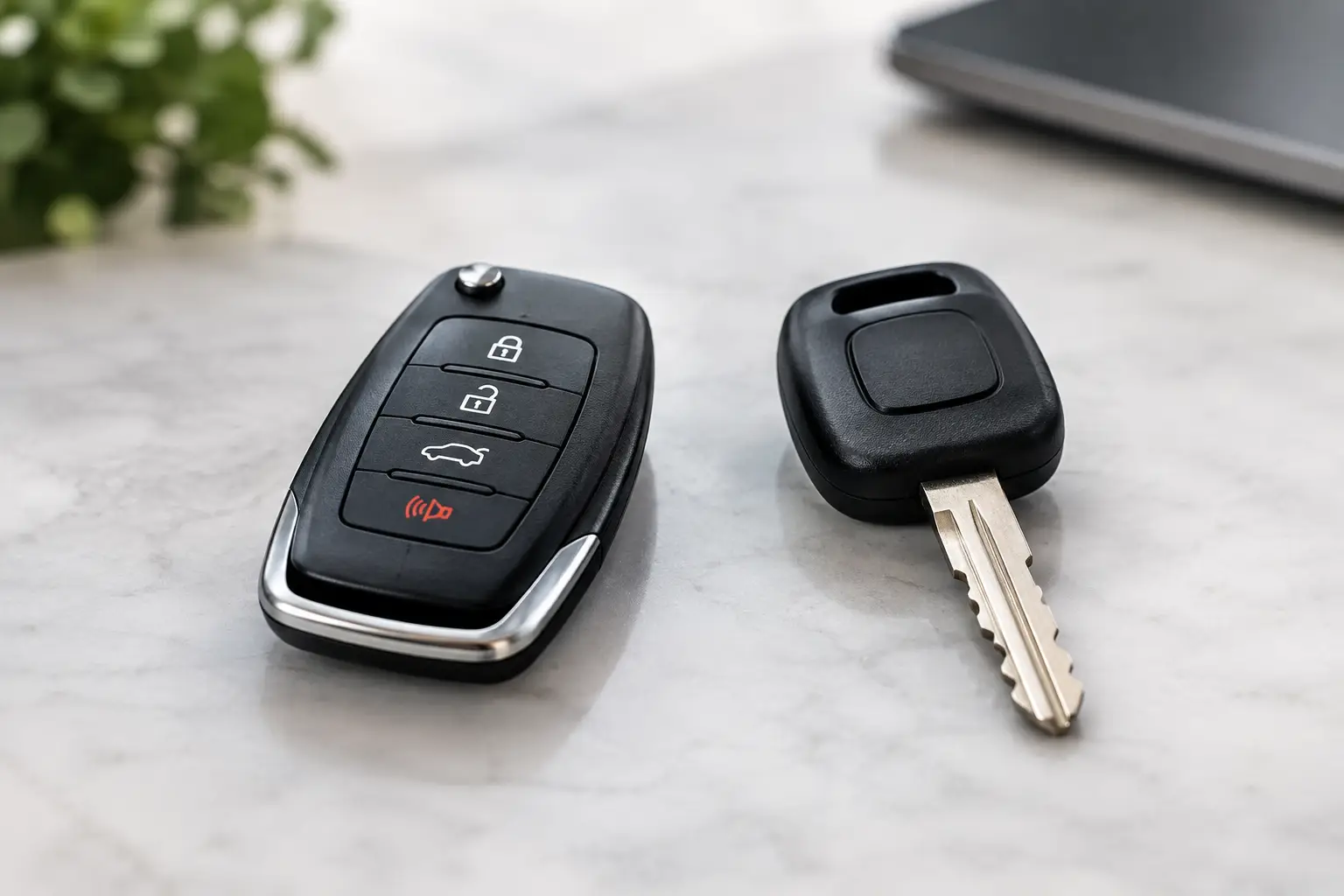
Roadside locksmith versus breakdown cover: know who to call for vehicle lockouts, lost keys and key faults across West Central Scotland, without delay.
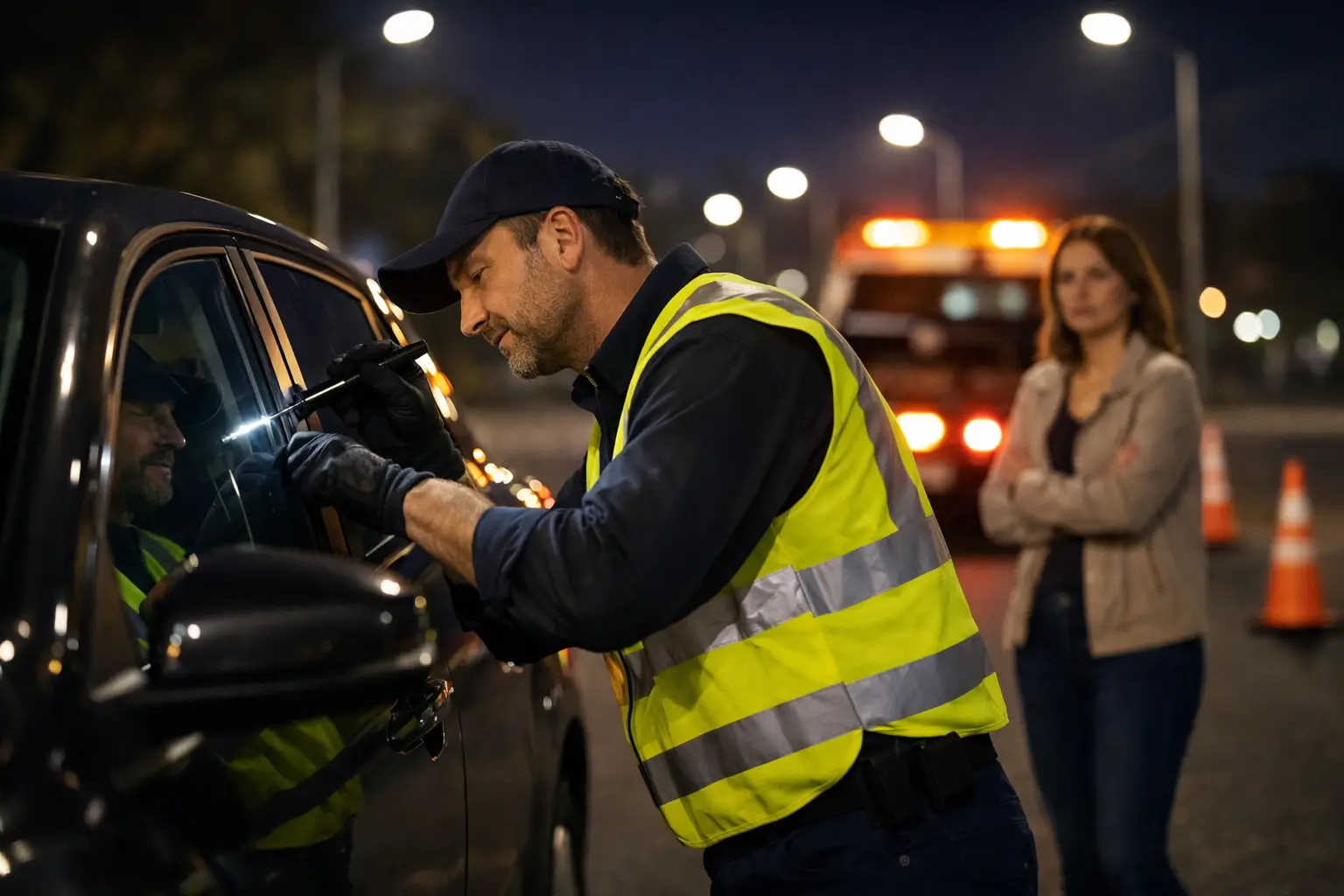
Guide to Emergency Car Unlocking Services
A locked car is rarely just an inconvenience. It can mean a child seat, work tools, medication or your only way home is sitting behind a locked door. This guide to emergency car unlocking services explains what to do first, when to call a specialist auto locksmith, and how a proper vehicle entry service gets you back into your car without turning a lockout into an expensive repair.
First, make the situation safe
Take a breath and check the immediate risk. If a child, vulnerable person or animal is trapped in the vehicle and appears distressed, call 999 straight away. Emergency services should take priority over protecting the car door or glass when there is a genuine threat to life or health.
If nobody is in danger, move yourself away from traffic if you are stranded at the roadside. Put on hazard lights where possible, stand somewhere visible and safe, and avoid repeatedly pulling door handles or forcing a window. A rushed attempt with a coat hanger, screwdriver or wire can bend the door frame, damage weather seals, trigger an alarm or harm the locking mechanism.
Before arranging help, check the simple possibilities. Try every door, the boot and the key fob. A weak fob battery, a door that has not shut properly or a key left in a different pocket can look like a full lockout. Do not, however, keep pressing the remote for several minutes if the car is behaving oddly. On some vehicles, repeated attempts can flatten an already weak vehicle battery or complicate fault finding.
When emergency car unlocking services are the right call
An automotive locksmith is the sensible choice when the key is inside the car, the remote has stopped working, the key has snapped, central locking has failed or the lock will not respond. Unlike a general locksmith, a vehicle specialist works with the mechanical and electronic security fitted to cars, vans and light commercial vehicles.
That matters because modern vehicles are not simply doors with a lock cylinder. Many use transponder chips, immobilisers, remote locking systems and proximity keys. Even older cars can have awkward deadlocks or security features that make improvised entry risky. The aim is not merely to get a door open. It is to gain access without creating damage that leaves the vehicle less secure afterwards.
For drivers across Glasgow, Cumbernauld, Paisley, Ayrshire and Greenock, a local specialist can normally assess the vehicle where it sits. Tell them the make, model, year if known, your location and what happened. Mention whether keys are visible inside, whether the engine is running, and whether the car has a keyless start button. Clear information helps the locksmith arrive with the right tools and plan.
Why damage-free entry matters
Breaking a window may appear quicker, but the real cost can be far higher than the glass. There may be broken glass in seats and door cavities, a damaged window regulator, a weatherproofing problem or a vehicle that cannot be secured overnight. For a family car or a work van, that disruption can be worse than the original lockout.
Professional non-destructive entry uses methods selected for the vehicle. Depending on the make and fault, this may involve lock picking, bypass techniques or gaining controlled access to the locking system. The exact approach should not be published as a set of instructions, because vehicle security information needs to be handled responsibly. What matters to the driver is that the method is appropriate, controlled and designed to leave the lock, door and trim intact.
There are occasions when a lock has already failed internally or been damaged during an earlier attempt. In that case, the locksmith should explain the trade-off before any work begins. A fair service does not promise that every fault has a simple answer, but it does explain the safest available option and the likely cost.
What a specialist will check at the vehicle
A good emergency response starts with confirmation of ownership. Have your driving licence, vehicle registration document, insurance details or another sensible form of proof ready if possible. It protects you, the locksmith and other motorists from unauthorised vehicle access.
The locksmith will then identify the likely cause. Is the key locked inside? Has the remote battery failed? Is the vehicle battery flat? Has a key blade broken in the door lock, or is the lock cylinder itself worn? These are different faults, and treating them as the same problem can waste time.
On electronically coded cars, the technician may also consider whether the immobiliser is preventing the vehicle from starting. Getting into the car is one job; making sure you can drive away is another. If the only working key is lost, damaged or no longer recognised, a replacement key may need cutting and programming after entry has been gained.
This is where a specialist automotive locksmith earns their keep. They can deal with traditional metal keys as well as post-1995 transponder systems, remote fobs and many proximity-key setups. Auto Locksmith Doctor Ltd provides this type of focused assistance, including emergency entry, replacement keys, programming and key fob shell repairs where appropriate.
Avoid the mistakes that make lockouts worse
Most lockouts are resolved quickly. The calls that become complicated usually involve well-meant DIY attempts or the wrong type of assistance. Avoid these common problems:
- Do not force a door frame apart with wedges, screwdrivers or household tools. Even a slight bend can create wind noise, water leaks and an uneven door fit.
- Do not try to pick a vehicle lock without the correct equipment and training. Modern locks can be damaged internally, leaving the key unable to turn afterwards.
- Do not break a side window unless there is an immediate danger to a person or animal and emergency services advise it. Glass replacement and clean-up are rarely quick.
- Do not assume a new key is only a piece of cut metal. Many vehicles need a correctly programmed transponder before the engine will start.
It may also be tempting to call the cheapest advertised provider without checking whether they are a car locksmith. A general service may be able to open some older vehicles, but a specialist is better placed to diagnose a modern key, immobiliser or central locking fault. Ask whether the entry method is non-destructive, whether call-out and labour costs are clear, and what happens if the car cannot be opened on site.
If the key is lost, broken or no longer works
A lockout can reveal a second problem. Perhaps the spare key is miles away, the original fob has split, or the key starts the car only after several attempts. Deal with this while the technician is present if you can. It is usually less disruptive than waiting until the next failure leaves you stranded again.
A broken key blade may be recoverable and a damaged fob casing may only need a shell replacement. Where the electronics have failed or the key is missing altogether, cutting and programming a replacement may be required. The correct solution depends on the vehicle and its security system, so be wary of blanket prices that ignore the model, year and key type.
If your central locking has failed, the issue might be the fob battery, the vehicle battery, a door actuator or an electrical fault. A locksmith can often establish whether the key and lock side of the problem is working, but some electrical faults may need an auto electrician or garage afterwards. Straight answers are more useful than pretending every fault can be fixed at the roadside.
Be ready before the next lockout
Once you are back in the car, take two minutes to reduce the chance of a repeat. Keep a spare key somewhere secure away from the vehicle, rather than hidden under it. Replace a weak fob battery before it fails completely, and get a stiff or intermittent door lock looked at early. For businesses with vans, consider who holds the spare and how drivers can reach them outside normal hours.
A vehicle lockout is stressful because it stops your day without warning. The right response is calm, safe and practical: protect people first, avoid damaging the car, and call an automotive specialist who can assess the actual fault. If you are stuck in West Central Scotland, have your location, vehicle details and proof of ownership ready – that gives the locksmith the best chance of getting you moving again without unnecessary delay.

Related Posts