Does key cutting require original keys? Learn when a locksmith can cut a replacement from a code, lock or spare, including modern car keys. Fast.
How to Solve Keyless Entry Faults in Your Car
Your car unlocks perfectly one day, then the fob does nothing when you are late for work, loading the kids in, or parked outside the house. Knowing how to solve keyless entry faults starts with separating a simple key fob issue from a fault in the vehicle itself. A flat battery is common, but it is not the only reason remote locking or a proximity key can stop working.
The safest approach is to check the easy causes first. If those checks do not restore operation, avoid forcing the door, prising trim apart, or repeatedly pressing buttons in the hope that it will reset. Modern vehicles use coded signals, immobilisers and body control modules. A specialist automotive locksmith can diagnose the problem without damaging the vehicle.
What causes keyless entry faults?
Keyless entry systems rely on several parts working together: the fob battery, buttons and circuit board, the key’s coded transponder or proximity chip, the vehicle receiver, door locks, wiring and the car battery. A fault in any one of these can make it appear that the whole system has failed.
The most frequent cause is a weak or flat fob battery. Remote keys can still show a small LED when pressed yet fail to transmit a strong enough signal to the car. Cold weather can make a marginal battery worse, which is why problems often seem to appear suddenly on a frosty morning.
Physical damage is another regular issue. Keys spend their lives in pockets, bags, work vans and kitchen drawers. A drop onto concrete, moisture from rain, worn buttons or a cracked casing can damage the circuit board or battery contacts. With proximity keys, a damaged key may still allow the doors to be opened but fail to be recognised inside the car, leaving an immobiliser warning or a no-start condition.
Sometimes the key is fine. A weak vehicle battery, blown fuse, failed central locking actuator or receiver fault can affect one door, all doors, or the car’s ability to detect the key. If neither of your working fobs operates the locks, the vehicle is more likely to be at fault than both keys failing together.
Start with the checks you can do safely
Before arranging a call-out, stand close to the vehicle and try the remote again. Large buildings, electrical equipment and busy car parks can occasionally interfere with a key’s radio signal. Move the car if possible, or try the fob from a different position around it.
Next, use the spare key if you have one. This is the quickest useful test. If the spare works normally, the original fob needs attention. It may only require a battery or shell repair, but it could also need its internal board repaired, replaced or programmed.
Check whether the car responds in any way. Do the indicators flash? Does one door unlock while another stays shut? Does the fob work only at very close range? These details help pinpoint the fault:
- No response at all from one key usually points to its battery, buttons or internal electronics.
- Very short range often suggests a weak battery or damaged fob antenna.
- One door failing while others operate is commonly a door lock actuator, latch or wiring problem.
- Both keys failing, especially alongside slow cranking or warning lights, may indicate a weak vehicle battery, fuse or body control issue.
- A key that unlocks the car but will not start it may have an immobiliser, transponder or proximity recognition fault.
Do not assume that a manual key blade proves the remote key is working. The blade is only a mechanical emergency method for opening the door. It does not replace the electronic code needed to disable the immobiliser on most modern cars.
Replace the fob battery correctly
If the fob battery is due for replacement, use the correct battery type printed on the old cell or inside the casing. Fit it with the correct polarity and make sure the metal contacts are clean and firmly touching the battery. A battery installed upside down, or a contact bent away from the cell, will give exactly the same symptom as a dead fob.
Work on a clean, dry surface and open the casing carefully. Many key shells use small clips that break if forced. If the plastic is already loose, the battery cover is missing, or the key has been exposed to water, fitting a fresh battery may not be enough. Moisture can corrode the circuit board long before there is visible damage on the outside.
Some vehicles recognise the fob immediately after a battery change. Others may need a short resynchronisation procedure, which varies by make and model. The owner’s handbook may describe it, but do not follow random online instructions that involve turning the ignition repeatedly or holding buttons for extended periods. Incorrect procedures can waste time and may not apply to your vehicle.
When the car battery or locking system is the problem
A keyless entry fault can be the first sign of a struggling car battery. If the interior lights are dim, the dashboard behaves oddly, the central locking is sluggish, or the engine cranks slowly, have the vehicle battery tested. Low voltage can cause modern control modules to behave unpredictably.
If your remote opens three doors but not the driver’s door, or the boot refuses to release, the problem is unlikely to be the fob. Door lock actuators can wear out, wiring can break where it passes through the door hinge area, and latches can seize. In these cases, repeatedly locking and unlocking the car can flatten the vehicle battery or leave you locked out without fixing the underlying fault.
A blown fuse is another possibility, particularly after a flat battery, jump start, water ingress or electrical work. Check the vehicle handbook for the correct fuse locations. Only replace a fuse with one of the same rating. A higher-rated fuse can damage wiring or control modules and turn a straightforward repair into a more costly one.
How to solve keyless entry faults without causing damage
If you cannot gain entry, do not force the door handle, wedge the frame open or try to pick the lock with improvised tools. Modern door frames, weather seals, side airbags and electronic locking systems are easily damaged. A bent frame can lead to wind noise and water leaks long after the original problem is forgotten.
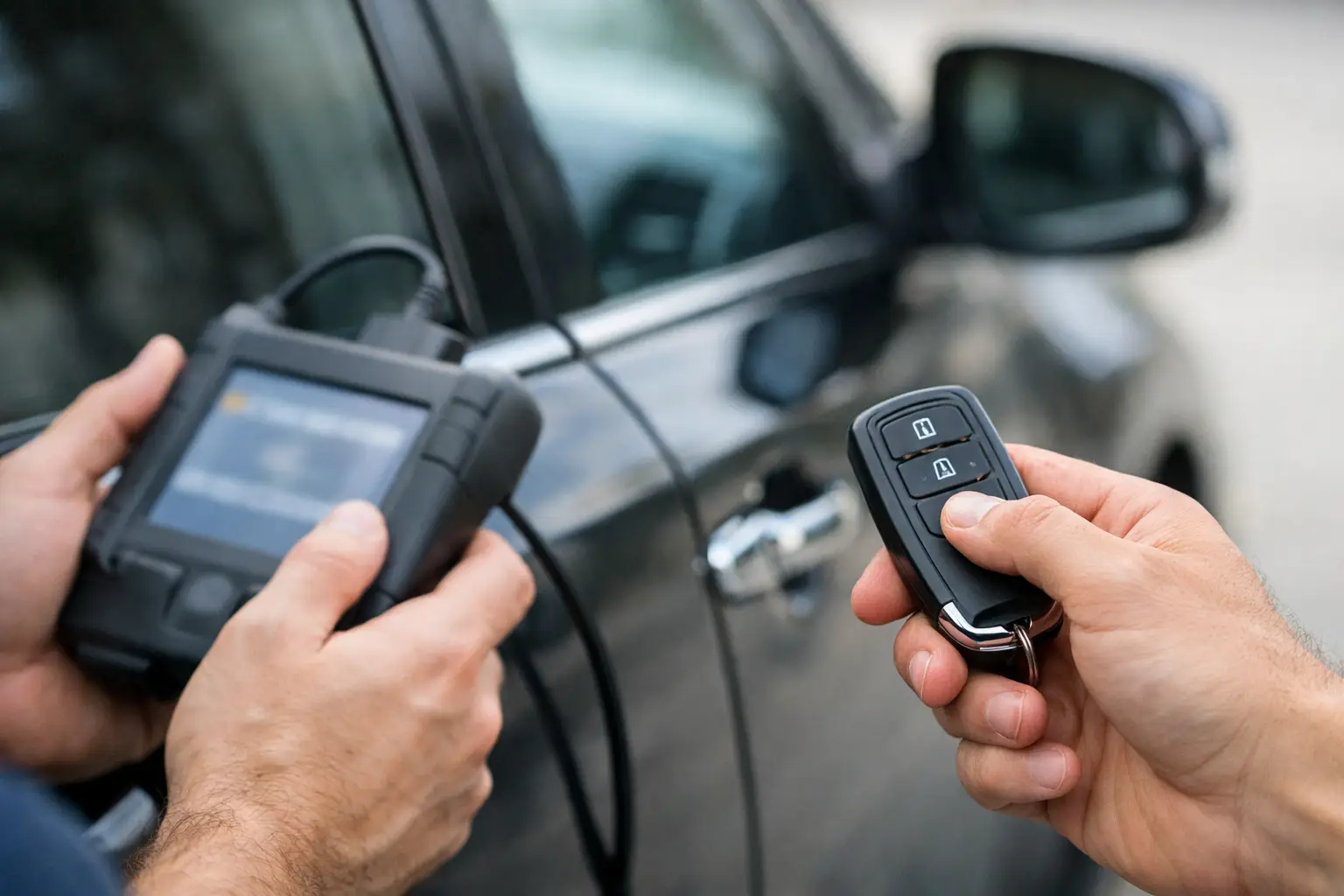
A proper auto locksmith uses non-destructive entry methods suited to the vehicle. Once access is gained, they can test the key fob, cut or repair a replacement key shell, programme a new remote, diagnose transponder faults and check whether the vehicle is recognising the key. This matters because a remote locking problem and an immobiliser problem can look similar to a driver but require different solutions.
For example, if a Ford, Vauxhall, Volkswagen, BMW or Nissan key has failed after being dropped, a new battery may restore the buttons but not the damaged circuit board. If the original transponder can be recovered, it may be possible to retain the coded element while replacing the worn shell. If the electronics are beyond repair, a replacement key may need cutting and programming to the car.
When to call a specialist auto locksmith
Call for specialist help when you are locked out, the key has stopped being recognised, both fobs have failed, the buttons are damaged, or the vehicle will not start after entry. It is also sensible to call before you have lost the only working key. Creating a spare while one key still works is usually simpler and less disruptive than dealing with a complete key loss at the roadside.
For drivers in Glasgow, Cumbernauld, Paisley, Ayrshire and Greenock, Auto Locksmith Doctor Ltd can provide damage-free vehicle entry, key cutting, remote and transponder programming, and practical fault diagnosis on location. A specialist will assess the vehicle and key rather than guessing at the cause or replacing parts unnecessarily.
Keep your spare key somewhere secure away from the vehicle, and replace a weakening fob battery before it fails completely. If the fault leaves you stranded, the right repair is the one that gets you back into the car and back on the road without creating new damage.

Related Posts