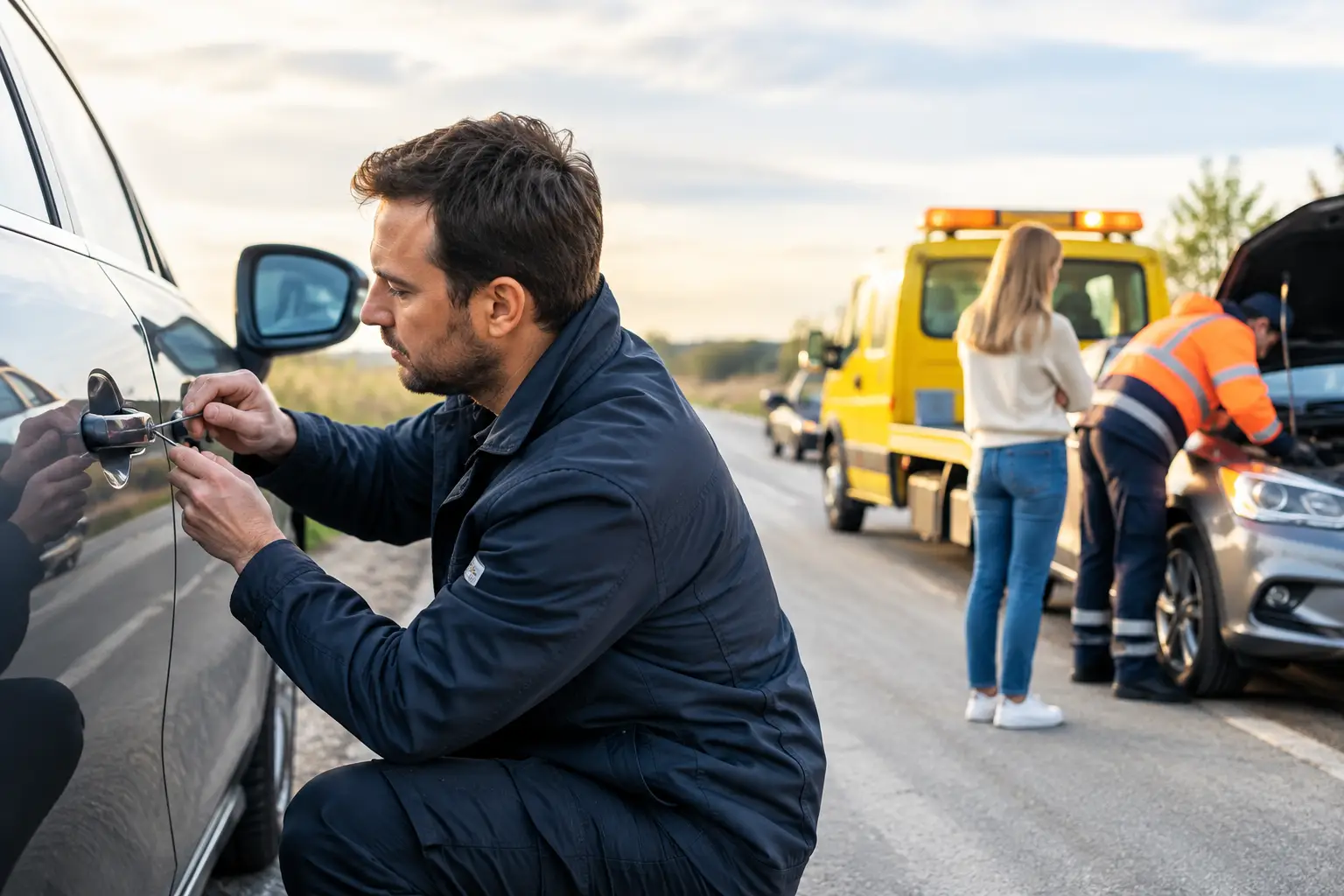
Roadside locksmith versus breakdown cover: know who to call for vehicle lockouts, lost keys and key faults across West Central Scotland, without delay.
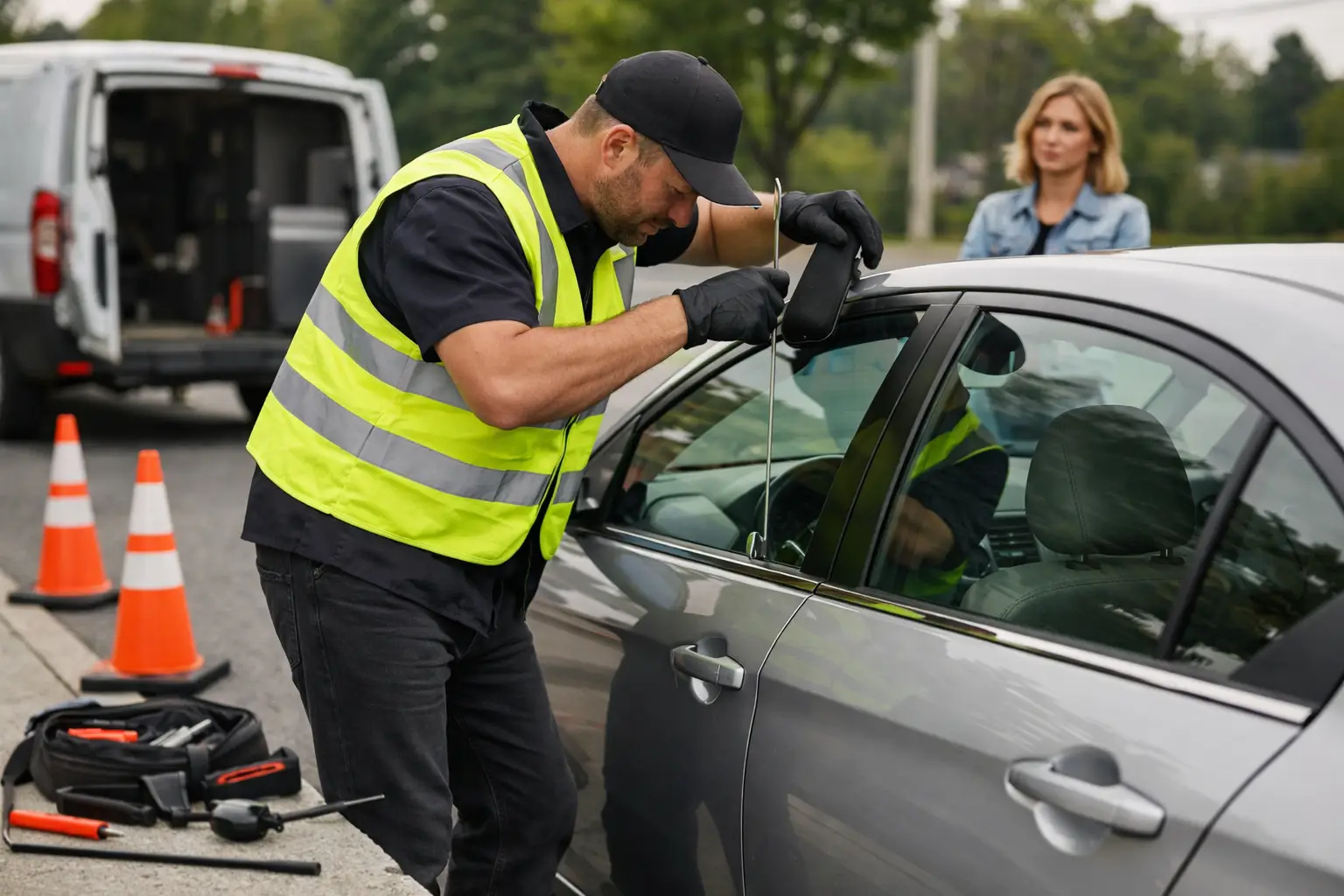
How to Open a Locked Car Safely Without Damage
A car lockout rarely happens at a convenient time. You may be outside your home in Glasgow before work, at a supermarket in Paisley with children in the car park, or parked at a job in Ayrshire with tools needed for the day. The first priority when considering how to open a locked car safely is not getting inside as quickly as possible at any cost. It is getting access without damaging the door, glass, locks, weather seals or electronic security system.
Modern vehicles are not designed to be forced open. A bent door frame, torn seal or damaged lock can turn a straightforward lockout into an expensive repair. Take a moment, check the safe options, and call a specialist where needed.
Start with the immediate safety check
Before trying anything, make sure everyone is safe. If a child, vulnerable person or animal is trapped in the vehicle, particularly in heat, cold or distress, call 999 straight away. Tell the operator your location, the vehicle registration if available, and the condition of the person or animal inside. Emergency services can decide the fastest safe response.
If there is no immediate danger, move somewhere safe if you are at the roadside. Stay visible, keep clear of moving traffic and do not leave a vehicle in a position where it creates a hazard. If you are on a smart motorway or a dangerous stretch of road, contact the appropriate emergency service or road operator rather than attempting to deal with the lockout beside live traffic.
Then confirm that the car is genuinely locked. It sounds obvious, but check every door and the boot or tailgate. On some cars, one door may remain accessible even when the driver’s door is locked. Try the remote again from close range, and check whether the key fob battery has failed rather than the vehicle itself.
How to open a locked car safely: use the proper key first
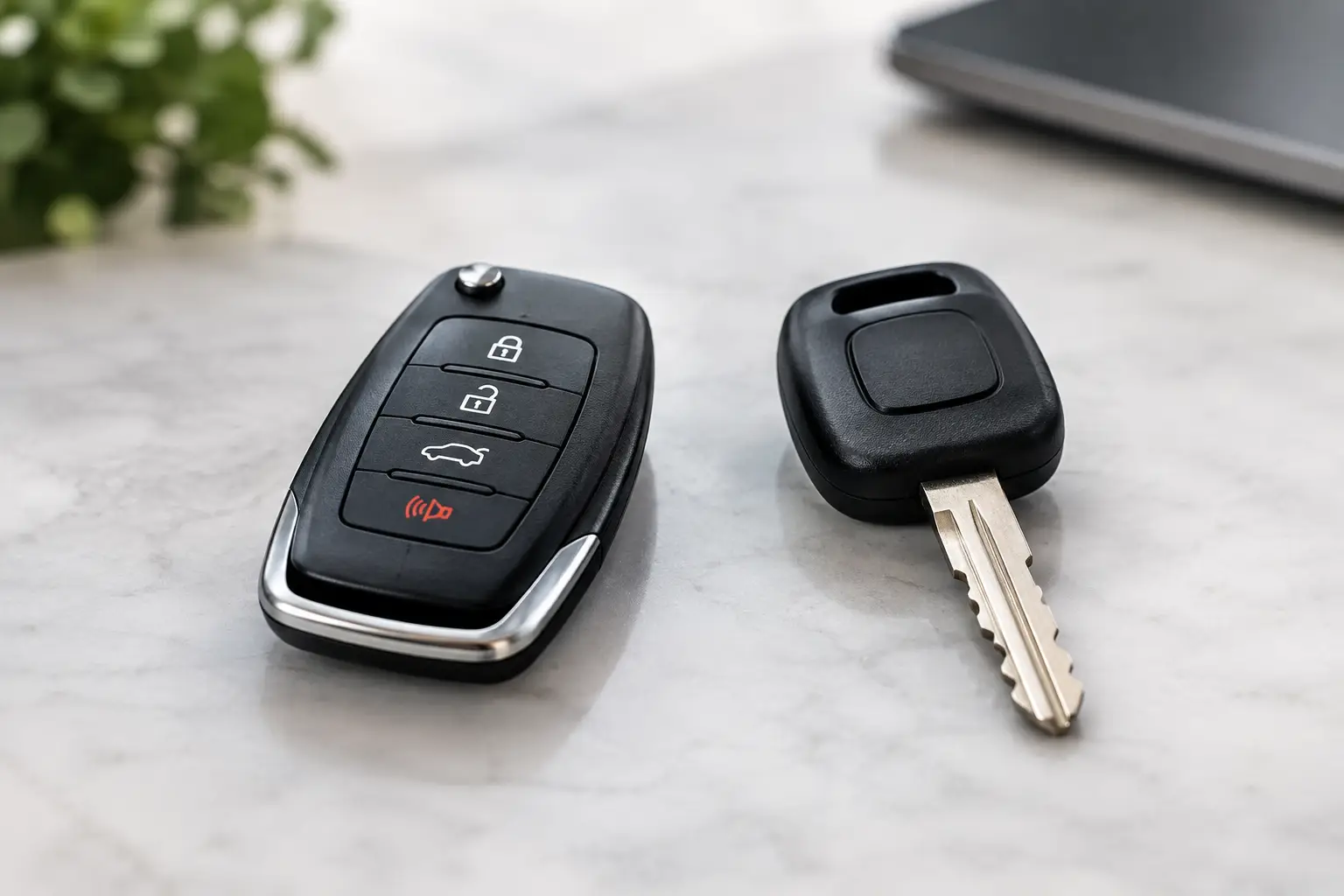
Many key fobs contain a hidden mechanical key. Look for a small release catch on the fob case, then slide or pull out the emergency blade. The door lock is often concealed behind a small cover on the driver’s door handle. Your handbook can show the exact location and method for your model.
Use the mechanical key gently. If it will not turn, do not force it. A lock that has not been used for years may be stiff, while frozen conditions or corrosion can also cause resistance. Heavy pressure can snap the blade or damage the lock barrel, leaving you with a bigger problem than a flat fob battery.
If the mechanical key opens the door but the alarm sounds, that can be normal on certain vehicles. Place the fob in its emergency recognition position or start the car as directed in the handbook. Some proximity-key vehicles have a marked area in the centre console or steering column where the fob must be held when its battery is flat.
A spare key is often the simplest answer, provided collecting it does not create a long delay or put anyone at risk. Ask a family member, colleague or neighbour to bring it if they can do so safely. For a business vehicle, check whether the fleet manager holds a spare or has an approved recovery procedure.
Avoid common methods that cause costly damage
The internet is full of suggestions involving coat hangers, shoelaces, wedges, screwdrivers and improvised rods. These methods may look quick in a video, but they are a poor choice for most modern cars.
Forcing a gap at the top of a door can bend the frame and permanently affect wind noise, water tightness and the way the door closes. A metal tool can scratch paint, tear rubber seals, catch side-impact wiring or damage the airbag system. Trying to pull an internal handle or locking button can also break trim panels and trigger alarms.
Breaking a window should never be the first response to a normal lockout. Replacing automotive glass costs far more than professional entry, and shattered glass creates a serious risk to people, pets and the vehicle interior. It may be necessary only where emergency services judge that immediate rescue is required.
Do not repeatedly press a remote that has become wet, damaged or unreliable. Equally, do not attempt to dismantle the door lock or key fob at the roadside unless you know exactly what you are doing. Modern keys contain transponder chips and circuit boards that can be damaged easily. A damaged key may still open the door but fail to start the engine because the immobiliser cannot recognise it.
Why newer cars need a specialist approach
Cars built since the mid-1990s commonly use transponder technology, remote locking, immobilisers and, increasingly, proximity keys. These systems improve security, but they also mean a lockout is not always just a matter of opening a door.
A professional automotive locksmith identifies the make, model and year before choosing the correct entry method. The aim is non-destructive access: opening the vehicle without breaking glass, bending doors or drilling locks. The correct technique depends on the vehicle’s lock design, deadlocking arrangement and electronic system.
Once access is gained, the underlying fault still needs attention. A flat fob battery may be a simple fix. A snapped key, failed central locking actuator, worn lock barrel or lost transponder key may require further work. If the only key is missing, a replacement may need cutting and programming so that it communicates correctly with the vehicle’s immobiliser.
This is why a general household locksmith is not always the right fit. Vehicle entry and car key programming require specialist tools and working knowledge of automotive security systems.
What to tell an auto locksmith
A clear call helps the locksmith prepare properly and avoid delays. Have your vehicle registration, make, model, approximate year and location ready. Explain whether the keys are visible inside, lost, broken, wet, or simply not operating the locks.
It also helps to mention any warning signs that appeared before the lockout. Perhaps the remote range had become poor, the driver’s lock had been stiff, the central locking had been clicking, or the car had recently had a flat battery. These details can point to the cause.
You should also expect to show proof that you are entitled to access the vehicle. A reputable auto locksmith will ask for identification, the V5C where practical, insurance details or another reasonable form of ownership evidence. This protects you, the locksmith and other motorists.
For drivers across West Central Scotland, Auto Locksmith Doctor Ltd provides specialist, non-destructive vehicle entry along with replacement keys, key programming and lock-related repairs. If the car cannot be opened on site, there is no charge for the attempted entry. That gives you a clear, fair option when a DIY attempt could cause damage.
After you are back in the car
Do not treat a lockout as finished just because the door is open. Test the mechanical key, remote buttons, central locking and starting process before driving away. If a fob battery was flat, replace it promptly and keep the emergency blade accessible. If the key case is cracked or buttons are worn, repairing or replacing the shell can prevent a future failure.
Consider arranging a spare key before you need one. A programmed spare is particularly useful for families sharing a car, tradespeople carrying equipment, and anyone who travels between Glasgow, Cumbernauld, Greenock and surrounding areas for work. Replacing all keys after they are lost is usually more involved than adding a spare while one working key remains.
Keep the spare somewhere secure, not hidden on or inside the vehicle. A trusted person, a secure home location or a properly managed workplace key system is safer than a magnetic box under the car.
A locked car is frustrating, but it does not need to become a damaged car. Use the emergency key if your handbook supports it, avoid force and improvised tools, and get specialist help when the cause is unclear. The quickest safe solution is usually the one that leaves your vehicle exactly as it was before the lockout.

Related Posts