Does key cutting require original keys? Learn when a locksmith can cut a replacement from a code, lock or spare, including modern car keys. Fast.
Car Immobilizer Problem Symptoms: What to Do
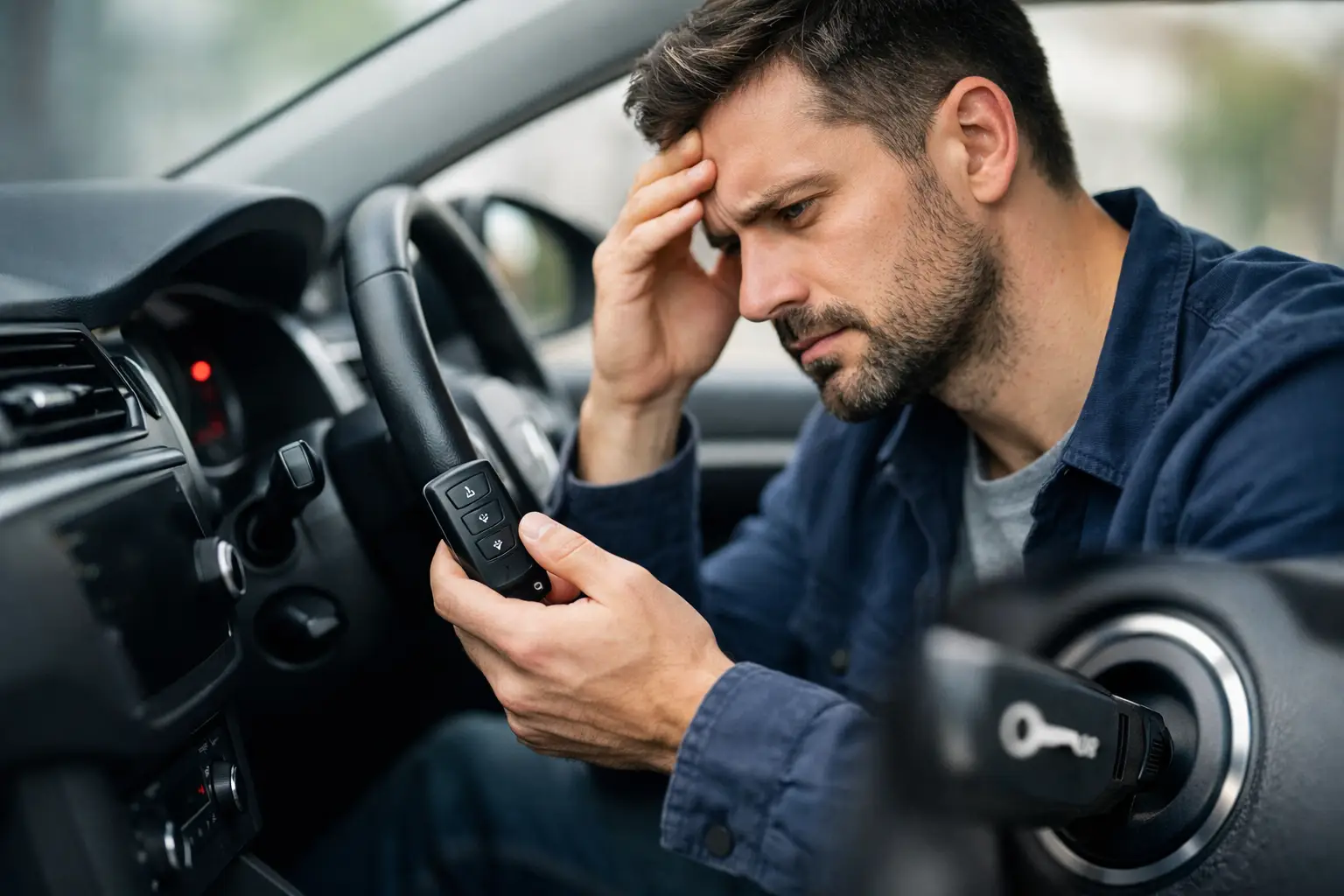
A car that unlocks normally but refuses to start is frustrating, especially when you are due at work, on the school run or parked somewhere inconvenient. The most common car immobiliser problem symptoms are a flashing security light, an engine that cranks but will not fire, or a message telling you the key is not recognised. The fault may be in the key, the vehicle’s reader or its electronics, so avoid guessing and avoid forcing anything.
Most cars built from the late 1990s onwards use an immobiliser. It is an anti-theft system that checks for the correct electronic code before allowing the engine to start. On older vehicles, that code is usually held in a small transponder chip inside the key. Newer cars may use a remote fob, proximity key or key card. If the vehicle cannot read or accept that code, it can keep the fuel, ignition or starter system disabled.
The main car immobiliser problem symptoms
The first sign is often the immobiliser or security warning light. Depending on the make and model, it may look like a car with a key, a padlock, or simply a red flashing LED. A light that flashes when the car is locked can be perfectly normal. A light that stays on, flashes unusually quickly or appears alongside a starting failure is not.
An engine that cranks strongly but will not start is another common symptom. The battery may sound healthy and the dashboard may light up as usual, but the engine will not catch. Some cars react differently and will not crank at all when the key is turned or the start button is pressed.
You may also see a dashboard warning such as “key not detected”, “key not recognised”, “immobiliser active” or “steering lock fault”. Do not assume the wording identifies the failed part. It confirms that the car has detected a security or key-authorisation issue, but proper diagnosis is still needed.
Other signs worth paying attention to include:
- The car starts with one key but not the other.
- Remote locking works, but the engine will not start.
- The key needs several attempts before it is recognised.
- The problem began after the key was dropped, got wet or had its casing damaged.
- A replacement key has been cut but has never started the vehicle.
Remote locking and starting are separate functions. A flat remote battery can stop the buttons from working, but it does not automatically mean the transponder chip has failed. Equally, a key can unlock the doors remotely yet still not contain a working code for the immobiliser.
Why immobiliser faults happen
A damaged or poorly made key is a frequent cause. The transponder chip can be cracked, missing or moved out of position after a key fob shell breaks apart. This is particularly common where a key has been taped together, held with a loose casing or repeatedly dropped on a hard surface. A copied metal blade alone will turn the ignition, but it will not start a coded vehicle unless the correct transponder has been programmed.
The vehicle itself can also be at fault. The aerial ring or reader around the ignition barrel may fail to read the chip. On push-button cars, the internal key aerials and proximity system add further possible fault points. Wiring faults, water ingress, a weak vehicle battery, a blown fuse or a problem in the body control module can all produce symptoms that look like a bad key.
A low car battery deserves a mention. Modern vehicles can behave unpredictably when voltage drops, particularly after sitting unused in cold weather. Warning lights may appear, central locking can become erratic and the immobiliser may fail to communicate properly. If the battery is clearly weak, address that first. However, do not keep attempting to start the vehicle until the battery is drained completely, as that only makes diagnosis harder.
Simple checks to make before calling for help
Start with the spare key if you have one. This is the quickest useful test. If the spare starts the car, the vehicle is likely reading keys correctly and the usual key is the problem. Keep the working key safe and arrange a replacement or repair before you are left with no usable key at all.
If you use a key fob, check the condition of its casing and buttons. A loose, split or water-damaged fob can allow the chip or circuit board to move. Replacing the button-cell battery may restore remote locking, but it will not fix a lost or damaged transponder. Be careful when opening a fob: small components can fall out, and some key types need the original chip transferred correctly into a new shell.
For keyless vehicles, place the fob where the manufacturer specifies for emergency starting. This is often against the start button, in a marked holder or in a particular area of the centre console. The exact position varies by vehicle. If the car then starts, the fob battery or keyless detection range may be the issue rather than the immobiliser coding.
Also check that you are using the right key. It sounds obvious, but similar-looking household, work and vehicle keys are easily mixed up. If you have recently had a replacement made, ask whether it was programmed to start the vehicle rather than only cut to operate the locks.
Do not repeatedly disconnect the vehicle battery, force the ignition, poke objects around the ignition barrel or attempt online “immobiliser reset” tricks. These can create extra faults, damage the lock or leave a vehicle needing more involved electrical work. Security systems are designed to resist bypassing for good reason.
When it may be more than an immobiliser issue
Not every no-start fault is an immobiliser fault. If there is no security warning light and the engine turns slowly, clicks once or the dashboard goes dark, the starting battery, terminals, starter motor or charging system may be more likely. If the engine starts and then cuts out while driving, that can point to a different mechanical or electrical fault and needs prompt attention.
Likewise, a key that will not turn in the ignition may be a worn key blade, a damaged ignition lock or a steering-lock issue. Forcing it risks snapping the key or causing damage inside the lock. A specialist automotive locksmith can assess the key and lock without treating every problem as an immobiliser failure.
How a specialist auto locksmith can help
When the car will not recognise the key, a specialist can test whether the key is transmitting a transponder signal, inspect damage to the fob and establish whether a new key needs cutting and programming. In many cases, this can be handled at your vehicle rather than arranging recovery to a dealer.
The right solution depends on the fault. A broken fob may only need a replacement shell and careful chip transfer. A lost, failed or unprogrammed key may need a correctly coded replacement. Where neither key works, diagnosis may show a reader, wiring or vehicle module fault that requires an auto electrician or garage after the key system has been ruled out.
Auto Locksmith Doctor Ltd provides mobile vehicle key and immobiliser support across Glasgow, Cumbernauld, Paisley, Ayrshire and Greenock, with non-destructive methods wherever possible. If you are stranded, tell the locksmith the make, model, year, symptoms shown on the dash and whether a spare key works. That information can save time and help bring the right equipment.
Do not wait for the only key to fail
Intermittent recognition is not something to put off. If your car only starts after several attempts, the fob is cracked, or one key has already stopped working, arrange a check while you still have another way to get moving. Sorting a suspect key at a convenient time is usually far less stressful than finding out it has failed completely outside your home, workplace or on a wet roadside.

Related Posts