Does key cutting require original keys? Learn when a locksmith can cut a replacement from a code, lock or spare, including modern car keys. Fast.
Relay Theft Prevention for Cars in Glasgow
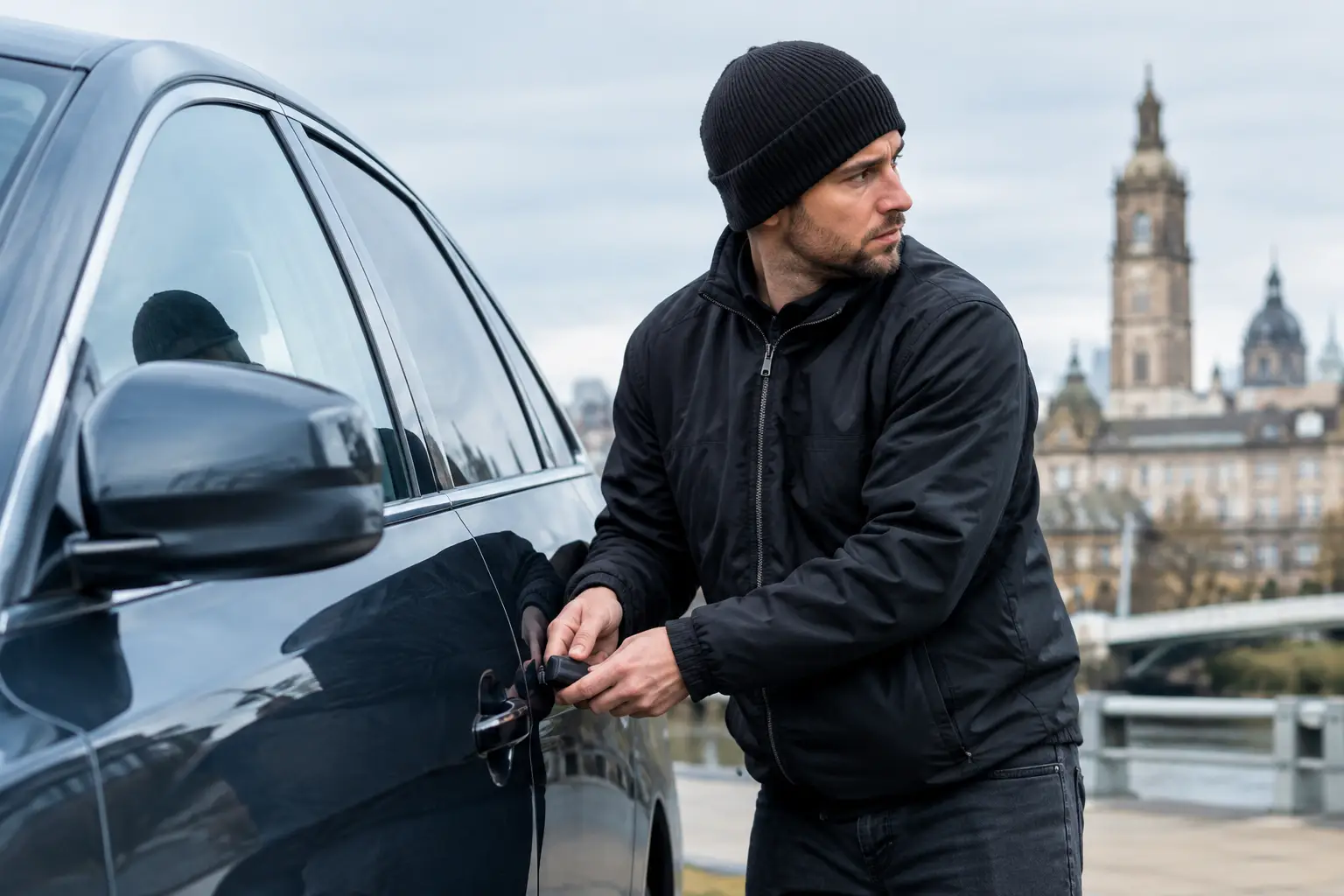
A keyless car can be parked outside your house in Glasgow with the doors locked and the key safely indoors, yet still be a target for relay theft. Prevention is usually straightforward once you know how the theft works, but it needs to suit your vehicle and how you use it. The aim is not to make life difficult every time you leave the car. It is to stop criminals using the convenience of keyless entry against you.
What relay theft is and why keyless cars are targeted
Relay theft affects vehicles with keyless entry, often called passive entry or proximity entry. With this system, the car detects an authorised key fob when it is nearby. You can unlock the doors by touching the handle, and many cars will start while the fob is inside the vehicle.
Criminals can use two electronic devices to extend the signal between the car and the key. One person stands near the vehicle while another stands close enough to the key inside the property. The equipment relays the communication, making the vehicle believe its genuine key is beside it. In some cases, the doors can then be opened and the vehicle driven away in a matter of minutes.
This does not mean every keyless car is equally exposed. Manufacturers have improved their security over time, and newer fobs may use motion sensors or other measures that make signal relaying harder. Older keyless systems can be more vulnerable, but the exact risk depends on the make, model, year and security features fitted to the car.
It is also worth separating relay theft from other types of vehicle crime. A stolen key, forced entry, diagnostic-port programming and CAN-bus attacks are different problems with different solutions. A signal-blocking pouch will not protect against every method, but it is a sensible first line of defence against relay attacks.
Relay theft prevention starts where you keep the key
The simplest measure is to store keyless fobs in a properly tested signal-blocking pouch or box when they are not being used. These are often called Faraday pouches or Faraday boxes. They are lined with conductive material designed to stop the fob communicating with the car.
Keep the pouch or box away from the front door, letterbox and windows. Even without a relay attack, leaving a key fob on a hall table close to the front door is not a good habit. Put it somewhere secure, ideally further inside the house, as soon as you come home.
Do not assume a pouch works forever simply because it looks intact. The lining can wear, seams can fail and a poorly made product may not block every frequency. Test it regularly: place the key inside, close the pouch fully, then stand beside the car and try to unlock it in the normal way. If the car responds, the pouch is not doing its job. Replace it rather than taking a chance.
A metal tin or biscuit tin may reduce a signal, but it is not a reliable substitute for a purpose-made, tested product. The same applies to wrapping the key in foil. It may work temporarily, but it is inconvenient, inconsistent and easy to get wrong.
Check whether passive entry can be switched off
Many vehicles allow passive entry to be disabled through the car settings menu, the key fob, or a dealer-level configuration option. The car can still be unlocked with the remote button, but it will no longer automatically respond when you approach the door with the key in your pocket.
For some owners, this is the best balance between security and convenience. For others, particularly anyone who relies on keyless access while carrying shopping, tools or children, it may feel like a step backwards. There is no single right answer. If you park on the street overnight or have had suspicious activity nearby, switching off passive entry can be worthwhile.
Check your handbook before changing any settings. Instructions vary widely between manufacturers, and some cars separate passive unlocking from keyless starting. Avoid internet shortcuts that involve dismantling a fob or removing batteries. You could disable the key, damage the casing or create a more expensive problem than you started with.
Motion-sensing key fobs
Some modern fobs go into sleep mode after they have been still for a period of time. This helps prevent relay theft while the key is sitting on a table overnight. Once the fob moves, it becomes active again.
It is useful protection, but it should not be treated as a reason to leave the key beside the door. The fob may not have entered sleep mode yet, and not all systems operate in exactly the same way. A signal-blocking pouch remains a sensible extra measure.
Make the vehicle harder to take if access is gained
Relay theft prevention works best in layers. If someone manages to get into the vehicle, a visible physical deterrent can slow them down and make the car less attractive than an easier target nearby.
A quality steering wheel lock is still useful. It will not make a car impossible to steal, but it creates delay, noise and risk for the thief. Choose one that fits securely and use it consistently, especially when parking overnight or leaving the vehicle at a railway station, retail park or airport.
A driveway post, wheel clamp or secure gate can also be effective where practical. These options are more relevant for vehicles kept at home, including vans, high-value cars and work vehicles with tools inside. They are less convenient for everyday town parking, so a steering lock and secure key storage are often the more realistic combination.
A tracker can improve the chance of recovery after theft, but it does not stop the theft taking place. Consider it as part of the plan, not the whole plan. If you fit a tracker, make sure you understand the subscription costs, monitoring arrangements and what happens if the vehicle is moved outside normal hours.
Parking habits that reduce opportunity
Where you park matters. A well-lit driveway, a visible parking space and a camera covering the vehicle can discourage opportunistic criminals. CCTV is not guaranteed prevention, but it increases the chance of evidence and makes a quiet, low-risk theft less likely.
If you have a driveway, park with the front of the car facing away from the road where possible. This can make a quick departure more awkward. Do not block pavements or create a hazard to neighbours, but think about whether the car is positioned for your convenience or for a thief’s.
When parking away from home, do a quick check before walking off. Make sure the vehicle has actually locked, the windows are closed and the key has not been left in a jacket, bag or centre console. Keyless systems can occasionally fail to lock if another fob is inside the car, a door is not shut properly or the key is too close to the vehicle.
Be careful with spare keys too. Never leave one in the glovebox, under a seat or hidden in the vehicle. A spare key should be treated with the same care as the everyday fob, including signal-blocking storage if it has keyless functions.
Do not overlook key fob and lock problems
A damaged fob case, weak battery or intermittent central locking fault may seem unrelated to theft prevention, but it can leave you relying on unsafe habits. For example, drivers sometimes stop locking the car properly because the remote works only now and then. Others keep a spare key in the vehicle after a fob starts failing.
Get faults checked before they become an emergency. A replacement fob shell can protect the internal circuit board if the casing is cracked, while a properly programmed replacement key gives you a dependable spare without compromising security. If your vehicle is not locking, unlocking or recognising the key correctly, it needs diagnosis rather than guesswork.
Auto Locksmith Doctor Ltd deals with vehicle entry, replacement keys, key programming and key fob faults across West Central Scotland. A specialist can confirm whether the issue is the key, vehicle battery, locking system, immobiliser or another electronic fault, without damaging the vehicle to gain access.
If you think your car has been targeted
Signs can include unfamiliar people lingering near the driveway, attempted entry alerts, doors found unlocked, or a keyless car behaving oddly around the time of suspicious activity. Do not ignore it because nothing has been taken. Move the keys into a tested signal-blocking pouch immediately and review your parking arrangements.
If the vehicle has been entered, do not disturb anything that could be useful evidence. Contact the police, notify your insurer and arrange for any damaged locks, keys or security features to be assessed. If keys are missing, treat the situation urgently. A thief with an authorised key does not need relay equipment.
A few small changes can make a real difference tonight: move the keys away from the door, test the pouch you already own, check the car has locked, and use a visible steering lock if you have one. That is practical relay theft prevention, without waiting for a problem to force your hand.

Related Posts